Students in flood-affected areas: From dropping out of school to traveling by boat

Some students are studying in emergency camps in flooded areas. Many of them have dropped out of school. The migration of educators and the shortage of staff have become a challenge. Some teachers and students use boats to travel.
Statements by local officials and published reports indicate the dire educational situation in the flood-affected regions of Iran, especially Khuzestan and Lorestan.
According to official statistics, 114 schools in Khuzestan were damaged during the floods of last April, of which 35 were "completely destroyed."
Teacher shortages and migration from flood-affected areas
Mehdi Rafiei Dehkordi, the head of education in Khuzestan, referred to the "shortage of 16,000 people" in the province and confirmed that despite the "restructuring of destroyed and damaged schools" and the establishment of classrooms, a number of students are still studying in dormitories.
This local official stated in an interview with ILNA on Monday, September 30: "We are currently trying to implement a plan to collect the containers, but this is not possible in some tribal areas. On the other hand, we sent a few containers to Masjid-e-Soloman to be sure, because some of the schools in this city were damaged by the earthquake."
Rafiei Dehkordi, stating that “we are trying to implement a plan to collect the school buildings,” spoke about the need for “national credit” in Masjed Soleyman and some areas of Khuzestan: “More than 50 percent of the schools in Masjed Soleyman are extremely dilapidated and do not even meet our standards. These schools must definitely be demolished or renovated in the future.”
The head of education in Khuzestan also mentioned the shortage of personnel as the "major problem" of the province, and referring to the sharp outflow of personnel from Khuzestan, he said that the entry of personnel into this province is always facing a "negative balance."
Studying in Connex
Meanwhile, Reza Zeinivand, the Director General of Education in Lorestan, announced the allocation of buildings to the demolished schools and said that "students are currently in these buildings."
The local official put the number of destroyed schools in Moqallan and Pol-e-Dokhtar at 113, but said that 310 damaged schools have been repaired and put into operation.
But according to the Director General of Education of Lorestan, "those schools that were damaged or destroyed in the city do not have a connection, but rather used prefabricated schools."
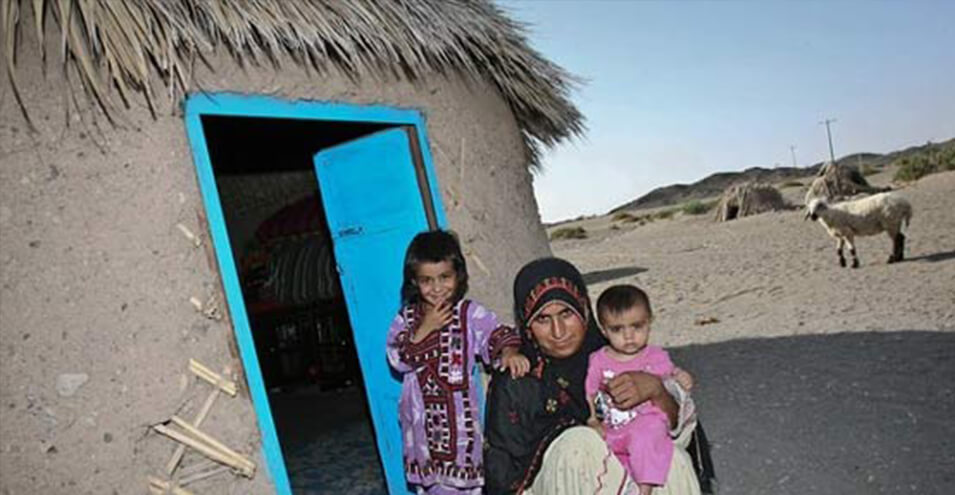
Regarding the difference between prefabricated schools and shanties, Zinivand said: "Prefabricated classrooms are like emergency camps. In addition to using prefabricated schools inside the city, efforts have been made to use the second shifts of other schools. In addition, we have two half-completed projects (a 12-grade school and a 6-grade school) in Pol-e-Dokhtar and, according to the plan, these two schools will be ready by October 15. Classrooms in the form of shanties are also used in deprived villages, and after the flood, a series of shanties were added to them."
Dangerous boat travel for students in 37 villages in Khuzestan
Due to the failure to repair the floating bridge in Anafcheh village in Bavi County, Khuzestan, after the flood in April this year, residents of 37 villages in this county, including students, are still facing traffic problems, and students and teachers in this area are forced to travel to school by boat every day.
The principal of a school in the village of Shreemeri in Bavi County, yesterday, Sunday, while referring to the problem of students' transportation in the village, told ILNA news agency that the area has been facing a 20 percent dropout rate. The school principal added: "Currently, some of our classes are not held and many teachers have migrated from the area due to this problem."
School principals and residents of these villages have also reported that their appeals to provincial and city officials to install a new bridge in this location have been unsuccessful.
Meanwhile, Manouchehr Varnaseri, the governor of Bavi, stated that "there is nothing we can do, we must wait for the army to take action," adding that the army, which built the floating bridge in Anafcheh village in 2013, has now made a "favorable promise" to reconstruct it.
The director of another school in the area, however, referring to the problem of people traveling in "more than 30 villages with a population of 12,000," told ILNA: "The officials only promise people to build a bridge. They even promised us a permanent bridge, but the foundation stone has not been laid yet. Many of our students, including girls, drop out of school because of this problem because they are afraid of traveling by boat on the river."
The problem of schools and other educational issues is not limited to the flood-affected provinces. With the start of the new academic year, the number of registered students in Iran showed an increase of 500,000 compared to the previous year. Along with such an increase, the Iranian Minister of Education had acknowledged a shortage of about 100,000 teachers. At least 30 percent of Iran’s educational spaces are dilapidated and in need of renovation. Two-shift or dilapidated schools, classes with a density of 40 students, a shortage of human resources and teachers, and discrimination between the capital and the cities and villages are other challenges facing education in Iran.
Source: DW