Parliament's Judicial Committee requests the Judiciary: Stop the execution of drug offenders until the new parliament bill is finalized
Members of the Parliament's Judicial and Legal Commission have called on the judiciary to suspend the execution of death sentences for individuals who did not play a key role in drug trafficking until the draft "Anti-Narcotics Law Amendment" currently under consideration in the Parliament is finalized.
Mohammad Kazemi, deputy chairman of the parliamentary judicial commission, told the Sharq newspaper about the plan on July 4: "The majority of parliamentarians agree with the plan to add an article to the anti-narcotics law, and that is why the plan will receive a high vote on the floor. But the point is that until then, the lives of some people will be in limbo, and if this plan is approved, they will no longer face the death penalty, and that is why we verbally asked the judiciary to stop the execution of the sentences."
The MP did not mention the judiciary's response to the MPs' request.
Since December of last year (2016), representatives of the Islamic Consultative Assembly of Iran have been finalizing a plan that, if approved, could save the lives of four to five thousand people sentenced to death on drug trafficking charges. However, its approval has been postponed due to opposition from the police, the judiciary, and the Anti-Narcotics Headquarters, and the execution of drug criminals has continued during this period.
Hadi Norouzi, spokesman for the parliamentary judicial commission, said in December 2016 that the bill, if approved, would be "retroactive" and that its approval could save at least 5,000 people currently awaiting execution on drug-related charges: "Currently, about 5,000 people are on death row, 90 percent of whom were first-time drug users, and the age of these people is between 20 and 30 years old."
Hassan Norouzi placed the responsibility for the execution of a number of these defendants in the event of a delay in approving this plan on the shoulders of those who are preventing its implementation: "This plan was reprinted on June 11 of this year for the order, and if there is a delay every day and people are executed, the mistake and its consequences will be returned to those who wrote such a letter."
The bill to reform the penalties for drug crimes, in the last-ditch effort by parliamentarians, was scheduled to be put to a vote in the open chamber of the parliament on Wednesday, June 7, 2017, but was stopped due to opposition from "a government security institution."
Mohammad Kazemi, deputy head of the parliament's judicial commission, told Sharq newspaper that the bill has been put back on the parliament's agenda, but added that due to criticism from the judiciary, the Anti-Drugs Headquarters, and the police, it requires further consultation and "hammering."
The General Legal Director of the Anti-Narcotics Headquarters announced in February 2016 that the headquarters' priority is to stop the plan to amend the Anti-Narcotics Law, and if representatives insist on the said plan, given the judicial nature of the plan, the opinion of the judiciary must also be obtained.
Ali Mozaffari, the Chief Justice of Khorasan Razavi Province, also joined the group of opponents of the new plan on July 4, 2017, saying that “the death penalty should not be removed from the anti-drug laws to please Western governments and arrogant institutions.” “If we make thousands of changes in ourselves, their (Western governments) opposition and stubbornness towards the Islamic Republic of Iran will not decrease. The Quran and narrations are the religious basis for the death penalty in the fight against drugs, which is considered corruption on earth. Execution for these crimes is for the benefit of human society.”
Brigadier General Mohammad Masoud Zahedian, head of the Counter-Narcotics Police, also expressed his opposition to the new parliament bill in Mashhad on July 4th, stating, "Abolishing the execution of drug offenders is not useful and will create problems."
This is while the new parliament plan does not seek to completely eliminate the death penalty for drug offenders. Mohammad Ali Pourmukhtar, a member of parliament, told Sharq newspaper: “The proposed plan by the representatives does not say that the death penalty should be completely eliminated, but rather our emphasis is that there should be no excesses in the plan and that the sentences issued should be such that the big offenders face the death penalty, not the small offenders.”
The draft amendment to the Anti-Narcotics Law was urgently submitted to the Islamic Consultative Assembly on December 22, 2016, to be presented in public after discussion in the Assembly’s Legal and Judicial Commission. The draft adds an article titled “Article 46” to the Anti-Narcotics Law, according to which criminals who are not recognized by the court as “corruptors on earth” will be sentenced to prison terms of more than 30 and 25 years, instead of death sentences and life imprisonment. The draft limits the death penalty for drug crimes to “organized and gang crimes and ringleaders,” “armed drug trafficking,” “criminals with a history of drug trafficking,” and “abuse of children in the context of trafficking,” and replaces it with prison sentences in other cases.
This is not the first time that the issue of limiting the death penalty for drug-related crimes has been raised in the Islamic Consultative Assembly. Previously, two other proposals and bills to reduce or abolish drug punishment were presented in the Assembly, but for undisclosed reasons, they never reached the approval stage.
In the session of the Islamic Consultative Assembly on December 23, 2016, Ezzatollah Yousefian Molla, the designer of the new layout of the parliament, asked, “What has been the result of executing so many drug traffickers?” He said, “In the current situation, a large part of the executions are related to drug trafficking, which unfortunately Western and international countries are using politically, which is causing huge costs for the country. This is while those who are sentenced to death are not traffickers in the true sense, but the main traffickers are people who manage these issues in hotels in Ankara and Istanbul.”
After being reviewed and prepared by the Legal and Social Committee, the new bill will be put to a vote in the open chamber of the parliament. If it is finally approved by the parliament, it must also be approved by the Guardian Council, which is an institution that reviews laws passed by the parliament for compliance with the constitution and Islamic law, in order to become law.
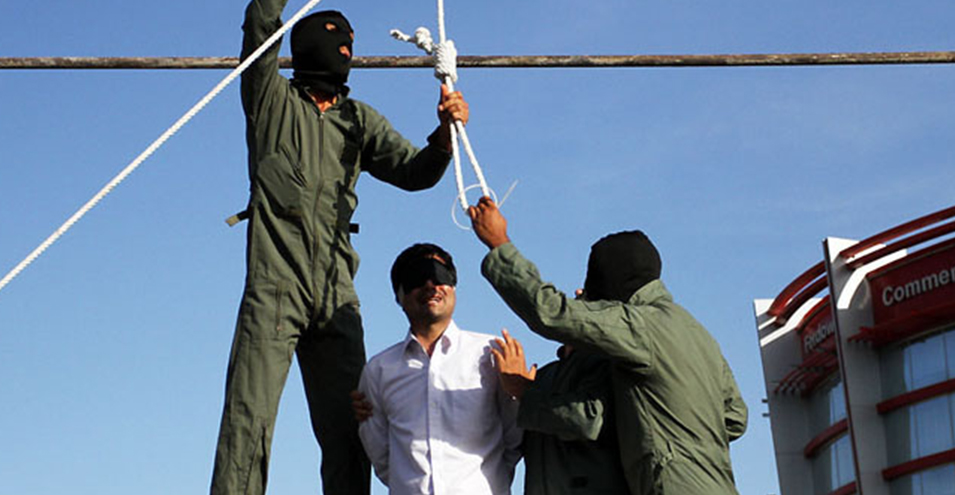
The high number of executions in Iran is considered one of the human rights violations in Iran, which in addition to provoking opposition from Iranian civil and human rights activists, has also drawn a lot of criticism from the international community and human rights organizations towards the Iranian judiciary. This is while, according to the Deputy Director for International Affairs of the Judiciary's Human Rights Headquarters, 93 percent of executions in Iran are related to drug crimes, which are not considered "serious crimes" according to international law and are considered as punishments according to Iranian law, meaning that their amount and form are subject to change and can be changed at the discretion of the judicial authorities.
Over the past year, comments on the death penalty, especially for drug offenders, have increased within Iran from judicial officials. Although most of these official statements share common ground in defending the principle of the death penalty, they differ and sometimes contradict each other in terms of the deterrent effect of the death penalty for drug crimes, the need to review the laws and reduce executions, and the nature of possible alternative punishments.
In October 2016, Ayatollah Sadegh Amoli Larijani, the head of the Iranian judiciary, made a statement emphasizing the need for strict implementation of the death penalty for drug offenses, stating: “The policy of the judiciary is not to eliminate the death penalty for drug offenses, and it is unfounded to say that executions were useless. If it were not for the judiciary’s strictness, the situation would have been much worse, and drugs would have been available in pharmacies.” At the same time, the head of the judiciary did not rule out the possibility of changing these laws in the future, noting that “drug laws are not divine revelation.”
Mostafa Pourmohammadi, the Minister of Justice of the Islamic Republic of Iran, spoke a month after the head of the judiciary in November, arguing that the death penalty was not a deterrent in the field of drugs, and spoke of the need to change the laws in this area and reduce the number of executions: "We are looking into what type of punishment is more effective, where, and for which people, so that we can consider it as an alternative to the death penalty. Of course, maintaining the death penalty is still in order, but not to the extent that it is carried out today."
Source: Iran Human Rights