Achievements of an Iranian researcher in Germany in marine biology
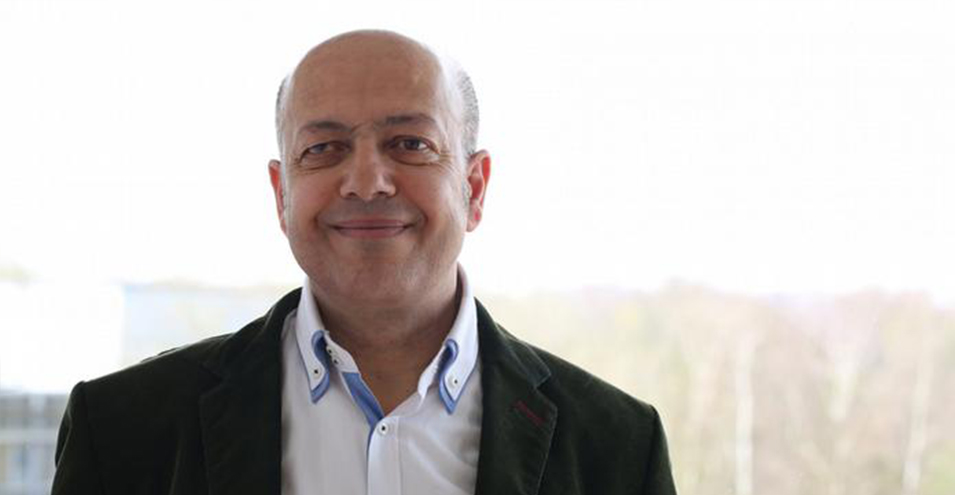
Professor Arzhang Khalili is engaged in research in the field of fluid hydrodynamics with applications to ocean biology at the Max Planck Institute in Bremen. He has made new achievements in solving the Stokes paradox.
Claude-Louis Navier and Sir George Gabriel Stokes independently developed important equations in the early 19th century that can be used to calculate the velocity and pressure fields of moving particles in liquids and gases (fluids). Today, these equations are widely used in engineering and the natural sciences.
In 1851, Gabriel Stokes succeeded in providing a simpler equation to describe the very slow motion of fluid particles. Stokes was able to calculate the coefficient of resistance of spherical bodies moving in a fluid through this equation, but he was unable to calculate the coefficient of resistance of cylindrical bodies, and research at this point reached a dead end. From 1851 onwards, this issue had attracted the attention of fluid dynamics scientists, and they all tried to provide a solution to this problem. But the answers obtained from calculating the coefficient of resistance of cylindrical bodies were different. Hence, this dead end became known as Stokes' paradox and remained unsolved.
The question that arose for Professor Khalili was how much organic matter microscopic organisms in the ocean waters carry with them from the surface to the seabed when they descend. After solving the problem with the help of mathematics and numbers, experiments were needed to verify these calculations, because in numerical mathematics, there is a high probability of error.
In an attempt to understand the cause of these differences, Professor Khalili realized that the variation in the results was actually due to the different experimental conditions.
Professor Khalili explains in this regard: "The deep waters of the oceans play a very effective role in the ecology and climatic conditions of the Earth. There are countless organisms and very small particles on the surface of the oceans and deep seas. When sunlight shines on these particles, photosynthesis takes place and the process of biological absorption and excretion takes place. These particles are the result of a combination of diatoms, phytoplankton, fecal pellets, and dust from storms, etc. As soon as the specific gravity of these particles becomes heavier than the specific gravity of water, they slowly move downwards (to the sea floor). These particles, called marine snow, contain organic matter that gradually and slowly reaches the ocean floor and transmits life from top to bottom. "Microbes settle on these diatoms and phytoplankton and begin to breathe, which produces carbon dioxide. Because this carbon dioxide is light, it travels all the way from the bottom to the ocean surface and exits the waters, causing many problems, including global warming, the creation of a hole in the ozone layer, and the melting of polar ice. This disrupts the global ocean carbon cycle and causes problems and changes in climate and weather conditions."
These changes can be predicted to some extent by computer programs, such as one currently in use at the Max Planck Institute for Meteorology in Hamburg, which can simulate the state of the Earth over thousands or hundreds of thousands of years and predict its climatic conditions.
One of the inputs to these computer programs is the amount of organic matter or carbon that enters the waters from the ocean surface, because this material produces carbon dioxide in the subsequent cycle. Since the particles of green algae and diatoms are cylindrical, Professor Khalili's achievements in solving the Stokes paradox have made it possible to improve some of the input data of these programs and obtain a relatively more accurate estimate of the amount of carbon or organic matter that can reach the sea surface.
Continuing the conversation, Professor Khalili emphasizes the importance of learning from the strategies of functioning and survival of living organisms in the oceans: "For example, some microorganisms produce a protein that, when combined with the salty water of the oceans, creates a natural adhesive. This adhesive could in the future replace sutures in surgery."
Another research topic that Professor Khalili is currently working on is studying the collision of fluid particles instead of using equations of motion to calculate the velocity and pressure fields of the fluid. This research simplifies difficult hydrodynamic calculations and reduces computer calculation time by converting nonlinear equations to linear ones.
Source: DW