“The Iranian government has no plan to prevent the unprecedented spread of Corona”
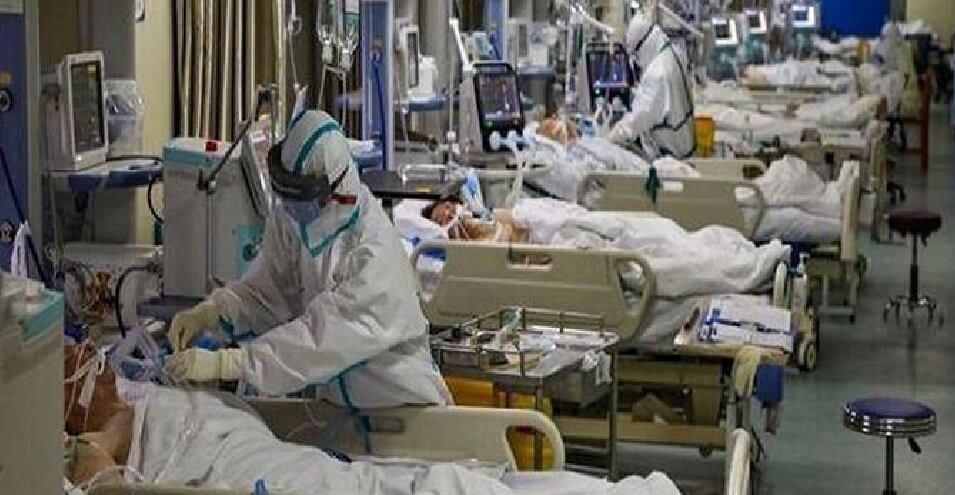
The COVID-19 growth rate in Iran is much higher than the third peak. No city is safe. According to a doctor, the government has resorted to testing a domestic vaccine on sweepers and cleaners out of desperation.
COVID-19 is rampant in Iran. Scattered news from Tehran and the cities indicate the rapid spread of the pandemic in the country and the helplessness of the authorities in dealing with it.
The crisis has intensified to the point that it has been announced in Tehran that, due to the high number of coronavirus patients, there are not enough beds and manpower for non-emergency procedures, and that caring for people who do not have acute illnesses is of secondary importance.
A similar situation prevails in provincial capitals. An employee of a social security hospital in one of the deprived provinces told DW that the situation at the hospital is critical and that a large number of patients have not been admitted even with positive COVID-19 tests.
According to him, some of the medical staff in the city received the first dose of the vaccine about three weeks ago and are still waiting for the second dose. There is a high possibility that the first dose will be ineffective after three weeks.
A Lorestan citizen who recently lost a close relative to COVID-19 told DW: "The situation is chaotic. The government is closing shops without helping businessmen and has not yet presented any specific plan to combat the coronavirus."
According to him, some high-ranking medical center employees "have even vaccinated their spouses' family members through favoritism, but many nurses are denied this right."
A doctor from Khuzestan reported the crisis in many hospitals in the province and told Deutsche Welle: "Perhaps no one in Germany will believe that our Ministry of Health is desperately testing a domestic vaccine on street sweepers, in the hope that God willing it will be safe!"
The doctor said that "people have no hope for government assistance in combating the coronavirus," adding, "The government has practically failed in the face of the coronavirus."
According to data from the Ministry of Health spokesperson, from April 8 to 9, 22,586 new patients were added to the number of COVID-19 patients "based on definitive diagnostic criteria," of whom 2,493 were hospitalized.
Simasadat Lari said that the total number of COVID-19 patients in the country has reached 2 million 6 thousand 934.
He also stated that 185 coronavirus patients have died in the past 24 hours, bringing the number of deaths from the disease to 63,884.
Record hospitalizations in Tehran
On April 8, the deputy director of medical affairs at Tehran University of Medical Sciences announced that the daily number of coronavirus patients hospitalized in Tehran province hospitals had reached a new record.
According to Farshad Allameh, elective surgeries have also been suspended in Tehran hospitals and new wards are being dedicated to COVID-19. He emphasized that the same trend is taking place in ICU wards.
Allameh also stated that critically ill patients are “usually elderly” and “the predominant strain of the virus appears to be the English one.”
The commander of the headquarters to combat the coronavirus in the metropolitan city of Tehran also stated that for the first time in recent weeks, the number of hospitalized people has exceeded 5,000 and said: "Almost all of Tehran's 22 districts are infected."
Alireza Zali called Nowruz trips, reduced adherence to health protocols, and family gatherings among the main reasons for the COVID-19 outbreak.
Zali, while stating that "we have reached a homogeneous pollution in Tehran, which is cause for concern," emphasized: "We have a bitter week ahead."
Currently, 4,043 people infected with COVID-19 are hospitalized in regular wards and 1,172 people are hospitalized in special wards of hospitals in Tehran province.
The commander of Tehran's coronavirus response headquarters suggested that Tehran should be closed for two weeks to prevent the further spread of the virus. He emphasized that closing the city is a temporary solution and not a definitive cure for the issue.
According to Zali, vaccination should be "the main priority to reduce mortality" in Tehran and other provincial centers.
But the Islamic Republic faces financial and ideological problems in importing the coronavirus vaccine.
Source: DW