“The rejection of the three-day emergency plan to shut down the country was a gravestone for the parliament”
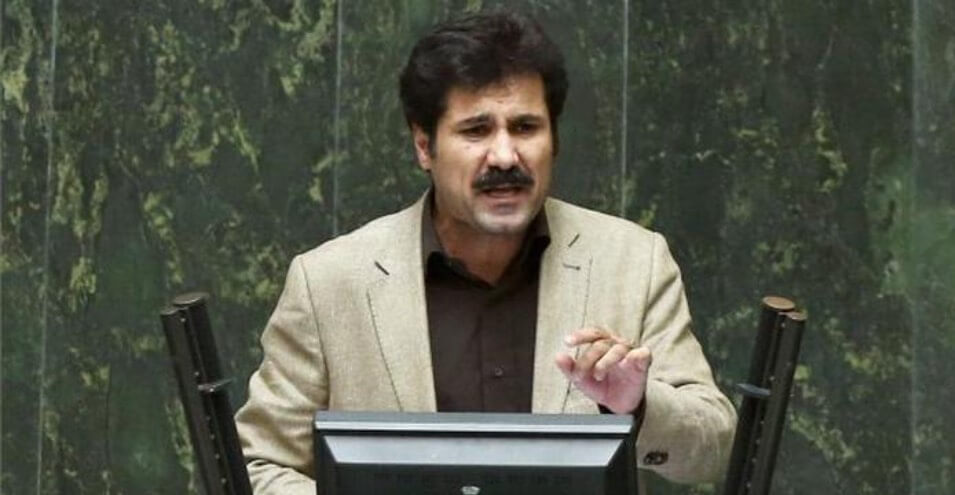
The Iranian parliament has removed the three-day emergency plan to shut down the country from its agenda. Six members of parliament criticized the move and wrote in a joint tweet that the three-day emergency plan was removed from the agenda due to a mistake by the deputy speaker of the parliament and an inappropriate warning by a member.
Six members of the Islamic Consultative Assembly protested in a joint tweet that the three-day emergency plan to close the country for a month was removed from the agenda during the public session on Tuesday, April 9, 2020. This session was the first public session of the Assembly after the end of the Nowruz holiday. The session was chaired by Masoud Pezzekian.
Tayyaba Siavashi, Seyyedeh Hamideh Zarabadi, Abdulkarim Hosseinzadeh, Bahram Parsai, Seyyed Farid Mousavi, and Fatemeh Saeedi wrote in this joint tweet: “The three-day emergency plan for a one-month shutdown was removed from the agenda due to a warning from a representative and a mistake by the vice-chairman. First, Article 71 first gives such powers to the parliament. Second, if Article 79 is only for the government, why is it included in the chapter on the legislative branch and under its rights? Third, there is no warning for the three-day emergency plan.”
Abdul Karim Hosseinzadeh, a representative of Oshnavieh and Naqadeh in the Islamic Consultative Assembly, considers this action by the Deputy Speaker of the Assembly illegal and does not consider the arguments of those who believed that this bill had a constitutional warning because it was intended to review the urgency of this bill in the Assembly, not the bill itself, and reviewing the urgency does not have a constitutional warning.
According to this representative, the argument of those who said that the bill itself is fundamentally unconstitutional was also pointless because it is the duty of the Guardian Council to determine whether a bill is unconstitutional.
Another argument of the opponents was that, in principle, the parliament does not have the power to shut down the country based on Article 79 of the Constitution and the government must submit a bill for it. Hosseinzadeh, however, asks why Article 79 is included in the chapter on the powers of the legislative branch and not in the chapter on the executive branch?
This was a problem that Tayyiba Siavashi, another MP, had previously pointed out.
Article 79 of the Constitution of the Islamic Republic states: “The imposition of martial law is prohibited. In a state of war and similar emergency situations, the government has the right to temporarily impose necessary restrictions with the approval of the Islamic Consultative Assembly, but in any case, the period cannot exceed thirty days, and if the necessity still remains, the government is obliged to obtain permission from the Assembly again.”
The representative of Oshnavieh told Sharq newspaper: "The rejection of the three-day emergency plan to close the country, especially during the days when thousands of citizens are infected with the coronavirus and are dying, was a gravestone for the parliament."
He also considered the holding of a public session of the parliament after a month of closure as a way to "make us and others understand that the parliament has become a multi-handed institution that cannot use its minimum powers even in the most critical circumstances of the country."
Hosseinzadeh said: "The disaster that befell the three-month emergency plan to shut down the country was a complete manifestation of the tyranny of the vote and the violation of the law."
Where did the plan to close the country for a month come from?
A few days ago, during the parliamentary recess, some representatives, including Tayyiba Siavashi, announced that a three-immediate plan had been prepared based on Article 79 of the Constitution, which, if approved and approved by the Guardian Council, "will close all government, public, and private centers except for the Cabinet, the Central Headquarters of the Judiciary, the Parliament, and military, sovereign, and welfare organizations. The financial source of the plan is also expected to be the temporary sale of free gasoline, withdrawals from the Development Fund with the permission of the leadership, and assistance from the World Bank."
Abdul Karim Hosseinzadeh also said in an interview with Sharq newspaper: "We had about 80 signatures on the plan through SMS registration from colleagues, and today, in the open court of the three-day parliament, the plan was announced as received and presented in the parliament. In an unbelievable move, strange things happened that went against the regulations and the constitution."
He then pointed out the objections raised by representatives to this plan and that Deputy Speaker of the Parliament, Pezgian, who is running the parliament in the absence of Ali Larijani, has accepted the constitutional warning.
Representative Naqadeh further told Shargh: "Contrary to the internal regulations of the parliament, the chairman of the session considered the constitutional warning valid, while there is no possibility of issuing a warning regarding the urgency!"
He continued by referring to other countries such as China and South Korea and said: "How long will this quarantine phobia last? We keep saying that enemy countries want to push the country into a lockdown. Why do you have this wrong view of the issue? By liberalizing social interactions, we are costing people their lives."
It is unclear whether the removal of the country shutdown plan from the parliament's agenda was a government order by Khamenei or whether it was opposed by the entire government.
In any case, a day after this plan was removed from the parliament's agenda, Hassan Rouhani announced that businesses and offices in the cities would resume work from April 13 and in Tehran from April 15.
Source: DW