Zanganeh: Iran has achieved self-sufficiency in gasoline production and even its export
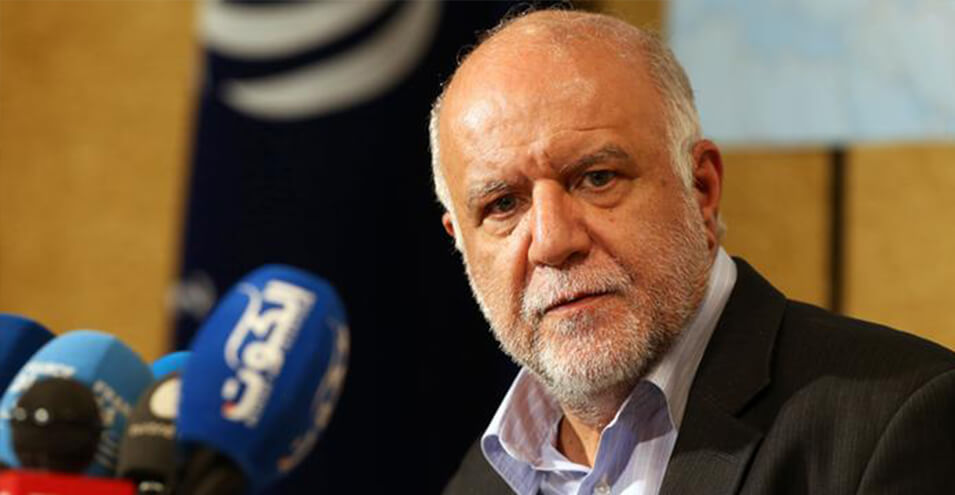
Iran's oil minister announced an "unprecedented leap" in gasoline production in Iran. According to him, Iran could be "one of the potential gasoline exporters" in the region. This comes as a plan to quota 20 liters of gasoline per person per month was considered this fall.
Iranian Oil Minister Bijan Zanganeh spoke about the “unprecedented and historic leap in the country’s gasoline production over the past five years” at the inauguration ceremony of the third phase of the “Persian Gulf Star” refinery on Monday, February 18. He provided statistics showing that the country’s base gasoline production capacity, which was 58 million liters per day in 2012, had doubled to 101 million liters per day in 2018, an increase of 50 million liters.
According to Bijan Zanganeh, this production will exceed 105 million liters per day by the end of this year. He also said about the production capacity of Euro oil and gas in Iran that its production has increased sevenfold since 2012 and has reached 44 million liters per day.
The Minister of Oil announced that Iran no longer needs to import gasoline. Regarding the quality of petroleum products in Iranian refineries, he said that due to the implementation of a quality improvement plan in the refineries of Arak, Isfahan, Bandar Abbas, Setareh Khalij Fars, and Tabriz, the gasoline produced is of Euro quality, a quality that did not exist in 2012.
Sanctions and environmental damage
One of the most important pollutants in Iran has been low-quality domestic gasoline. The problem of pollution from domestically produced (petrochemical) gasoline was first raised in July 2010 by Masoumeh Ebtekar, then head of the Tehran City Council's Environment Committee. ISNA quoted Yousef Rashidi, CEO of the Tehran Air Quality Control Company, as saying that he "raised similar concerns less than two months later in September of the same year, saying that Tehran's air pollution was concentrated on ozone and hydrocarbons resulting from gasoline evaporation."
However, during the reign of Mahmoud Ahmadinejad, officials at the National Iranian Oil Refining and Distribution Company insisted that the quality of gasoline and diesel produced in petrochemical complexes was standard and that their use would not cause any problems.
Now, Iran's oil minister says that the implementation of refining projects "is mainly aimed at increasing the quality of petroleum products and the environment," but financing the implementation of these projects is mainly the responsibility of European countries, which have been stopped due to pressure from US sanctions, "and this is causing a lot of environmental damage."
The “Economic World” newspaper wrote: “The plan to build the Persian Gulf Star Refinery as the most modern refinery in the Middle East was launched in 2006 on an area of about 730 hectares, 25 kilometers west of Bandar Abbas. The feed for this refinery is supplied through pipelines 388 kilometers long and 90 centimeters in diameter with a capacity to receive 500,000 barrels, which pass through difficult-to-access areas in the provinces of Bushehr, Fars, and Hormozgan.”
Moving beyond self-sufficiency and achieving export of refined products
According to the “Economic World”, with the launch of the third phase of the “Persian Gulf Star” refinery, 50 percent of the daily gasoline consumption in Iran will be provided. “Economic World” also quoted the Minister of Oil as saying that the daily production of 12 million liters of oil and gas and kerosene and three million liters of liquefied gas products are among the achievements of the launch of the new phase, and with it, Iran can be considered “one of the potential exporters of gasoline and an influential hub for this product and other refined products in the region.”
"Self-sufficiency" alongside gasoline rationing and smuggling
This is not the first time that officials have spoken about self-sufficiency in gasoline production. About eight years ago, it was also announced that Iran had achieved self-sufficiency in gasoline production.
Now, Iran's oil minister is talking about self-sufficiency and even the export of Euro-quality gasoline, only a short time after it was announced in December of this year that the Research Center of the Islamic Consultative Assembly was conducting studies based on which every Iranian would be given 20 liters of gasoline every month at a price of 10,000 rials.
Ahmad Amirabadi Farahani, a member of the Majlis' presiding board, told Tasnim News Agency that the goal of this plan is to "prevent gasoline smuggling, help the household economy, and adjust gasoline prices."
Kazem Jalali, head of the Majlis Research Center, also said: "In such a situation, every Iranian can earn 60,000 tomans per month by selling their gasoline quota at the open price, which for a family of five, this figure reaches 300,000 tomans per month."
Two weeks ago, the Iranian Ministry of Intelligence announced that it had identified three fuel smuggling gangs in the cities of Marvdasht, Kazerun, and Lamerd in Fars Province and had arrested 15 key members of the smuggling network. According to the Iranian Ministry of Intelligence, these three gangs had managed to collect more than 17 million liters of fuel through smuggling and “off-grid supply” during their activities and exported it from the country with the cooperation of “dealers.”
Official statistics on fuel smuggling in Iran are not announced, but some members of the Iranian parliament’s energy commission estimate that fuel smuggling from Iran to neighboring countries is 10 to 20 million liters per day. The head of the Iranian parliament’s research center recently “warned” about the continuation of fuel smuggling, saying that if fuel smuggling continues, we will be forced to import gasoline.
Source: DW