UN: 482 people executed in Iran in the past year
On Wednesday, March 29, the United Nations presented its annual report on the human rights situation in Iran during its meeting in Geneva, Switzerland.
The published report, which is the result of the annual report of the Human Rights Council, as well as the reports of the UN Secretary-General and the High Commissioner for Human Rights, expresses concern about the high number of executions, especially the execution of minor offenders, and welcomes the change in the law to impose severe punishments for drug defendants.
The main text of the 15-page report examines various issues related to the human rights situation in Iran. The report welcomes the change in the law that imposes heavy penalties on drug offenders, saying that this law will change the fate of 5,300 criminals facing the death penalty.
The report says that the Islamic Republic of Iran has cooperated with the UN Special Rapporteur on Human Rights in official correspondence and has answered his questions, but has not allowed him to visit Iran.
The report notes that no progress has been made in the areas of freedom of expression, protection of minority rights, and permission for them to work in Iran, and that repression and restrictions in these areas continue.
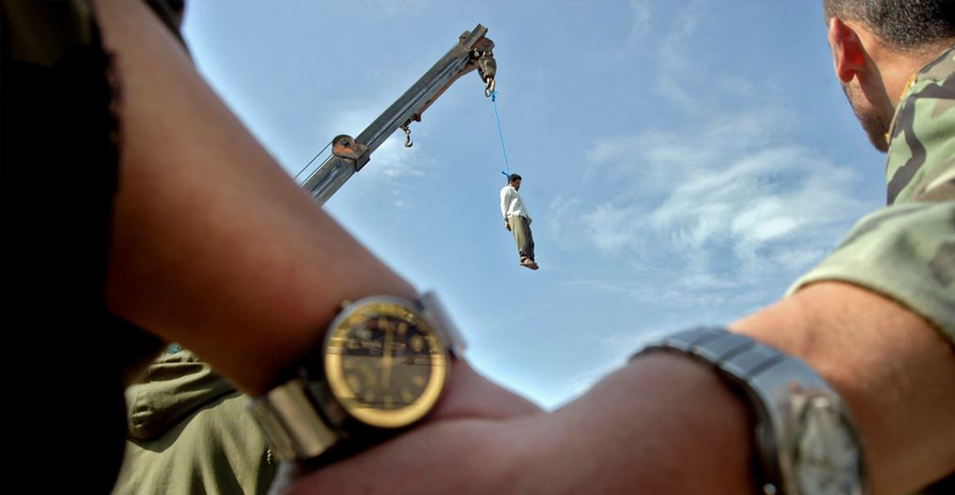
Referring to the execution statistics, the report says that 482 people were executed in Iran last year. Of these, 213 were executed on drug-related charges and 202 on murder charges. 24 were hanged on sexual assault charges, 16 on robbery and armed robbery, and two on charges of political crimes.
Of those executed last year, six were women and five were juvenile offenders. The number of executions in Iran was 530 a year earlier and 969 two years ago.
The report says that although the number of executions in Iran has been declining, it is still alarmingly high.
The report found that those sentenced to death do not have access to adequate legal protections. It also said that drug-related criminals and defendants do not have adequate access to lawyers and other legal rights.
This review welcomed the change in the law to impose heavy penalties on drug-related criminals and called on the Islamic Republic of Iran to commute the sentences of those who were scheduled to be executed under the previous law as soon as possible.
The Penal Code for Drug Crimes came into effect on November 13, 2019, after being approved by the Guardian Council. The law removed the death penalty from some cases and replaced it with alternative sentences such as life imprisonment, long-term imprisonment, and fines.
The passage of this law sparked many reactions.
Subsequently, the head of the judiciary, Sadegh Larijani, issued a circular asking judges to review all drug-related cases. Defendants who have faced death sentences or life imprisonment in their cases can also appeal.
Prison conditions
The report also examines the situation of prisons in Iran, stating that a number of wards are overcrowded with prisoners, and the statistics on the use of solitary confinement are also worrying.
The report points to violations of equal rights for women and the lack of adequate rights for minorities. The report says that access to social and occupational activities is severely restricted for minorities such as Baha'is, Sunni Baluchis, Yarsans, and Kurds.
According to this report, last year alone, 1,828 Kurds were arrested and imprisoned on charges such as environmental activism, eating and drinking in public during Ramadan, working as kolbars, and expressing joy and welcoming the Kurdistan independence referendum in Iraq.
The UN report also points to the repression and lack of protection for the LGBT community. The report also points to the lack of protective laws to eliminate discrimination against people who face physical and mental disabilities.
The lack of a proper space for dissidents and critics, and arbitrary arrests are other issues mentioned in the report. The report calls on Iranian authorities to cooperate with UN offices to improve the rights of all segments of Iranian society and implement the necessary reforms.
Source: Radio Farda