UN: Yemen situation is 'catastrophic'
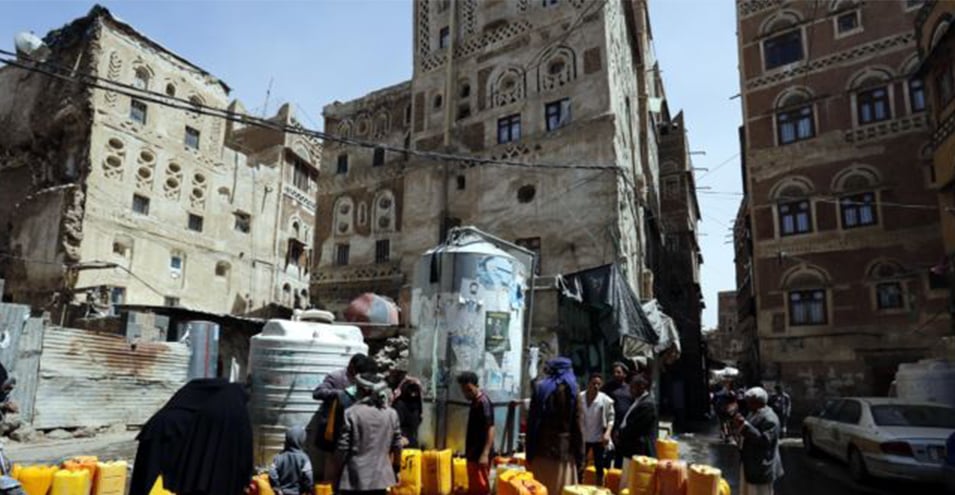
After three years of war, living conditions in Yemen are "catastrophic" and the country is facing the world's largest humanitarian disaster, with the threat of famine and cholera continuing, a senior UN aid official said on Tuesday.
The United Nations Security Council continued its discussions on the situation in Yemen on Tuesday, a day after Russia vetoed a British-drafted resolution to pressure Iran for sending weapons to the Houthis.
"After three years of war, the situation in Yemen is catastrophic," John Ging, the UN's humanitarian chief, told the Security Council. "People's lives continue to be devastated, and an estimated 100,000 more people have been displaced since the armed conflict intensified in November."
22 million Yemenis are in need of food aid, and of this population, about 8.4 million are on the verge of starvation.
John Gang added that about 1.1 million people have been infected with cholera since April 2017, the largest outbreak of the disease worldwide. Diphtheria has also returned to Yemen for the first time since 1982.
"The risk of famine in Yemen is serious"
Mark Lowcock, the UN humanitarian chief, said on Tuesday that the humanitarian situation in Yemen was "catastrophic." He added that after three years of war and 22.2 million people in need of assistance, the situation was critical.
Mark Lowcock also criticized the Saudi-UAE coalition on the one hand and the Houthi fighters in Yemen on the other for prolonging the conflict and thereby endangering the lives of civilians.
Mark Lowcock, the UN Under-Secretary-General for Humanitarian Affairs, warned the Security Council that in the current situation in Yemen, famine is a serious risk.
Thousands of people have died in the war in Yemen between Saudi Arabia, which supports the country's government, and Houthi rebels, which began in 2015, in the Arab world's poorest country.
Ismail Ould Cheikh Ahmed, the UN Special Envoy for Yemen, whose term of office has ended, said in his latest report to the Security Council that military clashes have increased significantly in several areas in the past two months, including Yemen's border areas with Saudi Arabia.
Ismail Ould Cheikh Ahmed said the parties involved were engaging in destructive behavior that would not yield any political gain.
He also told the Security Council that peace talks had been agreed upon by all parties but were not signed at the last minute. He called for a new round of talks.
The report notes that a report by a UN panel of experts released in January said that the ballistic missiles fired by Houthi rebels at Saudi Arabia were made by Iran. Russia has not accepted this conclusion.
Mr. Sheikh Ahmed, who played a mediating role in the peace talks for three years, said, "The parties involved in the war continue their policy of refusing to talk, which has led the country into more poverty and destruction than before."
Ismail Ould Cheikh Ahmed expressed particular concern about the recruitment and arming of thousands of child soldiers, particularly by the Houthi rebels.
UN Secretary-General Antonio Guterres this month appointed Martin Griffiths of Britain as the UN Special Envoy for Yemen, replacing Sheikh Ahmed.
Source: Radio Farda