Anniversary of the Murder of Dariush and Parvaneh Forouhar; A Crime for Which the Main Instigators Were Never Tried
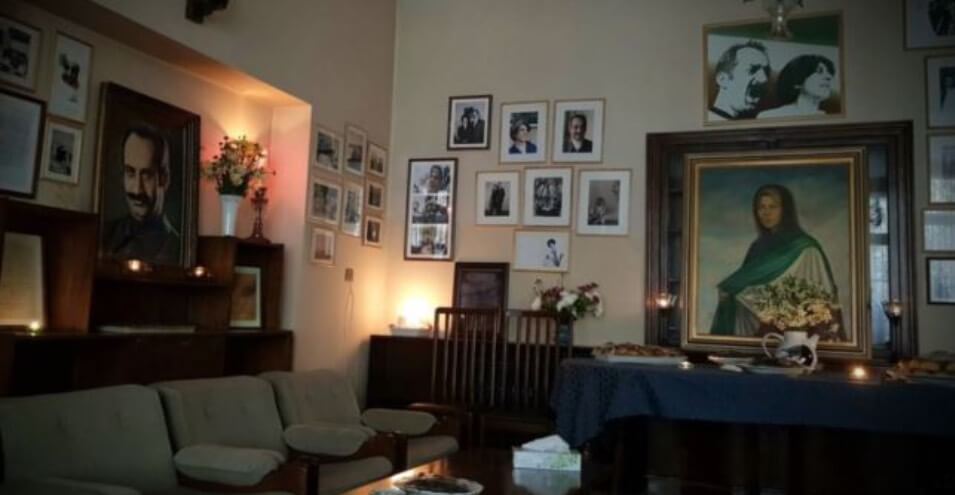
December 1st marks the anniversary of the murder of Dariush and Parvaneh Forouhar, critics of the Islamic Republic of Iran; a murder whose main perpetrators were never punished, and a number of Ministry of Intelligence agents accused of involvement were eventually released despite receiving heavy judicial sentences.
On the evening of December 1, 1998, agents of the Iranian Ministry of Intelligence went to the home of Dariush Forouhar, Secretary General of the People's Party of Iran, and stabbed him and his wife, Parvaneh Eskandari, to death. The Islamic Republic's Ministry of Intelligence later announced that a number of its employees were responsible for the murders of Dariush Forouhar, his wife, and Mohammad Jafar Poyandeh and Mohammad Ali Mokhtari, two other victims of the serial killings. Although the names of the victims were beyond this list, the government of Mohammad Khatami considered only these four people to be victims of the serial killings. However, in the years that followed, the serial killings case that led to the arrest of Saeed Emami, former deputy security officer of the Ministry of Intelligence, and a number of other employees of that ministry, had many ups and downs. One of the ups and downs was Saeed Emami's death in prison, which Islamic Republic officials declared to be suicide by taking cleaning solution.
Meanwhile, Mustafa Kazemi, then deputy security minister of the Ministry of Intelligence, and Mehrdad Alikhani, director general of the Ministry of Intelligence, were sentenced to life imprisonment for “the crime of commanding and ordering four murders.” Both are currently free.
Ali Mohseni, a member of the Ministry of Intelligence's Operations Department, was sentenced to one count of retribution after paying half of the full blood money to the killer for the crime of aiding and abetting the murder of Parvaneh Eskandari. Hamid Rasouli and Mohammad Azizi, middle managers of the Ministry of Intelligence, were sentenced to two counts of life imprisonment for the crime of commanding and issuing orders to carry out the murder of Dariush and Parvaneh Forouhar.
Those sentenced to retribution were sentenced to 10 years in prison following an appeal against the verdict and the exemption of the children of Dariush and Parvaneh Forouhar from retribution, and it is said that they are currently free.
Furthermore, the then-Intelligence Minister, Ghorbanali Dari Najafabadi, who resigned after the Ministry of Intelligence admitted that his staff were involved in the murders, was never prosecuted, despite the defendants’ claims that he was aware of the murders. This is despite the fact that, according to Parastu Forouhar, the daughter of the victims, the two main defendants in the case had mentioned Dari Najafabadi as having ordered the murders. Dari Najafabadi is currently Ayatollah Khamenei’s representative in Markazi Province, Friday prayer imam in Arak, a member of the Assembly of Experts, and a member of the Expediency Discernment Council.
According to Parastu Forouhar, the arrested employees of the Ministry of Intelligence had repeatedly stated in their interrogation papers that the killing of opponents was part of the routine missions of that ministry and that the high-ranking officials of the ministry were aware of it, but none of this led to the then Minister of Intelligence or the clerics close to the Iranian security apparatus, including Mohseni Ejei, facing serious charges. In contrast, security agents have either prevented or imposed restrictions on the anniversary of the deaths of Dariush and Parvaneh Forouhar every year.
Source: Voice of America