The shadow of Corona is heaviest on child laborers.
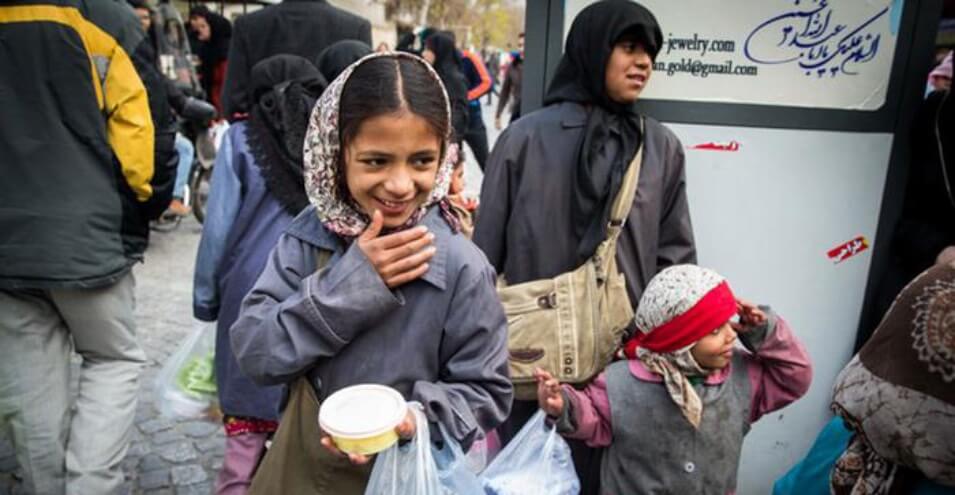
The coronavirus pandemic is showing itself everywhere, from the legislature to the Eid bazaar. The only thing that hasn't changed is the children scavenging in garbage cans and selling flowers and cleaning windows at intersections.
The streets are deserted, there is no sign of the hustle and bustle of Esfand, the markets and shopping centers are almost empty, the Haftsin market, red fish and Samno market are open, but there is no crowd. Corona has cast a shadow over everything except the children who continue to come and go behind red lights and at intersections with flowers in their hands, chewing gum in their hands, handkerchiefs in their hands, and pecans in their hands.
There have been no reports of children contracting the coronavirus, and there have been no deaths from the virus among children. However, no medical research has proven that children are immune to the virus.
A board member of the Children's Rights Protection Association has called for greater attention to the health, hygiene, education, and housing of garbage-picking children.
Mina Jandaghi says that children who scavenge and sell on the streets or in the subway are roaming the city without masks or gloves, have poor nutrition, and live near garbage.
ILNA news agency quotes this activist as writing: "On the other hand, these children are more vulnerable to illness due to their type of nutrition, insufficient rest, and exposure to various types of stress and psychological pressure. In the event of illness, these children are also unable to visit medical centers due to the high costs of treatment and the difficulties of accepting children without identity papers."
Mina Jandaghi called on the Welfare Organization to pay attention to providing shelter for homeless and rough sleeper children and the necessary support for them, saying: "These children are present on the streets of the city every day, but their connection with society is very limited."
Earlier, the CEO of the Association for the Protection of Children's Rights had warned about the danger that threatens working and street children. Farshid Yazdani told ILNA news agency last week: "Children and adults who make a living by selling in the subway are exposed to threats and danger due to their extensive contact with society and presence in public places."
Yazdani, while condemning child labor, called on the government to provide free hygiene supplies, gloves, disinfectants, and masks to this group.
For children, there is no difference between coronavirus and non-coronavirus work.
So far, no organized and extensive work has been done to protect working and street children from the coronavirus pandemic. Only popular and non-governmental organizations such as the Tolo Association, the Imam Ali Association, and the Association for the Defense of Working and Street Children have taken spontaneous measures to protect working and street children from the coronavirus.
The Imam Ali Community decided in a crisis headquarters meeting held on March 25 to ask the responsible institutions in this field to force contractors not to use children at this time.
The Tolo Society, in cooperation with the Red Crescent Organization and another group of NGOs, has distributed health packages in the Darvaze Ghar neighborhood of Tehran.
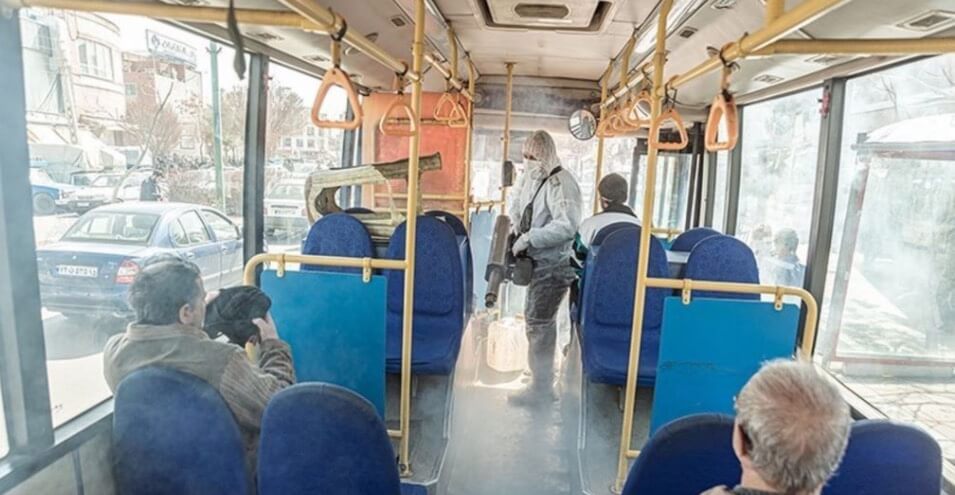
Amir Hossein Mirbahari, a member of the Society for the Defense of Working and Street Children, told DW Persian: "Unfortunately, I can personally say that I did not witness any raids to disinfect the streets and centers where children are exposed. For example, the necessary equipment for working children, especially those working in the field of waste recycling, such as safe gloves, suitable masks, and disinfectants, which should be delivered to the children quickly and free of charge in these circumstances, or measures to deal with and treat children who themselves or their families become infected, which unfortunately either do not have statistics or there are no significant operations."
This child rights activist says that in addition to the equipment needed by this group of children, providing them with accurate information is also particularly important because these children have less access to accurate and truthful information, and what they receive is mostly fake news and often frightening news that has no basis in fact.
I asked Mr. Mirbahari whether the Society for the Defense of Child Labor and Street Workers had contacted employers of child laborers to ask them to send these children to public and high-risk places less often during the coronavirus outbreak?
Amir Hossein Mirbahari said: "We have access to employers in a few cases, while the reality is that the number of child laborers is much larger and more widespread than we can contact in projects of popular organizations, and as a result, this requires a larger task at the level of, for example, the Welfare Organization in Iran."
The Islamic Republic of Iran News Agency, IRNA, wrote in a report on this issue: "Based on data from the Center for Strategic Studies of the Ministry of Labor, out of about 9 million children aged 10 to 17, 409,000 children have been identified as active in the field of work or looking for work in the country, which is directly related to poverty in the family, and their main work in Iran is peddling, selling flowers, fortune telling, and collecting garbage."
These are, of course, only the working children who have been identified. Since a large number of working children are children without Afghan identity cards or with Iranian mothers, it can be assumed that the number of these children is much higher than the officially announced figure.
In the heat of the coronavirus pandemic, child laborers and flower sellers continue to clean car windows and pick up trash with bags in hand. The shadow of the coronavirus epidemic has been so heavy that it has affected Nowruz and the street atmosphere in Esfand, but it has apparently not changed the daily lives of working and street children.
Source: DW