The number of Covid-19 patients in Khuzestan Province tripled
The number of COVID-19 cases in Iran has once again started to rise. In Khuzestan province, the situation is red in 9 cities. Being in closed environments due to the heat accelerates the spread of the virus.
One of the factors influencing the increase in cases of this disease in Khuzestan Province is the warming weather and people taking refuge in indoor environments with cooling devices. Experts had previously warned that the coronavirus spreads faster in closed environments.
Furthermore, the declaration of a white status and return to normal activities in a number of cities in Khuzestan province has facilitated the spread of the virus. For example, the National Headquarters for Combating Corona introduced the city of Masjed Soleiman as one of the white cities for the return to normal activities, including the opening of mosques and holding Friday prayers.
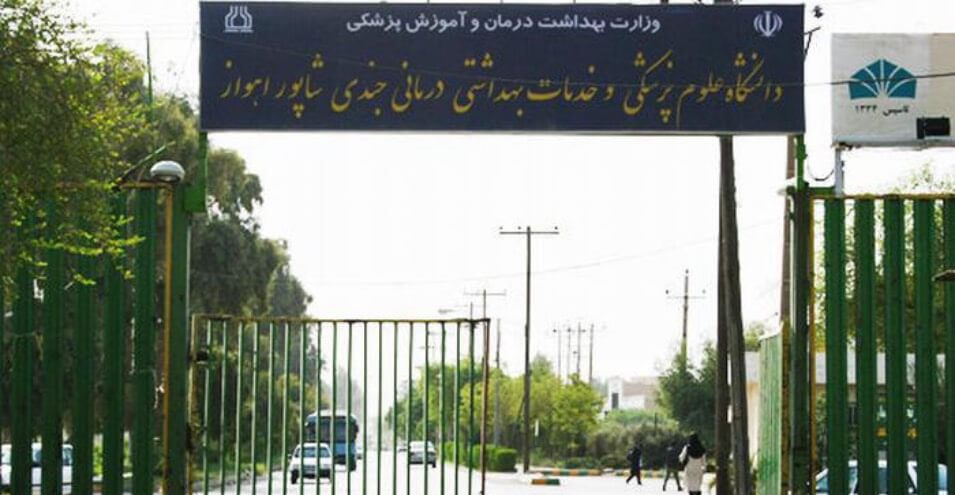
Experts say the criteria for declaring white cities do not have a clear and reliable definition. Farhad Abolnejadian, the head of Ahvaz University of Medical Sciences, last week asked the Ministry of Health to review the list of white cities. He had called for a number of cities in Khuzestan to be removed from the list.
The National Coronavirus Task Force has divided the country's cities into three zones: risk level one, two, or three. The lowest risk level, "one," is white. In white cities, one person is hospitalized per 100,000 people per day. More than three is defined as red, and between these two is defined as yellow.
One caveat to this classification is the lack of a clear definition of who should be hospitalized. Iranian hospitals are only admitting people who are seriously ill. Everyone else is asked to stay home and self-quarantine.
As a result, it can be said that the number of patients hospitalized to determine the color of a city has no connection to the actual number of patients with Covid-19 in that city.
More testing to identify infected people faster
The governor of Khuzestan says that the number of diagnostic laboratories in the province has increased, resulting in more patients being identified in the province. He has urged people to observe social distancing.
Alireza Raisi, Deputy Minister of Health and Medical Education, also called the success in containing the coronavirus dependent on "the level of people's health literacy and public cooperation and empathy," and claimed that the disease has been controlled only in countries where people have observed health precautions.
Alireza Raisi said on Monday, May 12, that “about 90 percent of the people,” or 78 million people, of Iran’s population, had been screened. He called people filling out an electronic questionnaire screening and described conducting coronavirus tests to definitively identify cases as “propaganda.”
The Deputy Minister of Health said: "If we wanted to test everyone, it would impose a huge cost on the country. Out of the 78 million people we screened, we found one million suspects who had symptoms. Among them, 130,000 people were found who deserved more attention. Of these 130,000 people, tests were conducted."
He called this method a “targeted and intelligent screening system.”
Experts say that 80 percent of people who are infected with the coronavirus either don't realize they are infected or have mild symptoms. In 20 percent of cases, the person becomes ill. Some of these 20 percent are severely ill and require medical care.
As a result, there are no specific statistics on the actual number of people infected with the coronavirus, but as the number of people increases, the number of people infected with Covid-19 will also increase.
The increasing number of people requiring hospital care due to COVID-19 is a cause for concern in Khuzestan province. The oil-rich province’s population of five million suffers from poverty and a lack of hospital equipment. According to Iraj Harirchi, Ahvaz is the second most marginalized city in the country and given the current situation, “appropriate measures must be taken for it.”
Source: DW