The Testimony of "Maryam Jalili", a Christian Citizen, from Her Life and Evin Prison to Immigration to America
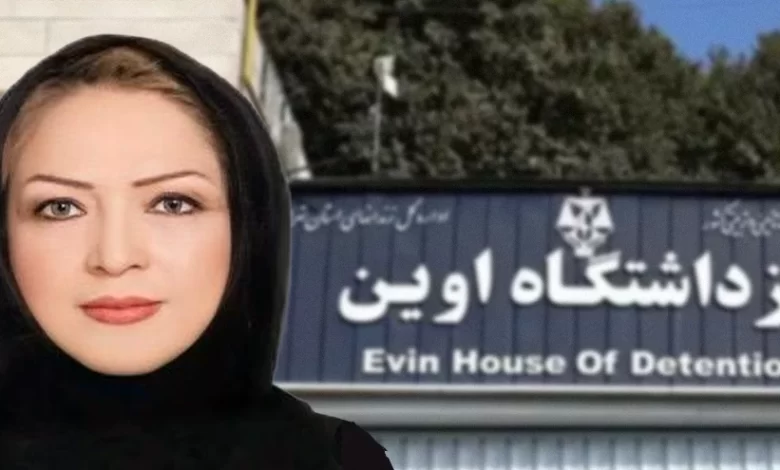
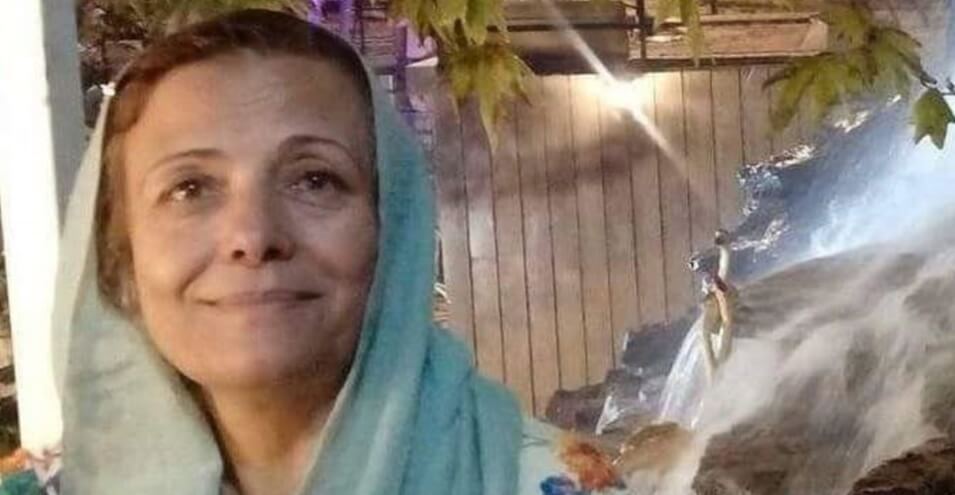
Maryam Jalili, a Christian citizen, testified during an interview about her life, her imprisonment in Evin Prison, and her immigration to America.
Maryam Jalili, born in 1964, gives a testimony of her life and the time she was imprisoned in Evin Prison in an interview with the "Article 18" organization, which she confirmed on August 17, 1403. Her testimony is about the pain she endured before believing in Jesus Christ and the conditions she experienced in prison, after which she spoke about Jesus Christ and her faith with many people, including Baha'is, lawyers, and political figures who were incarcerated with her.
The interview, prepared by the "Article 18" organization, is given below:
"I am Maryam, born in 1964 in the city of Nishabur. My name is Maryam and I was born in 1964 in the city of Nishabur. I had four sisters and two brothers. My father was a soldier and for this reason he was very strict in raising his children. Our house was like a barracks. I wanted to get away from the atmosphere of home, so I decided to marry the first person I met. At the age of 13, I married one of my mother's relatives and my first son was born when I was 15. I was seventeen when my son suddenly contracted meningitis and this disease led to his death. This incident was very painful for me. I could not understand why my child was born and died. Many questions occupied my mind. In private, I would ask God: "You knew that my son was going to die, so why did you give him to us in the first place to take him?" A few years later, at the age of 21, I had another child and my second son was born.
When I was 38, one of my sisters, Farzaneh, who was 26 at the time and had a three-year-old daughter named Hasti, was returning from a vacation trip to the city of Nishapur with her husband and daughter to attend my brother and sister's wedding, which was being held on the same night. They had a bad accident near Nishapur, which resulted in my sister's death.
Farzaneh's death was the second fatal blow for me. In the bathroom, I cried and cried to God: "Why did Farzaneh die at this age? What will happen to her three-year-old daughter?" For a long time, I had many questions about God's justice and wisdom in my mind, and since I had no answers to them, they tormented me. I was very confused and restless. I attended many Islamic gatherings and meetings, but I did not find comfort.
I read the book “Four Works by Florence Scovel Shinn” and I was intrigued by the references to the Bible. One of my relatives was studying English literature at university. I noticed that part of their courses was a study of the Bible in English. I became curious and on the fifth of Ramadan 2004, I asked her some questions about Christianity and the Bible. She read me this passage from the Bible: “Come to me, all you who labor and are heavy laden, and I will give you rest.” (Matthew 11:28) When I heard this verse, my heart felt at peace. It was as if I had found what I had been searching for for years.
From Neyshabur, I went to the Congregational Church in Tehran and bought a Persian Bible from the church bookstore. I read the Bible with great enthusiasm and found answers to questions that had been on my mind for years. I went to the Congregational Church bookstore in Tehran several more times and purchased the Bible and other Christian books. My fiancée, Najmeh, and I studied the Bible simultaneously for 8 months.
My father was a member of the board of trustees of the city's mosque and Mahdiyyah. My mother was a Hajiyyah woman who regularly made pilgrimages and held prayer meetings at home. In the meantime, I also became a Christian. Gradually, I talked about Christianity with my mother, sisters, brothers, son, and daughter-in-law, and a total of 19 people in our family became Christians.
One of my relatives had converted to Christianity before us. He had been arrested by the Ministry of Intelligence a year before he spoke to us about Christianity. Although the Ministry of Intelligence was monitoring him, he would discreetly come to our home to teach us more about Christian beliefs. We had a home church service on Fridays.
I had a women’s clothing store and often worked outside the home from morning until night. But I had decided to stay home for a few days for personal prayer and fasting. We had also put our house up for sale during those days. One morning, around 10 or 11 a.m., our doorbell rang. I answered the phone. My son said from behind the door, “Mom, they’re here!” I assumed it was a customer from the real estate agency. I calmly said, “Let me get dressed.” My son said again in an anxious voice, “Mom, I’m telling you, they’re here! They’re coming to take you.” When the door opened, five plainclothes male officers entered the house. There were no female officers with them. When they entered, I realized they were agents from the Ministry of Intelligence.
I was not prepared or well-informed to face the security officers, so I didn't know if I should ask them for a warrant to search the house or to arrest me. They didn't show any warrant and searched the entire house for two hours. They even searched the rice bucket and all the drawers in the freezer. I was amazed at the type of search they did. I had left a series of Islamic books in the basement of the house that I no longer read. The officers were very angry when they saw the books and said, "Why did you leave these books here? You have disrespected the sanctities of Islam by doing this."
After a thorough search of the house, they asked me to call my wife on the home phone and ask her to come home. After she arrived home, they handcuffed us both and took us away. They put very strong plastic handcuffs on me. They took me into the car and asked me to put my head down, I didn't know where they were taking us.
Upon arriving at the detention center, I was taken to solitary confinement. The cell was very small and cage-like, but the walls between the cells did not reach the ceiling. That is why I first heard the voice of my daughter-in-law Najmeh and then the voice of Elaheh singing a hymn of worship. The guard harshly ordered me to be quiet. That is how I learned that the rest of my Christian friends had been arrested.
Around midnight, I was taken to the office of the deputy prosecutor, who was a veteran of the Iran-Iraq War. He told me, “I know your family and I know where you come from. I just want to know what happened that made you leave Islam and become a Christian?” As I cried and spoke of God’s love, I told him, “These tears are not from weakness or that I want you to set me free. But when I talk about God, tears flow uncontrollably.” He replied, “I understand.” I told him, emphasizing, “My faith is in my heart, and even if you pressure me, you cannot take my faith away from me. Even if I die, I will go to my God.” He treated me with great courtesy and respect during this meeting.
At 1 am, they sent us to Vakilabad Prison in Mashhad by van. When we got into the van, I saw Elahe’s brother Mojtaba, who had also been arrested. Later, I learned that the operation by the Ministry of Intelligence agents had been in five stages. First, they had arrested my daughter-in-law from her father’s house, then they had gone to Mojtaba’s house and arrested her along with her sister Elahe. Then they had come to our house. In total, the agents arrested five people in four different locations.
I had a timid personality, but God had given me the strength to endure in that situation. I had taken a loan from the bank to start the shop. I didn't know how long I would be in detention and I was more worried about my obligations and my checks. But when I was in the cell, I prayed and sang hymns.
The night before my arrest, my son and daughter-in-law were guests at our house. The interrogator told me everything we had talked about, and I realized that they were listening to our conversations at home. They asked many questions, for example: “Who brought you the gospel and spoke to you about Christianity for the first time? Do you have any contact with foreign countries?” I told them honestly that no one had brought me the gospel. I was seeking God, and I was not deceived by anyone. God forbid that I should ask Him for guidance on a prayer mat and He should deceive me.
The interrogators insisted, “You are a Zionist Christian evangelist. You receive money from the Israeli and American governments.” They made many baseless accusations against me. They were so certain that after my release, I realized that even my brother believed their accusations against me, that I had received money from the American government for those I had spoken to about Christianity. I did not know the meaning of evangelism at all and said that I had not evangelized anyone. The interrogator would reply, “You spoke to your family about Christianity!” It was only then that I realized that they considered this act to be evangelism.
I had heard from Christians who had experienced arrest that the Ministry of Intelligence forces Christians to repent and return to Islam before being released. I prayed to God not to put me through this ordeal, and fortunately, they did not ask me to do so. Until, after eight days of interrogation at the Ministry of Intelligence detention center in Mashhad, they asked me for a business license as collateral, and one of my relatives provided the collateral.
After our release, we felt terror and terror at home. We were in complete silence because we were afraid that our conversations would be overheard. We naively assumed that only our home was under control, and we held church meetings at my sister's house, and sometimes I stayed at my sister's house for the night. The Ministry of Intelligence agents would call my brothers and say, "Tell your sister not to stay in this city or we will arrest her again."
I prayed about it and asked God for guidance, and eventually I went to Isfahan with the father of my children. I thought that Neyshabur was near Mashhad and was a religious city, but Isfahan is a city of freedom of belief because of the large Armenian population. After only a few months, my home became the place where the house church meetings were held. Among us were both old converts living in the city and new converts who joined us. In our meetings, we prayed together and for each other, and we read the Bible.
One day, a woman who had cancer came to our house to attend a meeting. We prayed for her recovery during the meeting. Excited that someone had prayed for her, she returned home and happily told her husband, who was a member of the Isfahan Governor's Security Guard, "Today, I was prayed for at the home of a person named Maryam." Two or three days later, someone from the Governor's Security Guard called me and said, "You should introduce yourself to the Governor's Security Guard."
I was scared, so I fled from Isfahan to Shiraz and then to Ahvaz. In Ahvaz, I went to meet Pastor Farhad Sabqroh. I lived in Kermanshah for a while and finally went to Tehran.
In Tehran, I attended the meetings of the Central Congregational Church, at the intersection of Taleghani and Quds streets. There I met a Christian named Mitra. Mitra was single and older than me. At Mitra’s house, I met a church lady named “Zaghgoosh,” a teacher at the Congregational Church. “Sister Zaghgoosh” taught us about Christian theology at her home.
Mitra and I would fill our backpacks with Bibles and pray in the park and on the streets. We would talk to some people about Christianity and give them Bibles as gifts. Since the church was an open building and the meetings were officially open to Persian speakers, we were not afraid.
Christmas 2009 coincided with Ashura and Tasu'a. We decided to celebrate the birth of Jesus Christ two days later than the official Christmas day so as not to disrespect the Muslim mourning ceremonies. Thus, on Tuesday, January 28, we celebrated Christmas at the home of a church member named "Farzan" in Pakdasht. Several people from Tehran and several from Pakdasht gathered together, and there were about 12 of us in total.
Farzan wanted to play the organ and I wanted to read a chapter from the Book of Psalms. It was around 5 p.m. when the doorbell suddenly rang. Farzan went to open the door and when he returned, he had taken off his tie and was crumpling it in his hands. He said, “Come!” We asked, “What? Who?” He meant to say “the officers,” and at that moment about 30 officers stormed into the house. Two of the officers were women and the rest were men. One of the officers who was mistreating us had a gun and a walkie-talkie.
The female officers, all wearing headscarves, were standing in one corner, doing nothing. One of the officers was filming everyone with a camera. Another officer was taking photos and videos of me with his personal cell phone. I knew that what he was doing was illegal, so I protested and said, "You have no right to film us with your personal phones." My protest was useless, and he continued to work, giving me very dirty looks. After filming, they told the women, "Put on your hijab!" They wanted to film us without a headscarf in a Christian gathering, to provide evidence against us that we were participating in an unlawful gathering against their own will.
The officers searched Farzan’s home and confiscated many items, including cell phones and Bibles from everyone present. Mitra’s mother was about 80 years old, and one of the officers asked her, “What is your religion?” She bravely replied, “I am a Christian.” The officers’ reaction was a mixture of anger and surprise, but they did not arrest her, but they did arrest the rest of us, nine women and three men.
Farzan's house was at the end of a dead-end street. The officers handcuffed us and put us all in a van. The neighbors looked on in surprise. They thought we had committed a serious crime that so many officers had come in so many cars to arrest us.
We were first taken to a secret detention center, and then Mitra and I were taken separately by car to our homes in Tehran with two agents. The two agents searched my entire house and confiscated and took away a large number of Bibles, Christian books, and CDs. Two other agents also went to Mitra’s house in a car and searched his entire house. From Mitra’s house, they also confiscated his personal Bible and Christian books, along with a picture frame of Jesus Christ, a family album, and even his brother’s hard drive. Then they returned us to Pakdasht.
The officers took us, all 12 of us, to a half-finished, brick-like building. Entering that strange building was scary. The officers’ faces were filled with violence and they were constantly threatening us. One officer called out the detainees one by one. My main interrogator was “Tehran,” an interrogator from the Tehran Ministry of Intelligence. He asked me, “What made you believe in Christ and change your religion?” I explained to him, and it didn’t take long for him to realize that he couldn’t convince or force me to return to Islam.
They took us to the Pakdasht police station at night. Staying at that station was the hardest part of our detention. Police officers worked there during the day and soldiers stood guard at night. This place was not at all a suitable place for female prisoners. I imagine that the Pakdasht police officers were surprised when we arrived at the station. That is why the day after we arrived at that place, a female officer came to tidy up the room where we were being held. It was not a suitable place to keep a human being.
We women were taken to a very small room. The upper part of the wall of the room had a window with broken glass, and the cold winter air was entering the room. The floor was mosaic and there was no wide carpet. Because of this, the floor was very cold and we used blankets as bedding. There was no heating in the room. They gave us one small blanket and the nine of us had to cling to each other to keep warm with one blanket. The room was so small that we had to sleep side by side.
The room had no lights, and from 4 p.m., when it got dark, until dawn the next day, we were in total darkness. We were allowed to go to the bathroom twice a day. The bathroom was at the end of the corridor leading to our cell. I imagine it hadn't been used for years. It had a very bad smell, and the faucet, which seemed broken, was always running and water was running.
They didn't give us food or water, they said if you wanted water you had to buy it yourself. Most of the children didn't have any money with them. I had a small amount of money in my coat pocket and we used it to buy water. However, hunger didn't bother us, because when we entered the checkpoint we had decided to fast. Even if they had given us food, we wouldn't have eaten and we would have kept the fast. They intended to torture and abuse us by keeping us in this place and under such conditions.
About three days later, we were taken to the Pakdasht prosecutor's office. The judge spoke to me as the head of the group of detainees and asked me questions, which I answered. Finally, he said, "I don't see any crime or accusation in you." He pointed to the thick books on his desk and said, "I am a man of the law. Ask whatever you want from these books! I can talk to you about them, but I can't talk about the issues you mentioned about Christianity and your beliefs. But based on what you said, I can understand that you didn't commit a crime. But you have to justify the agents of the Ministry of Intelligence in Tehran, otherwise, from the perspective of the Pakdasht judiciary, you didn't commit a crime." He tried to release us, even arguing with the agents of the Ministry of Intelligence that "if the crime took place in this area, you are not allowed to enter this case, because this is not your protection zone." But his efforts were unsuccessful.
The younger women were scared and crying. One of them was “Marjan,” who was an employee of the Pakdasht city council. She was single and afraid that her father and brother would find out about her conversion to Christianity and her arrest. Pakdasht is a small town and she was afraid of being disgraced and infamous. One day after her arrest, Marjan’s father and brother were allowed to visit her. Her brother slapped her in the face, and we could hear the sound of her being slapped. Another woman was married and had two children. In addition to fearing disgrace and infamy due to her arrest, she was also worried about her children. To strengthen each other, we prayed and sang hymns together during that time. One day the interrogator said to me, “We arrested you so that you would stop doing these things, but they informed me that you were singing songs here too?” Thinking I had been misunderstood, I replied, "We were singing hymns of praise to God. If you want me to sing them for you to hear, I will." He replied in a reprimanding tone, "No! It's not necessary."
They would regularly take us in an old, dirty, and worn-out minibus from the Pakdasht police station to the courthouse on Moallem Street, to the prosecutor's office. They wanted the prosecutor to issue an indictment for us and then transfer us from the Pakdasht police station to Evin Prison. This was completely illegal, and the prosecutor at the Tehran prosecutor's office was not willing to write a warrant for our transfer from the Pakdasht police station to Evin Prison.
An interrogator, nicknamed “Tehran,” came with us, he knew we were fasting. One day on the way back from Tehran to Pakdasht checkpoint, he ordered pizza, but no one wanted to eat it. Tehrani got angry and said to me, “You are leading these people.” I said, “Who am I to lead them? They are fasting of their own free will.”
Finally, Judge Mashaallah Ahmadzadeh wrote the order for our transfer. But before the transfer, the Chief Justice of Pakdasht asked the agents of the Ministry of Intelligence to release us for one day on his own guarantee. In this way, we were temporarily released. We had not bathed for six days and our whole bodies smelled bad. When we got home, we bathed first. The next day, Mitra and I went to the house of Elaheh's father, who was a lawyer. But at that moment, the Chief Justice of Pakdasht called and said, "Intelligence agents are coming for you. Get here quickly." In this way, after six days of detention at the Pakdasht checkpoint, we were transferred to Evin Prison.
We returned to Pakdasht and introduced ourselves at the justice building. From there, they took us by bus to Tehran and into the Evin prison compound. It was night, and the men and women were separated. They took us to a fingerprinting room. The staff there woke us up to do our fingerprinting. They hung badges around our necks and took our photos, then took us to a small cell. In those days, due to the protests after the 2009 presidential elections, many protesting prisoners were being held in Evin prison, and there was no free space there.
The interrogations began. I am a quiet person, but the interrogation hours were generally very long. One of my interrogations lasted from 8 am to 10 pm, and my cellmates were worried about me. Once, the interrogator said angrily, “This cannot be done, Ms. Jalili. I will tell you what I know and then you will be forced to confess it. So, whatever I ask, you must give complete information.” In Evin Prison, I realized from my interrogator’s voice that he was the same interrogator from Tehran. Once, when he wanted to express his pain, he said, “We are the unknown soldiers of the Imam of the Time. My chest is full of pain. I went to the front and I am a war wounded.”
When the interrogation was over, I had to be returned to my cell blindfolded. So the interrogator would give me a rolled-up piece of paper. I had to hold one end of it and the other end of the paper was in his hand. So he would lead me out of the room without holding my hand. Previously, when I was in Vakilabad Prison in Mashhad, even the female guard would not hold my hand. I had to hold her chador because she believed that I was impure and that the moisture on my hands would make hers impure.
When each of us returned from interrogation, we would ask him about the interrogator's questions and the answers he had given so that our statements would be consistent. But the interrogators were trying to make us distrust each other. Creating division is one of the interrogators' most common methods. The interrogator had lied to two of our detained friends: "Poor people! Maryam would take money from anyone she converted to Christianity, and you would benefit financially from her." They had believed this lie.
In the interrogation room, I had to sit on a chair facing the wall, blindfolded and handcuffed. Once, I felt the presence of three or four officers behind me in the interrogation room. I was wearing a coat and a shawl over my coat. The interrogator shouted, “Fix your hijab! Cover your hair.” I protested, “The shawl is slipping on my shawl. How can I bring the shawl forward when you have handcuffed me?”
They had printed out photos from an album they had taken from Mitra's house. The interrogator showed me the photos and said firmly, "You have to explain each of these people in the photos, who they are, what their moral qualities are, and what they do." I told the interrogator, "We saw each other once a week in meetings, and I don't know much about them."
The interrogator said, “Look under the blindfold of the acoustic insulation of the room, a part of it is broken. This is the head of the defendant who did not cooperate in the interrogation. If you do not cooperate, the same thing will happen to you.” The interrogator angrily said to the rest of the people in the interrogation room, “If they had interrogated him properly the first time he was arrested in Mashhad, he would not be here now.” The interrogator shouted and said, “They call this place Evin, there is no God here. If you do not cooperate, we know what to do with you .”
The interrogator made many baseless accusations against us. It was as if he didn't need any evidence. He would say, "You are promiscuous and have unhealthy sexual relationships with each other," or "You have connections with foreign countries." It was as if they were trying to add pages to our case file in any way they could to make our case thicker. Another accusation the interrogator made was, "You had an illegal gathering." I simply thought the problem was that we didn't have an official permit, so I asked, "Oh! So if we had a permit, wouldn't you have arrested us?" The interrogator didn't answer and just looked down.
The interrogator also used threats regularly. He would say, “I will put a noose around your neck and pull the stool out from under you!” At that time, my son was planning to go to Canada to continue his education. The interrogator even used him to threaten me, saying, “We will not let your son leave this country.”
One day, the same harsh interrogator gave me a piece of paper to write full explanations about the names written on the paper, or to write a “monologue” as he called it. He, who had said, “ There is no God in Evin, ” began praying behind me in the interrogation room. I wrote my answers very briefly. While praying, he glanced at the interrogation paper from behind me, and when he saw my answers, he slammed a thick stack of paper firmly on my head and said, “What did you write? You have to write the way I want you to.”
When they took us before the judge, I criticized the interrogator's treatment of me and another of our companions who had been slapped, and I said, "The interrogators have no right to disrespect us. We have not committed any sin to deserve such treatment. The interrogator can express his protest verbally. Why should he hit me on the head with a bunch of papers in his hand, or allow himself to slap one of our sisters in the face?" Again, they did not respond to my protest.
The interrogator did not stop at swearing and insulting us. One day, while I was in the interrogation room of Ward 209, I heard the interrogator calling Mitra very obscene and sexually offensive words. Mitra was in the next room and I could hear him protesting. At that moment, I prayed and said, “God, I really don’t want them to say these obscene insults and curses to me and for my ears to hear them.” Fortunately, they did not speak to me with such disrespect.
Another technique of the interrogator was to try to lure me. During one of the interrogation sessions, he asked me to spy for them. He said bluntly, “Do you want to get out of prison? There is a condition! You have to go to the Congregational Church and see who comes and goes, and spy for us.” I said, “I am not that kind of person at all. I don’t want to do this and I don’t have the ability to do this. You have so many agents, you pay them salaries, tell them to do this.”
Some time later, some other friends and I decided to fast again. During this same period, I was taken to the prison office one day. The interrogator said, “Why did you go on a hunger strike? You have become the leader of the group, you are inciting the others and you are making everyone rebel.” I said, “I am not on a hunger strike. I am fasting and I plan to drink only water and tea for 40 days.” After a while, they took me to the prison office again. The interrogator said, “You are on a hunger strike.” I explained again that I was fasting. It was here that he asked me to explain about Christian fasting. When he heard that we could drink tea while fasting, he brought me tea and put two sugar cubes in it to make sure that we were not on a strike.
Once the interrogator asked, “What do you expect from us?” I said, “Please don’t make Iran a second Evin for us. Now that you understand that I am just a simple Christian, let us have our own worship and go to church.” He said, “No! You have to promise not to go to church and not to be in touch with your Christian friends.” In response, I told him, “I will go to church and I will be in touch with my friends, unless they themselves want to be in touch with me.” He didn’t answer, and it was as if they could smell fear. If they realized that you were determined in your beliefs and were not afraid, they would have backed down, but if you were afraid, they would have made more noise and threatened you.
Tehrani asked, “Which church do you want to go to?” I said, “The Congregational Church and the Nilu Church.” In response, he said, “My heart aches for you! You have clearly gone astray and taken the dirt road!” I said, “Brother, don’t you say that I have gone astray? So pray for me, I will pray for you, but one day in heaven we will see where both of us are.”
I asked him to give me back my notebook and books, but he said, “We want to read your writings to get to know your thoughts.” It was clear that they were trying to understand the prisoners’ psyches and torture them based on their understanding. The interrogators had understood that I liked solitude and loneliness, and Mitra, on the contrary, did not like loneliness. For this reason, they took Mitra to solitary confinement and me to the general ward.
The general ward had two floors. The first floor was for those who had unhealthy sexual relationships or who ran brothels. The second floor was for financial prisoners or those accused of murder. I was on the second floor, and in our room, three prisoners were serving their sentences for murder. A week before his temporary release, Mitra was also taken to the first floor ward. But one of their other tortures was that they did not allow us to be together.
We thought we would be released after a short time, just like during our detention at Pakdasht checkpoint. That's why we didn't bring any extra clothes with us. When I went to the bathroom, I washed my winter coat and had a hard time getting the water out. Inside the prison, they had stretched a rope from one bed to another with yarn and we spread our clothes on it to dry. We had to sleep in that damp space. The room smelled unpleasant. The head of the prison was kind and gave me a set of clothes to wear while my clothes dried.
During the entire period of detention, I was only allowed to call my mother once, and that was in the last days. Most prisoners had to beg, plead, and beg for leave. Even when it came to seeking help from a lawyer, the interrogator threatened: "If you go to a human rights lawyer, the situation of your case will get worse."
Bail was set at 100 million Tomans for each of us. Mitra’s mother put up her house deed as bail for me. We were arrested on January 8, 2009, and were temporarily released from prison on bail on March 17, 2009. After our release, only Mitra and I were in contact with each other. The rest of the Christians in our home church were afraid to be in contact with us. During this time, my separation from the father of my children also occurred.
The trial was very long. Finally, we were called to Branch 15 of the Islamic Revolutionary Court, which lasted several sessions. Only Mitra, Farzan, and I were in court, and the others had been released. Judge Ahmadzadeh brought many charges against us. One of our charges was “disturbing national security.” Mitra, who is from Kermanshahi, said to the judge in a sweet Kermanshahi accent: “Hajj Agha, I am very sorry that our belief in Christ has disrupted your security. Is the security of the country such that if Maryam and I believe, it will be disrupted?” The judge ignored the remark and left the sarcasm unanswered.
Another of our charges was “promoting Christianity,” or for example, he would accuse Mitra of “having a picture of Jesus Christ” on the wall of his house! I laughed at these charges and said, “Is having a picture of Jesus Christ a crime?” The judge said, “Whatever we take from you Christians is evidence of a crime for you.” In the verdict that was finally issued on January 5, 2010 and later communicated to us, it was written about our charge: “Discovering illegal books without ISBNs related to the propagation and promotion of Christianity, along with film CDs and related films, and placing the sign of the cross and posters attributed to Jesus Christ on the walls of the house.”
Although we had delayed the celebration of the birth of Christ out of respect for our fellow Muslims, the judge wrote in the verdict, “Two days after Ashura, the defendant, along with the main members and Muslims who had been recruited into the deviant Christian sect, were arrested while celebrating and teaching the Bible in accordance with the instructions in the disciple-making pamphlets, wearing inappropriate headscarves, in a mixed assembly.” It was clear that their main problem was “promoting Christianity.” Other words and phrases were mostly used to justify their opposition to our work in spreading the message of the Gospel. For example, all of our charges that were brought up in the courtroom were grouped under one charge, and the court verdict stated “acting against national security by forming an illegal group and setting up a group to deceive the Muslim community and promote the Christian religion.” However, elsewhere in the same verdict, the official and registered church “Jamaat Rabbani” that we had attended was also described as “one of the major centers for the propagation and evangelization of the distorted Christian sect.”
Some time later, we were summoned to the court to be informed of the verdict. We went to Judge Salavati’s secretary’s office, and the secretary gave us the verdict to read and sign. Based on Article 610 of the Islamic Penal Code, the judge had sentenced each of us to five years in prison for “gathering and colluding” against the security of the system. I asked the secretary to give us the verdict. He allowed me to transcribe it from the verdict and said that you have twenty days to appeal the verdict.
We went to the house of Elah Dost Mitra's father, a retired lawyer. But when he learned of our accusations, he was afraid and said, "I won't get involved in these things, and he didn't even want to give us legal advice."
Mitra, Farzan, and I went to the office of a middle-aged lawyer on Dolat Street in Tehran. The fee he charged for his legal services was very high. When he saw our surprise, he said, “I don’t want this amount just for myself. I have to bribe many people, including the judge, to convince them to change the verdict.” We asked in surprise, “How are you going to change the judge’s decision?” He pointed to a tree on the street and said, “Even if you worship that tree, the government has nothing to do with you. Just don’t talk to anyone about your faith. I am friends with the judge in your case. I will go to his room and whisper in his ear that they didn’t understand what they did, so please forgive me.” We said, “Well, if we are going to say we made a mistake, why should we pay you? We would have done it ourselves. We have no regrets and we will not turn away from our faith.”
Finally, a lawyer named Mr. Shafiei advised us to write the text of the protest defense. Mr. Lawyer was surprised when he saw the handwritten copy of the verdict that the court clerk had given us. Because in most security cases, he does not give evidence to the defendants. He told us that you can go to various government centers and register your protest. I also wrote a letter of about a page and a half addressed to the head of the judiciary, Sadegh Larijani.
In May 2011, the appeals court was held in absentia in Branch 36 of the Tehran Provincial Appeals Court. The judge was Seyyed Ahmad Zargar and the advisor was Hassan Babaei. The judge rejected our objection but reduced the prison term by half. Thus, the 5-year prison sentence was reduced to two and a half years.
Mitra and I decided to go to Evin Prison to serve the sentence for two and a half years. Farzan was summoned separately to serve the sentence. My biggest concern was to have a Bible in prison. During the three months I was detained, all our belongings were taken from us, and I missed my Bible very much. At the suggestion of Pastor Robert Assarian, one of the leaders of the Congregational Church, I took my Bible with me and put it in my handbag. I also had a small handbag. In my bag, I had clothes, towels, sheets, and some necessary items. During the inspection at the entrance to Evin and the inspection of the administrative hall, they only searched my bag, but they did not search my handbag. I entered the women's ward. One of the female prison guards who was on shift was in her office. She opened my handbag and saw the Bible. She flipped through the book and asked, "What is this?" I said, "The Bible!" He gestured at me with his eyes and then said, "Take it, take it! But bring it to me whenever I tell you." Apparently, he didn't want his colleague to find out about this.
During those two and a half years, every shift this lady was on, my name was paged. She asked me to secretly take my Bible to her office. She asked her questions about the contents of the book, and I answered her as best I could. At the lady’s request, I secretly placed the Bible on the bench in the yard. She would pick up the book, read it, and put it back on the bench for me to pick up. She was very eager to study the Bible and learn more about Christianity. The other female officers were also friendly to me, and one of them even asked me to pray for her so that she could buy a house.
In addition to Mitra and me, there was another Christian prisoner named Shahla Rahmati in prison. I talked to many prisoners about Christianity. With prisoners who were members or supporters of the People's Mojahedin, Baha'is, and others. My association with Baha'is made me familiar with the Baha'i faith. Mrs. Mehwish Shahriar Thabet, one of the Baha'i prisoners, wrote a poem about me on my birthday and gave it to me. Sometimes we would have conversations and debates with Faran Hessami, a Baha'i psychologist, and Nasrin Sotoudeh. We would read the Bible and talk about it.
After some time, when the prisoners got to know Mitra and me, their relationship with us became one of respect. For example, during the month of Ramadan, a person named “Kobri,” who was a mother in prison, asked me to share an iftar. I knew that according to the traditional view of Islam, anyone who apostatized from Islam was considered an infidel and impure. I spoke to the mother in prison and asked if “the mother,” who was one of our fellow prisoners and a devout Muslim woman, would be happy for me to share the food? He spoke to the mother and heard the answer: “What is this? Of course she can.” So they agreed to let me share an iftar.
Faezeh Hashemi Rafsanjani, who was also a member of parliament, was in prison serving a sentence. During that time, we became somewhat close. I also talked to her about my Christian faith. Sometimes she would come to my bedside with a request or a plea for prayer and say: "Mary, our God, who apparently is asleep; the breath of your God is warm! You tell your heavenly Father, your Father hears." Her pleas for prayer were mostly in political and social fields.
Through a prisoner whose wife was in the male prisoners' ward, I learned that my brother in faith, "Farshid Fathi," was in prison. I secretly corresponded with Farshid. During the meetings between this female prisoner and her husband, letters were exchanged between Farshid and me by placing papers in socks or shoes. After a while, Farshid gave me a series of Christian books. I gave the books to some trusted prisoners to read. One of them was a young girl in my cell who, after reading the Christian book "Control of Thought, Healing of the Tongue," wrote many parts of it on paper and stuck it to the wall next to her bed. However, the books were not kept permanently, and I had to return the books to Farshid.
Prisoners were allowed to visit their families once a week. But because my family was not in Tehran, my mother could only visit me once a month. My mother, who was over 60 years old and suffered from chronic knee pain, had to travel about 12 hours by train to Tehran to meet me in person. She would visit me for an hour and then return to Neyshabur. That’s why she visited me once every seven months.
Once, during a face-to-face meeting, he said, “Najma, your daughter-in-law has been arrested.” I was very saddened by this. Because Najma had been arrested with me once before, during the arrest in Nishapur. Mitra and I prayed together for various issues and spent time worshipping God together. After hearing the news of Najma’s arrest, Mitra prayed with me. Together, we prayed for her that God would protect her faith and that she would not be forced to write and sign a letter of repentance.
When Najmeh was in prison, the interrogators had humiliated and threatened my son Mustafa a lot. They had told him: “You are so cowardly to let your wife become a Christian. You did not dare to stop your wife.” Mustafa was alone and suffered a lot of mental and emotional pressure during that time. Both I, his father, and now his wife Najmeh were in prison.
During one of the meetings, my mother told the prison chief, Mr. Lavasani, “It’s my other daughter’s wedding. Let Maryam come and attend her sister Frank’s wedding.” Lavasani agreed and told my mother that you should apply and we would agree. My mother happily shared this with me. I told my mother, “They will most likely ask us for a heavy bail.” At my mother’s insistence, I wrote the application. One day, Lavasani came to the women’s ward and I went to the office where she was. The ladies in brass and khaki were also in the office. I said, “I had written a letter requesting leave. My sister’s wedding date is coming up. Do you agree to my request?” He said, “Yes, I am aware. I will agree to your request on the condition that you become our spy in the women’s ward and bring us information!” I said, “You have cameras and wiretaps in the ward. You also have so many employees in the prison. What do you want me to do?” He said, “You have to do this.” I replied, "Thanks, I won't do that." And then I left the office in disappointment.
The prisoners had a series of legal demands. I don’t have a higher education and I’m not good at writing essays. I prayed and thought a lot and finally wrote a four-page letter to the prosecutor. I ended the letter by writing the phrase, “Is there a phone for listening?” One day, they paged my name and I went to the prison office. The prosecutor of Evin, Mr. Dowlatabadi, had read my letter and had come to the prison. He said to me, “You wrote, is the phone ready for listening? I want to say that yes, it is.” I talked to him about an Iraqi woman named “Basma.” Basma was the manager of one of the big hotels in Baghdad. An Iranian diplomat proposed to her, and she came to Iran. She was accused of espionage and was not allowed to contact her four eldest sons who were in Baghdad. I explained her problem and when I returned to the ward, I found out that Basma was allowed to contact her children.
On September 17, 2013, there were almost four days left before Mitra and I were released when they came to our cell at midnight, turned on the light, and said, “Get out, pack your things, you are free.” Mitra and I had not packed our things yet and were not ready. Mitra said angrily, “You are not going to arrest us whenever you want and release us whenever you want. Come and release us on the same date that was set for our release.” Ms. Khaki asked us to get ready and leave the prison. She warned that “if you don’t leave, the guards will come and beat you by force.” We left the prison at 2:00 AM with a soldier. They dropped us off in front of Mitra’s house in a taxi. Fortunately, Mitra had the key and we entered the house. The next morning, when his mother woke up, she was very happy to see us.
For a long time after my release, I was sad and upset, and the faces of the prisoners were before my eyes. The quality of the prison food was very bad. Of course, during those two and a half years, I fasted most of the time and did not feel hungry. But the prisoners sometimes longed for good quality and varied food. I remembered their wishes and cried at every restaurant and sandwich shop I passed.
Mitra is an athlete and after Faezeh's release, she kept in touch with her and they prepared for volleyball matches together. Faezeh paid a lot of attention to other prisoners during the 6 months she was in prison. She provided prisoners she knew with the opportunity to rest for a few days in a villa after their release. She once invited Mitra and me. She is a kind and generous lady, and my friendship with Faezeh continues.
After my release, agents from the Ministry of Intelligence in Neyshabur would constantly call me and say, “You are under surveillance. If you try to do anything again, we will arrest you again.” I couldn’t go to church and I wasn’t allowed to do any Christian activities. The judicial officer, or interrogator, would tell me in prison, “Ms. Jalili, you have been arrested twice so far. There is no third time. Suddenly, you are crossing the street and a beam hits you in the head! Or suddenly a motorbike hits you.” I still remember all his threats and used to remember them. I would constantly walk past buildings under construction in fear because I was afraid that they would deliberately throw a beam at my head.
A few months after my release, someone called me and said, “Congratulations on your release from prison. If you want to resume your past activities, I am the person in charge of your case.” When this person called, I found myself in prison. The Tehran case had been closed, but the Neyshabur case had not been closed. I think they did not want the case to go to court for some reason.
When I was in prison, Baha'i prisoners asked me many questions about Christianity. I tried to convey all the information I had from the Bible and my experience with God. But I felt a little knowledge of the Bible and a desire to study Christian theology. Mitra gave me a tablet for my birthday. I contacted an experienced Christian teacher via Skype and talked to him about my situation and my desire to study Christian theology. He advised me to leave the country to pursue this goal because the conditions for this were not available in Iran.
I never intended to leave Iran. But I was forced to leave Iran to escape the strict control of the Ministry of Intelligence agents and the lack of the opportunity to go to church and study Christian theology. Thus, in 2013, I left for Turkey by train.
I met a church in Kayseri and the church's minister and went to this city. I stayed there legally for three months with a visa and then applied for asylum. During all this time, both in prison and even after, I had the friendship and support of Mitra. Mitra was a unique and wonderful friend and sister that God gave me. We are very different in personality, but we are friends in the truest sense of the word.
I thought that no one would think of us or even pray for us while I was in prison. But when I was in Turkey, through the leader of our church in Kayseri, I learned that the Article 18 team was working and praying for Mitra and me. I was very happy to hear this.
"After several years of seeking asylum, I finally went to America in September 2018 and settled in this country. I keep in touch with my Christian friends in Iran as much as possible. They share their problems and issues with me, we pray together, and with the help of the connections I have in Iran, I send Bibles to my friends."
Maryam's testimony as a Christian citizen is one of the great and unique testimonies that many other Christian citizens also have, of how when they were imprisoned in a government prison, God was with them and they were miraculously released from prison and remained faithful to their service and faith without fear.