Amnesty International calls for providing necessary medical services to three women imprisoned in Iran
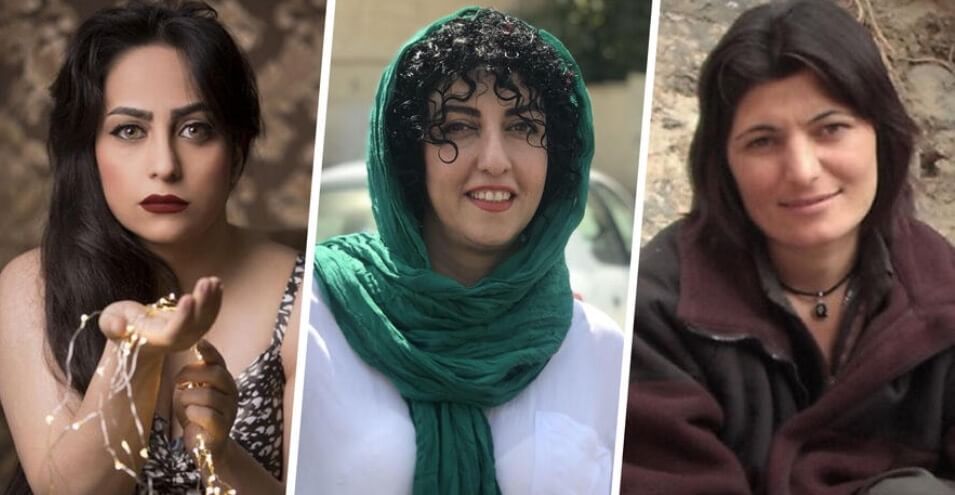
Amnesty International called on the Islamic Republic of Iran to immediately provide necessary medical services to political prisoner Zeinab Jalalian, human rights activist Narges Mohammadi, and imprisoned lawyer Soheila Hijab.
On Thursday, July 9, Amnesty International responded to reports published about these prisoners being denied medical care for the coronavirus by writing on the human rights organization's Twitter account: "Amnesty International calls on the Iranian authorities to immediately provide them with the necessary medical care."
This human rights organization also reacted to the transfer of Zeinab Jalalian, a Kurdish political prisoner, from Rey City Prison (Qarchak) to an unknown location two weeks ago, calling it an "enforced disappearance" and calling on the authorities of the Islamic Republic to immediately announce her fate and whereabouts and to allow her to contact her family and lawyer.
Previously, Taghi Rahmani, Narges Mohammadi's husband, also announced on Twitter on Tuesday, July 8, that the journalist and human rights defender, who was violently transferred from Evin Prison to Zanjan Prison after a sit-in with 7 other female prisoners protesting the November massacre, along with 6 other prisoners, is experiencing extreme lethargy, severe body pain, and loss of sense of smell.
According to Mr. Rahmani, the condition of Ms. Mohammadi, who is in prison without medication or treatment, has been steadily deteriorating since July 2. Despite the family's efforts to get the authorities to agree to send the imprisoned journalist on leave, they have only been told that they will take a coronavirus test.
Earlier, Voice of America announced on Monday, July 6, that Soheila Hijab, a lawyer who was sentenced to a total of 18 years in prison in March last year on charges such as "propaganda against the regime," "forming a group in support of women's rights," and "requesting a referendum and changing the constitution," has contracted the coronavirus in Qarchak Prison in Varamin and continues to be held in quarantine in harsh conditions without medical attention.
In late June, Voice of America also reported, citing the Kurdistan Human Rights Network, that Ali Jalalian, the father of Zeinab Jalalian, a political prisoner sentenced to life imprisonment, announced that his daughter had been transferred to the prison's health center since June 4 due to severe shortness of breath, and after examination and testing, she was diagnosed with coronavirus; however, according to him, "prison officials are refusing to transfer her to the hospital on orders from the Ministry of Intelligence."
The release of some prisoners began on Wednesday, March 27, with the issuance of a new circular by the head of the judiciary, which ordered the release of only a limited group of prisoners sentenced to imprisonment under certain conditions. One of the provisions of that circular states that those political prisoners who have been sentenced to more than five years in prison on charges of “acting against national security” “are exempt from being sent on leave.” This is despite the fact that most political prisoners on such charges have sentences of more than five years.
As such, a large number of prisoners in various Iranian prisons, including political and ideological prisoners whose sentences have exceeded 5 years, are still being held in Iranian prisons. Despite the spread of the coronavirus in Iranian prisons and the infection of some prisoners with the coronavirus, they do not have the right to short-term leave or conditional release.
US Secretary of State Mike Pompeo said in a press conference on Wednesday, April 26: "We have asked not only Syria, but also the Islamic Republic of Iran to release not only American citizens, but all those who have been unjustly imprisoned in these circumstances. This is a humanitarian act, and apart from the fact that these people have been illegally imprisoned, in these circumstances the principle of humanitarianism dictates that they be released from prison."