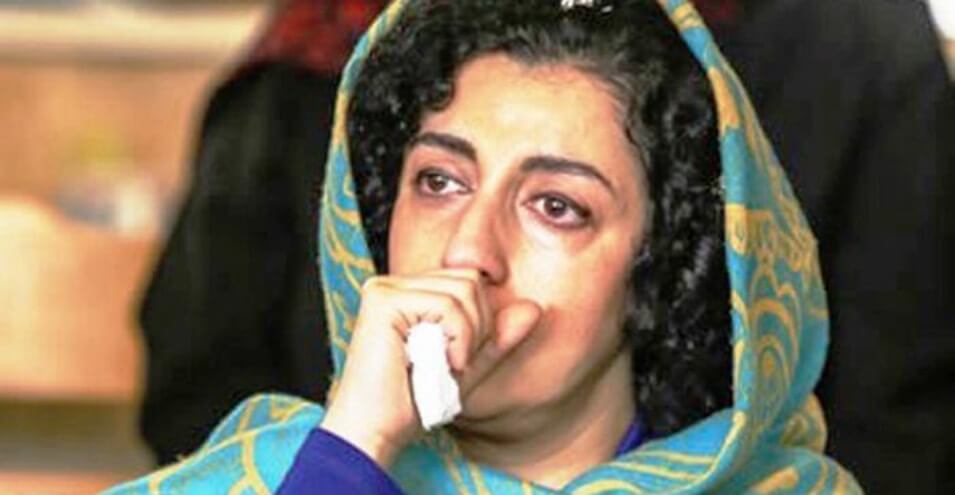
Faezeh Hashemi: We were informed that my father's body contained 10 times the permissible level of radioactive material.
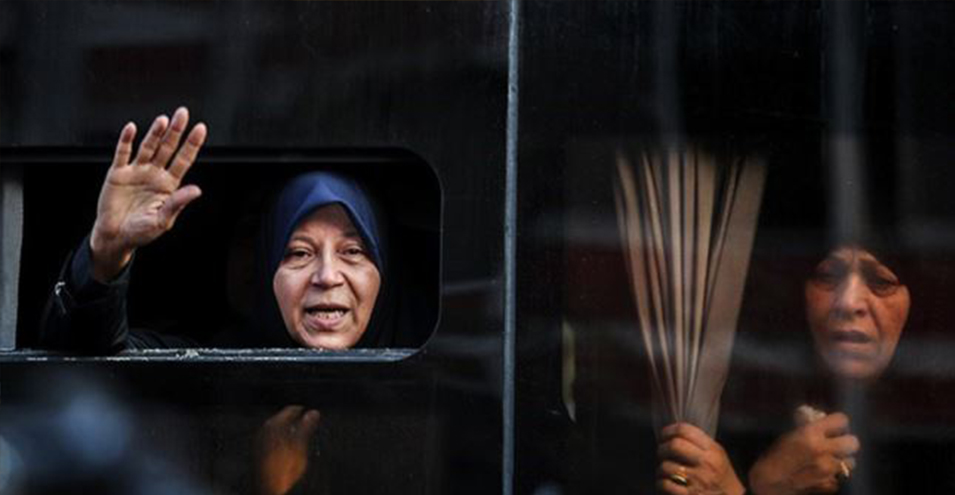
Faezeh Hashemi, the daughter of Akbar Hashemi Rafsanjani, announced that in a meeting attended by a number of members of the Supreme National Security Council, Mr. Hashemi's family was informed that her father's body contained "10 times the permitted level of radioactive material."
On Saturday, December 15, Ms. Hashemi announced in an interview with the Etemad Online website that it was said in this meeting that the body of Effat Marashi, Akbar Hashemi Rafsanjani's wife, contained "three times" the permissible level of radioactive material, and the body of Fatemeh Hashemi, his daughter, contained "one time" the permissible level of radioactive material.
According to Faezeh Hashemi, the Supreme National Security Council announced that it "has no knowledge of the origin of this radioactive material," but "this was not the reason for the death of the former head of the Expediency Discernment Council."
He also said that from the words of the Supreme National Security Council officials, "it seemed that the case was closed in their view."
Akbar Hashemi Rafsanjani's daughter did not announce which members of Iran's Supreme National Security Council were present at this meeting and when this meeting was held.
Faezeh Hashemi's words were made while experts in similar cases did not consider the presence of radioactive materials in the bodies of some people to be a definitive sign that they died for this reason.
For example, regarding the death of Yasser Arafat, head of the Palestinian Authority, Swiss doctors announced that their tests indicated the presence of polonium in Mr. Arafat's body, but they had no conclusive evidence to show that Mr. Arafat died due to this poisoning.
Officials from Iran's Supreme National Security Council have not yet responded to Ms. Hashemi's statements.
Meanwhile, Etemad Online quoted a medical biotechnology expert as saying that the presence of even a particle of radioactive material in the human body "is not normal," except for "those who are undergoing treatment with radioactive materials or have been exposed to radiation."
Ali Karami described the deaths of Yasser Arafat and Hugo Chavez as a result of radioactive poisoning, adding that "there is an element called polonium 210, which is considered a radioactive substance, and its presence in people's bodies is a sign of poisoning."
Mr. Karami, who is described in the report as "a full professor at Baqiyatollah University of Medical Sciences and a specialist in medical biotechnology," noted that "one of the properties of the element polonium-210 is that it remains in test samples for hundreds of years and its presence can be tracked."
Akbar Hashemi Rafsanjani, one of the founding figures of the Islamic Republic and one of Iran's senior officials over the past four decades, died on January 9, 2016, at Tajrish Hospital in Tehran.
His sudden death sparked many rumors about a possible assassination attempt on him. However, Mohammad Hashemi, Akbar Hashemi Rafsanjani's brother, said on February 10, 2016, that his brother was neither "assassinated" nor "suffocated," but rather that the cause of his death was "cardiac arrest."
Mohammad Hashemi, however, said in an interview with the Shahrvand newspaper on Saturday that "they announced the cause of death at the hospital as cardiac arrest, but no one announced the cause of the cardiac arrest. No one has yet announced what the cause of the cardiac arrest was."
Fatemeh Hashemi, the daughter of Akbar Hashemi Rafsanjani, has also said that “there were no heart problems or ailments in my father, and he was physically stronger than many of his children.” Akbar Hashemi Rafsanjani was 82 years old at the time of his death.
Fatemeh Hashemi also says that after her father's death, people went to his office at the Expediency Discernment Council and emptied the safe where he kept "important materials."
He also reported the loss of Mr. Hashemi's "second will."
Source: Radio Farda