France: EU plan to allow trade with Iran will have broader application
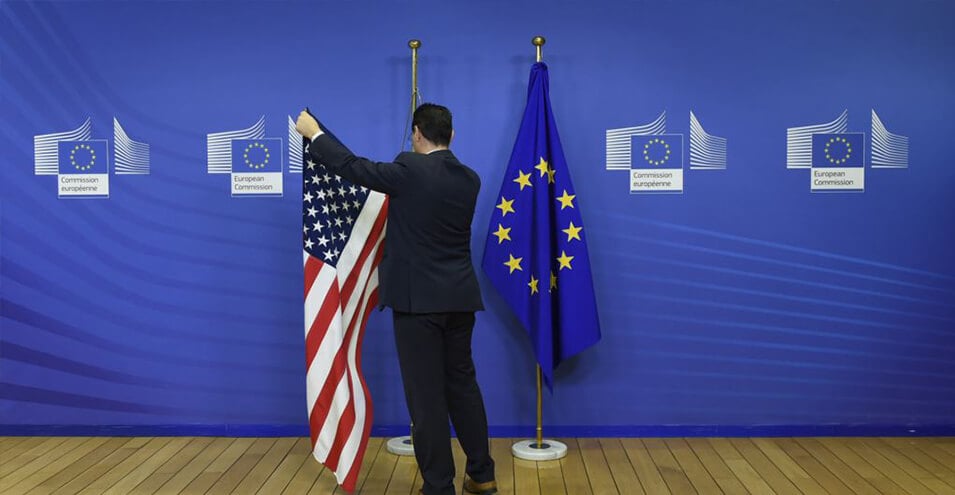
The French Foreign Ministry says that Europe's special plan to allow trade with Iran, which is under US sanctions, could also be used in other cases to keep the union immune from US laws.
Last month, Federica Mogherini, the European Union's foreign policy chief, announced that the union's new financial mechanism, known as the Special Purpose Vehicle (SPV), would be implemented from November so that the union could continue to have trade and financial relations with Tehran despite Washington's sanctions.
The main idea of this mechanism is that the European Union can neutralize the US action to punish banks that continue to help transfer Iranian oil revenues.
Until now, it seemed that this mechanism would be aimed solely at Iran, but the French Foreign Ministry said on Thursday, October 16, in response to Reuters that the mechanism's goal is not only Iran, but also encompasses a broader scope.
Agnes van der Mol, a spokeswoman for the French Foreign Ministry, stated: “According to European rules, the new financial mechanism should facilitate financial transfers for companies that still want to maintain their business relations with Iran.”
"Above all, the aim of this mechanism is to provide a tool for the financial autonomy of the European Union. It is therefore a long-term plan to protect European companies from illegal cross-border sanctions in the future," he added.
Reuters writes that many analysts and diplomats have expressed skepticism about the success of this mechanism because the United States could even target the SPV itself by changing its sanctions law.
Gordon Sondland, the US ambassador to the European Union, also said on Wednesday that the special mechanism of European countries to preserve the nuclear agreement with Iran will not be effective because international companies and business institutions will not cooperate with it.
Mr. Sondland said in an interview with Euronews that he does not agree with the European Union's approach towards Iran and its efforts to preserve the JCPOA.
Many financial institutions and large European companies, such as Peugeot-Citroen, Daimler, Boeing, Airbus, Eni, Maersk, and the oil company Total, have ended their activities in Iran due to fear of US sanctions.
US President Donald Trump, who on May 8 withdrew the United States from the six-power agreement with Iran over its nuclear program, threatened in July that European companies would be subject to sanctions if they did business with Iran, ignoring the country's sanctions.
Washington reimposed the first round of suspended sanctions on Tehran in mid-August of this year. The US has said that a second round of sanctions will be implemented from November 4th, with the aim of reducing Iran's oil exports to zero.
Source: Radio Farda