"Ghalibaf", from bloody repression of youth to de facto ruler of Iran in negotiations with America
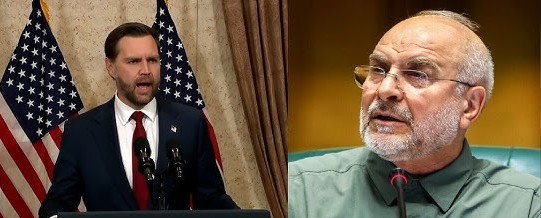
American officials announced an unprecedented negotiation with Qalibaf, who was involved in the bloody repression of youth, and described the negotiation as unprecedented.
In a significant development in the diplomatic atmosphere between Tehran and Washington, US Vice President J.D. Vance announced talks that he said were unprecedented in decades. His remarks come as debates over the true position of power in Iran’s political structure and the role of figures like Mohammad Baqer Ghalibaf have taken center stage.
In a press conference, Vance described Qalibaf as a key figure in the running of Iran, referring to his meeting with him. He said: "I met with Qalibaf, the person who is effectively running Iran. He sat down with the first vice president of the United States. This has never happened before."
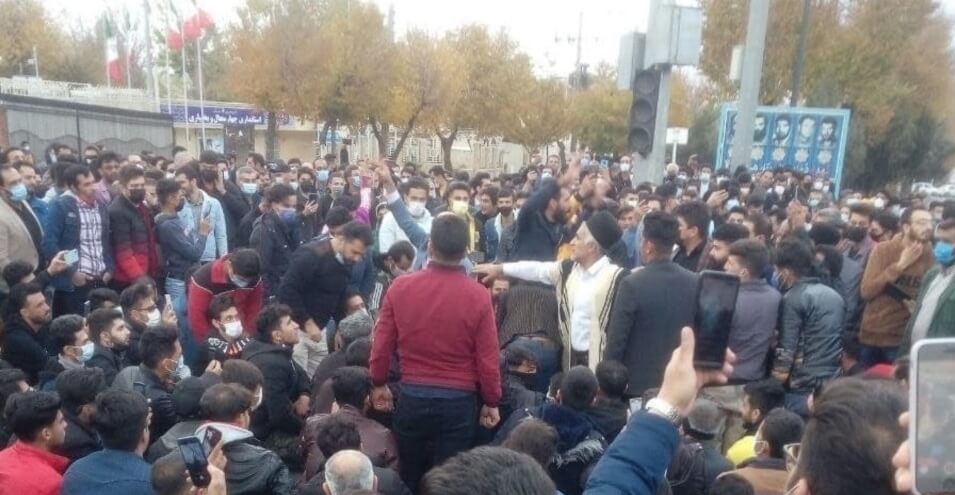
These statements are made in a situation where Qalibaf has been known as one of the influential figures in the power structure of the Islamic Republic in recent years, and his role in various periods (from commanding the police force to being present at high political levels) has always been a subject of debate. Domestic and international critics have repeatedly accused him of playing a role in suppressing protests and violent confrontations with protesters, especially youth.
During the meeting, the US Vice President also addressed the atmosphere of distrust between the two countries, emphasizing: “After 49 years, there is a lot of distrust between Iran and the United States.” He also added: “This issue is not going to be resolved overnight. I think those people were looking for an agreement.”
Vance reiterated this point, saying, "There is a lot of mistrust between Washington and Tehran, and it cannot be overcome overnight," while emphasizing that the process of talks would continue.
According to him, the US government is not seeking a limited agreement, but rather a broader goal: "Trump does not want a limited agreement with Iran, but rather a comprehensive agreement that will completely end the conflict."
He also referred to Washington's nuclear policy, saying: "Trump's policy is clear and unambiguous. We will never allow Iran to have a nuclear weapon." Along with this tough stance, Vance also spoke of economic proposals: "Trump offers to turn Iran into an economically prosperous country if it commits to ending its nuclear ambitions."
The US Vice President also added, referring to the overall process of negotiations: "We will continue to negotiate and I will continue to try to achieve a great deal with Iran because it will be beneficial for our country and for the world."
In conclusion, he once again emphasized the importance of these talks, saying: "Our meetings with Iran have been historic and unprecedented in the past 49 years. We know that there is a legacy of distrust with Tehran, but we are negotiating in good faith and at the behest of the president."
These statements come at a time when analysts, while examining the prospects of a possible agreement, are also paying special attention to the role of figures who have practical power inside Iran, an issue that could be influential in determining the future course of relations between Tehran and Washington.