Iran condemned for human rights violations at the UN
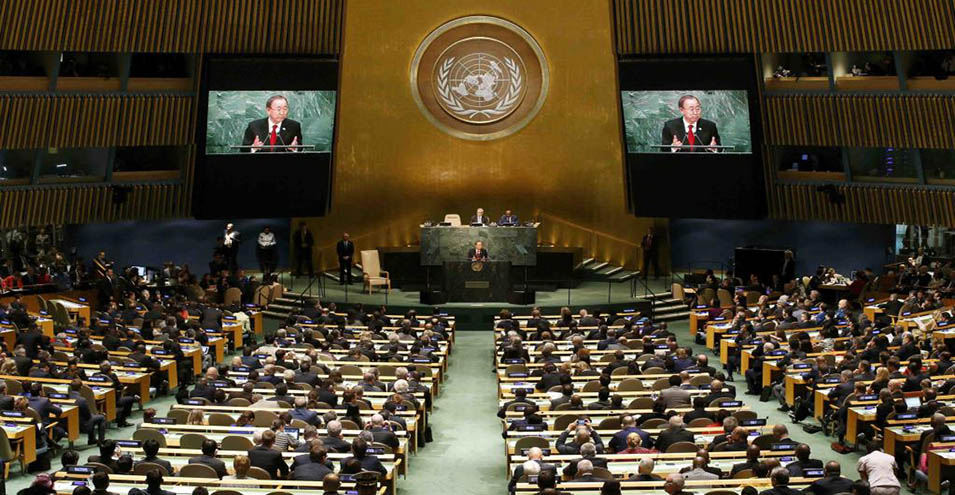
The UN General Assembly has condemned Iran and North Korea for human rights violations in two separate resolutions. The resolution against Iran strongly criticized the repression of political activists and journalists.
The United Nations General Assembly condemned Iran and North Korea for human rights violations. The proposed resolution against Iran was put to a vote by 193 representatives from around the world on Thursday (December 17), with 81 countries approving it. 37 countries voted against the resolution and 76 countries abstained.
The resolution against Iran was drafted by Canada and submitted to the UN General Assembly. The resolution strongly criticized the repression of political activists and journalists. The resolution called the increase in the death penalty in Iran one of the “worrying” issues.
Read more: Protest against the arrest of journalists by IRGC intelligence
The resolution, on the other hand, welcomed the efforts of Iranian President Hassan Rouhani on "important human rights issues, including eliminating discrimination against women and ethnic minorities."
Iran's representative to the United Nations General Assembly criticized the resolution, calling it "unfair" and influenced by "political motives."
Iran has the world's second-highest number of executions after China. According to Ahmad Shaheed, the UN Special Rapporteur on human rights, 753 people were executed in Iran in 2014, at least 13 of whom were under the age of 18 when they committed the crime.
Although most executions in Iran in recent years have been related to drug trafficking (69 percent of executions in the first six months of 2015), according to some officials in the Islamic Republic, the death penalty has not had much of an impact on reducing crime.
At least 830 people were executed in Iran between January 1 and November 1, 2015. Thousands are currently on death row. Human Rights Watch also says that increasing the number of executions of drug offenders will not solve Iran's drug problem.
Read more: "Iran should work to eliminate the death penalty for drug crimes"
A number of members of the Islamic Consultative Assembly have recently signed a bill that would remove the death penalty from many drug-related offenses. The bill has been signed by 70 members of the Assembly.
Russia, China, Syria, Iraq, and Sudan were among the countries that voted against the resolution condemning human rights violations in Iran.
Although the provisions of this resolution are not binding, according to political observers, the adoption of this resolution reflects the international community's determination to continue defending human rights in Iran after reaching a nuclear agreement between the P5+1 group and the Islamic Republic.
North Korea is another human rights violator
The United Nations General Assembly also condemned North Korea for human rights violations. 119 countries voted in favor of the resolution against North Korea, a significant increase from last year. 19 countries voted against and 48 abstained.
The resolution against North Korea was drafted by the European Union and Japan and submitted to the UN General Assembly. The resolution criticized the North Korean government for its “systematic and persistent violations of human rights.”
Read more: North Korean leader Kim Jong-un to receive peace prize
The resolution calls on the Security Council to establish an international tribunal to investigate human rights abuses in North Korea. But diplomats in New York say the request is likely to face opposition from China, one of the five permanent members of the Security Council and a veto-wielding ally that can block any binding resolution against North Korea.
Iran, China, Syria, Cuba, and Sudan were among the countries that voted against the resolution against North Korea.