Merkel says Europe can no longer rely entirely on the US and Britain
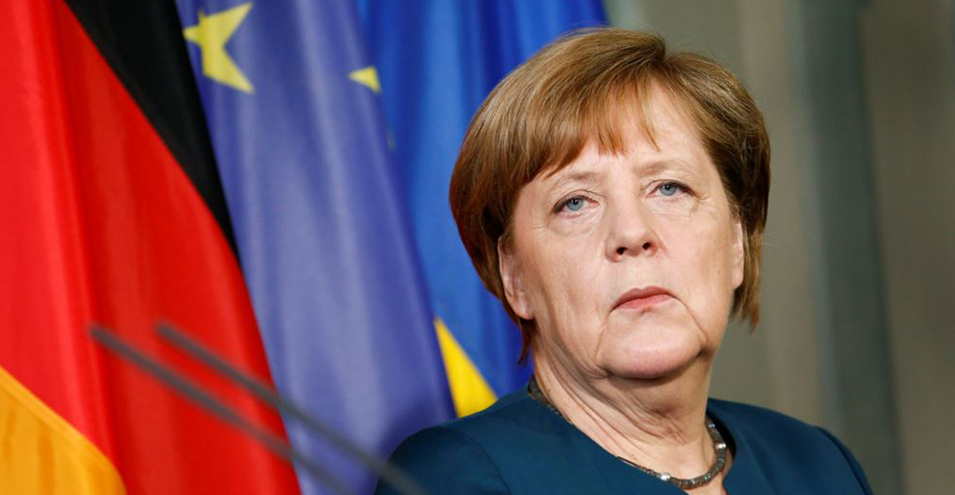
German Chancellor Angela Merkel says that with Britain leaving the European Union and the election of Donald Trump in the United States, Europe can no longer be "completely dependent" on the two countries and must take its "destiny" into its own hands.
On June 27, during an election campaign in Germany, Ms. Merkel said that maintaining friendly relations with European allies, Britain and the United States, is important, but that the continent can no longer fully count on them: "The time when we could rely entirely on others is coming to an end. I have come to this conclusion in recent days."
"We Europeans must truly take our own destiny into our own hands," he added.
Angela Merkel's words were met with a minute's applause from those present during her speech.
US President Donald Trump has just returned to Washington from his trip, which began in Saudi Arabia and ended with meetings with European and Group of Seven leaders in Belgium and Italy.
Upon his return, Mr. Trump described his trip as a "complete success" and said he had experienced a "historic week."
However, some analysts say that relations between Europe and the United States are currently undergoing a transformation. Stefan Birling, an expert on European-American relations at the German University of Regensburg, told the Washington Post, “After the inauguration [of the new US president], everyone in Europe hoped that Trump would take a moderate stance and care about the position of the G7 and NATO. But the exact opposite has happened.”
Merkel's remarks on Sunday come after the leaders of the world's seven largest economies failed to reach a full agreement on implementing the Paris climate change agreement during a meeting in Italy, while they have also been divided over economic trade and the refugee issue.
In the United States, Mr. Trump emphasized that the G7 meeting was “incredibly productive” and that he had succeeded in strengthening US relations. The final statement of the meeting emphasized the consensus of the G7 leaders on two issues: “the global economy” and “continuation of sanctions against Russia.” The leaders of the world’s seven major economies added that the parties could not reach a common ground on the issue of “climate change.”
During Mr. Trump's meeting with European Union leaders, the US president criticized Germany for failing to meet NATO's goal on military spending and payments. The US president also reportedly criticized the state of German car exports.
But in Germany, political rivals appear to be in little disagreement about Europe's approach in the wake of the US election. Martin Schulz, leader of the Social Democrats, Merkel's main rivals in the country's upcoming election, told ARD that Europe needed to be more united and cohesive: "Stronger cooperation between European countries, at all levels, would be a response to Donald Trump."
Germany's general elections will be held in September.
Source: Radio Farda