Nahid Taghavi, Iranian-German prisoner, bargaining tool of the Iranian government

Taghavi was arrested in Tehran eight weeks ago, and it is still unclear on what charges. Germany's efforts to clarify his status have been unsuccessful. It appears that the Islamic Republic is using him, like other dual nationals in prison, as a bargaining chip.
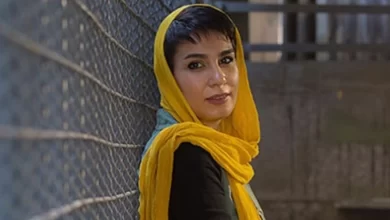
Nahid Taghavi, 66, is a dual Iranian-German prisoner who was arrested on October 15. Her daughter, Maryam Klaren, referred to this date in an interview with a reporter for German television channel ARD in Turkey, saying: “I feel like I’ve been living in a bubble up until now. I’ve never had anything to do with human rights violations or political prisoners before. But that bubble burst that day.”
The ARD correspondent in Istanbul writes about the anger and frustration of Nahid Taghavi's 40-year-old daughter, who is deeply worried about her mother and whose calls to Iran have gone unanswered. Maryam Klaren says she does not know why the Islamic Republic has imprisoned her mother. Not only her, but apparently the German government has not yet received any information from the Iranian government about Nahid Taghavi's accusation.
When Nahid Taghavi is arrested, no one knows about her arrest for several days. Her daughter calls her repeatedly, but no one picks up the phone. She asks her uncle to visit her sister’s apartment in Tehran and see what has happened to her. There is no sign of her sister in the apartment, and all the belongings inside have been ransacked. Neighbors tell Maryam Klaren’s uncle that her sister has been taken away by security forces.
"He is already dead."
Maryam Klarne imagined all sorts of horrific scenarios in the 12 days she didn't know about her mother. "It was really catastrophic," she says. "As a girl, you have a thousand thoughts and fantasies. You think it's all over and she's dead."
After this time, Maryam Klaren’s uncle’s phone finally rings in Tehran. An Evin Prison officer is on the line and says that Nahid Taghavi is there and they can have a short phone conversation. The conversation lasts less than a minute; just long enough for Nahid Taghavi to say that she doesn’t know why she’s been arrested.
Two months have passed since that phone call, and Ms. Taghavi has still not been charged. Her daughter says that under Iranian law, charges must be filed in writing within eight weeks, but their lawyer has yet to receive any information from Iranian authorities. She herself has not been able to speak to her mother even once. Her uncle in Tehran has been told that contact with outside Iran is not allowed.
Ms. Taghavi is 66 years old and, according to the International Human Rights Council, has been an activist for women's rights and freedom of expression. She came to Germany in 1983 and has been granted German citizenship in addition to Iranian citizenship since 2003. Taghavi has been traveling between Iran and Germany for the past 15 years.
Dual nationals are both bargaining tools and victims of the power struggle in Iran.
Why was Nahid Taghavi arrested? According to a reporter for German Channel One, one can only speculate. Nahid Taghavi is a retired architect who has traveled between Germany and Iran for years with two passports without any problems. Her daughter says that her mother never made a political statement in public. Does this change her situation?
Borzo Daraghi, an expert on Iran issues at the Atlantic Council, an American think tank, says that this is not a criterion for the Iranian government, but rather that Iranian hardliners who have the upper hand in the government and judiciary use dual-national citizens as bargaining chips, negotiations, or prisoner exchanges.
Deraghi told a reporter for German Channel One that in many cases charges are fabricated after arrest. They “put the person in solitary confinement. They wake him up in the middle of the night, they interrogate him for 14 hours. Then they might let him sleep for an hour and start the interrogation again. Sometimes they leave the light on in the cell 24 hours a day.” Deraghi says that under constant pressure, the prisoner finally agrees to sign whatever is put in front of him.
He also points to the power struggle in Iran, which many have been and are becoming victims of, saying: "There is currently a power struggle between the hardliners who control the judiciary and the moderate, conservative Rouhani government in Iran. Many observers believe that the hardliners believe that the government's efforts to get closer to the West must be thwarted. This is a prelude to the Iranian presidential elections next summer."
According to Borzo, the extremists' efforts are focused on "preventing the current government from succeeding in reviving the nuclear deal before the elections."
Lack of consular access to Nahid Taghavi's case or meeting with her
The German Foreign Ministry first warned dual nationals not to travel to Iran in mid-November. In response to a question from German television Channel 1, the Foreign Ministry wrote that the increased pressure on dual nationals does not only apply to Iranian-Germans, but also to dual nationals of Sweden, France, and Britain.
The arrest of Nahid Taghavi probably played a significant role in the German Foreign Ministry's warning. The German Foreign Ministry has confirmed that it has repeatedly raised the issue of Nahid Taghavi's arrest with Iran. In recent days, during Germany's protest against the execution of Ruhollah Zam, Germany has called for the release of all political prisoners. A protest that prompted the summoning of the German ambassador to Iran.
Maryam Klaren says that although she is very happy with the German government's stance, she wishes that Germany would clearly demand her mother's release and name her. The German embassy in Tehran has not yet been able to gain consular access to Nahid Taghavi and her case, but the German government has said that it will continue its efforts.
However, it is now said that German embassy staff have been able to deliver Nahid Taghavi's blood pressure medication to her in prison, which has eased her daughter's worries and fears. Last week, she took part in a protest in Frankfurt on Human Rights Day, and in a speech in front of the Iranian consulate called for her mother's immediate release.
"Even if this speech didn't help, at least I was able to shout out my anger, and that felt good," Ms. Taghvi's daughter told the ARD reporter.
Source: DW