Doctors Without Borders: The situation for asylum seekers on Nauru is extremely bad
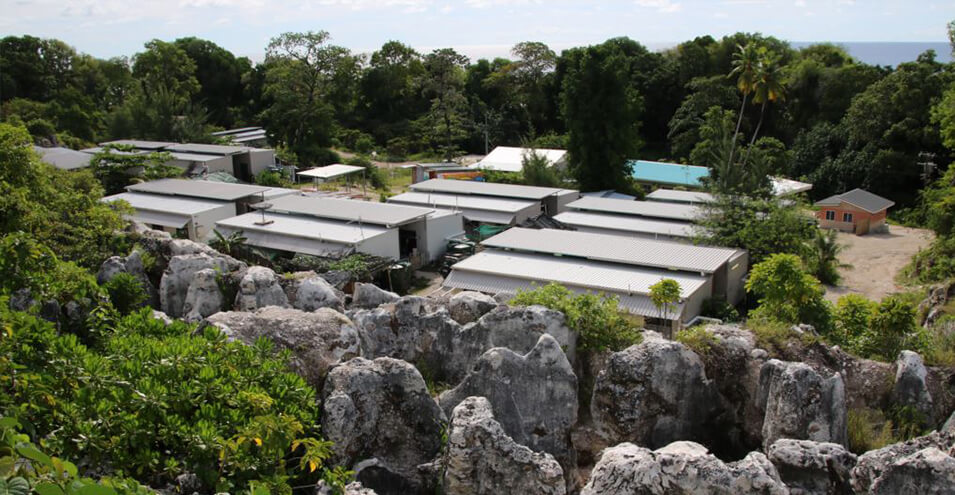
As concerns and alarming reports grow about the conditions of asylum seekers sent by Australia to camps in Nauru and Papua New Guinea, Doctors Without Borders says the mental health of many on Nauru is "extraordinarily poor" and "inhumane".
In a report called "Endless Despair" by Doctors Without Borders and published on Monday, December 3, it was stated that 60 percent of those treated by doctors in Nauru "are thinking about suicide" and 30 percent of them have attempted suicide.
Doctors Without Borders says that among those who have attempted suicide, there are children as young as 9 years old.
According to the non-governmental charity, doctors and aid workers in Nauru's detention centers have witnessed some of the worst humanitarian conditions in the world, "even taking into account the assistance the organization provides to victims of torture."
However, the Nauruan government has forced the organization to leave the island; according to the organization, the aid workers provided assistance to Nauruan citizens and asylum seekers sent by Australia to detention centers on the island from November 2017 to October 2018.
Doctors Without Borders says the Nauruan government abruptly announced on October 5 that "you are no longer needed" and forced the aid workers to leave the island within 24 hours.
The organization says doctors and paramedics have been forced to abandon "hundreds of patients who needed urgent help."
The expulsion of aid workers from Nauru comes after the organization called on the Australian government in October to immediately remove asylum seekers, especially children, from Nauru.
The recent warning from Doctors Without Borders about the conditions of asylum seekers sent by Australia to the Pacific Islands is not the first of its kind, but rather the latest in a series of reports from activists and watchdogs who have all expressed concern about the conditions of families, children and others in detention.
In October, the United Nations called on the Australian government to immediately evacuate and close the country's asylum detention centers on islands far from Australia.
Shortly afterwards, the Australian Medical Association warned about the situation of children in the refugee camp on Nauru, saying it was a "miracle" that none of them had yet died.
In November, Amnesty International called on Australian politicians to take immediate action to transfer 1,287 men, women, and children held in camps in Nauru and Papua.
However, none of these warnings seem to have had much impact on Australian government policy. Australian Prime Minister Scott Morrison insisted late in the summer that he would “not take any action that would jeopardise Australia’s border security policy.” This meant that the Australian government was unwilling to change its policy of not accepting any boat people on its soil and would continue to keep them outside its borders.
According to statistics from the Australian Refugee Council as of last summer, the total number of refugees in both Nauru and Papua was estimated at 1,655. A total of 3,127 people were said to have been sent to these two countries under the Australia-Nauru and Papua agreements, many of whom were Iranians; of these, at least 855 have left the islands “voluntarily,” with the majority returning to their homelands.
Source: Radio Farda