Washington's clear message to Tehran about the fall of the ayatollahs and the change in the global security equation
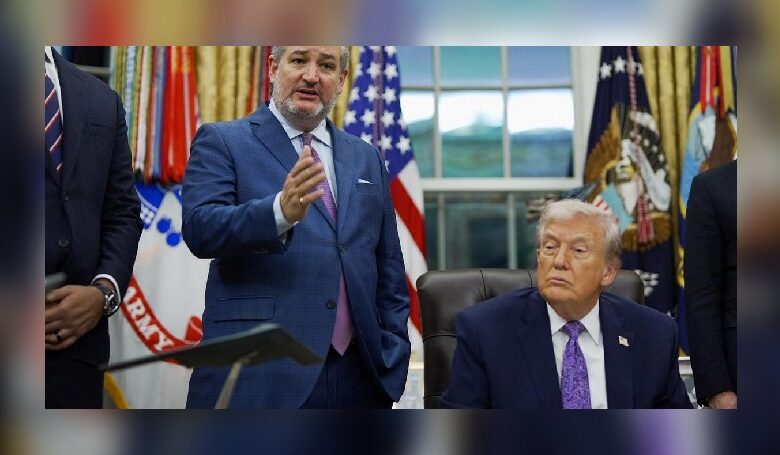
Following widespread protests in Iran, Washington issued a clear message about the fall of the ayatollahs and the changing global security equations.
Following the increasing reactions of American officials to the nationwide uprising of Iranians, Republican Senator Ted Cruz of Texas took a harsh and unprecedented stance by posting a message on the social network X; a stance that indicates a change in tone among a significant portion of American politicians regarding developments in Iran.
Ted Cruz wrote in the message: “If the people of Iran overthrow the Ayatollah, America and the entire world will be safer.” He then added, in a sarcastic tone and addressing the leaders of the Islamic Republic: “May the crowd chanting ‘Death to America’ meet their 72nd Houris tonight.” He ended the sentence with several “praying hands” emojis.
Cruz's comments came just hours after a new wave of public support for the Iranian protests from U.S. officials. In recent days, a number of U.S. senators and political figures have taken to social media to condemn the crackdown on protesters and the internet shutdown in Iran, and to emphasize the Iranian people's right to political change.
Hours before Ted Cruz's message, US President Donald Trump once again reacted to developments in Iran on the social network Trudeau Social, writing: "Iran is moving closer to freedom; perhaps in an unprecedented way. The United States stands ready to help."
These positions are being raised at a time when Iran has simultaneously witnessed widespread popular protests, severe repression by government forces, and a nationwide internet shutdown; conditions that have attracted the attention of global public opinion and increased political pressure on Tehran.
Continuing his stance, Donald Trump has warned in several television interviews and in his statements on the presidential plane that if the Islamic Republic again resorted to killing protesters, it would face a harsh response from the United States.
He had previously posted a video of the Iranian protests and wrote: "More than a million people participated in the demonstrations. Iran's second largest city fell into the hands of protesters, government forces retreated."
Trump also said in a speech on Friday, January 9: "The Islamic Republic of Iran is in big trouble. I think people are taking over cities that no one thought was possible until just a few weeks ago."
Emphasizing Washington's close monitoring of developments in Iran, he added: "We are monitoring the situation closely. I have stated firmly that if they start killing people like they have in the past, we will take action. We will hit hard where it hurts. And that does not mean having military forces on the ground, but it means hitting very, very hard where it hurts."
Trump also referred to past US policies and said, "So we don't want this to happen. There have been situations like this where President Obama has completely backed down."
He went on to describe the current situation in Iran as "absolutely unbelievable," adding: "This is something absolutely unbelievable that is happening in Iran. It's amazing to watch. They (the Islamic Republic) have done a bad thing. They have treated their people very badly and now the people are retaliating. So let's see what happens. We are watching it. We are watching it very closely."
The US president concluded with a warning yet emotional tone: "I just hope! You know! I just hope God keeps them safe. I just hope the protesters in Iran are safe, because Iran is a very dangerous place right now. I say again to the leaders of the Islamic Republic of Iran, you better not shoot, because we're going to start shooting too."
The sum of these statements shows that the nationwide uprising of Iranians is no longer considered just a domestic crisis, but has become an issue with direct security and political consequences at the international level; a development that could fundamentally transform Iran's future equations and its relations with the world.