Why does the Pope consider the Internet to be divine love, while the Holy Spirit is a source of corruption?
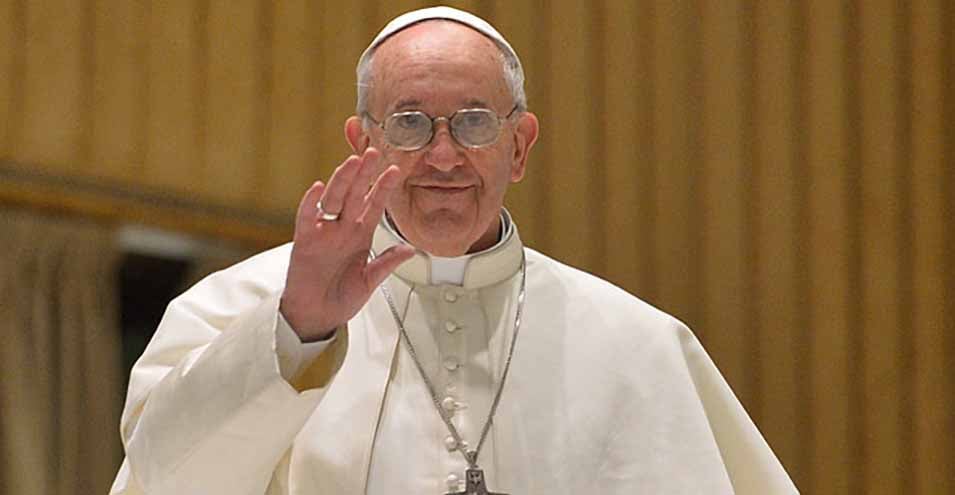
While the leader of the world's Catholics, on the occasion of Communications Day, refers to the Internet as a divine gift, a Shiite cleric living in Qom considers it the source of all corruption and evil. Where does this degree of difference in perspective come from?
According to the Persian-language Christian News Network, citing news agencies, the leader of the world's Catholics on World Communications Day, referring to the positive and negative aspects of the Internet, said that its benefits far outweigh its disadvantages.
Pope Francis, the leader of the world's Catholics, called the internet a "divine gift" in a statement released by the Vatican on World Communications Day. The pope said the internet "provides infinite possibilities for encounter, communication and solidarity" and that this is "a really good thing."
The world's Catholic leader, referring to growing inequalities around the world, said the media "can create a sense of unity in the human family, which in turn can inspire solidarity and a serious effort to guarantee a dignified life for all."
Pointing to the negative aspects of wider communications, Pope Francis said the speed of communication “exceeds our capacity for reflection and judgment.” He added that by offering a wide range of ideas, electronic forms of communication “also enable people to enclose themselves behind sources of information that only confirm their own ideals and beliefs or political and economic interests.”
Of course, the Pope also pointed to the negative impact of digital communication: "It can distance us from our neighbors and those closest to us." The world's Catholic leader said that the Internet has its drawbacks, but these disadvantages "do not justify rejecting social media; on the contrary, they remind us that communication is ultimately a human achievement, not a technological one."
We need to “recover a sense of reflection and peace,” he added, and that requires “time and the ability to be silent and listen.” In a statement released today, the pope told his followers that “participating in dialogue does not mean rejecting our opinions and traditions.” Pope Francis said the internet and social media provided an opportunity for such dialogue. “The digital world can be a space full of humanity — a network made not of wires and cables, but of people,” he said.
"Makaram" and corruption and sin
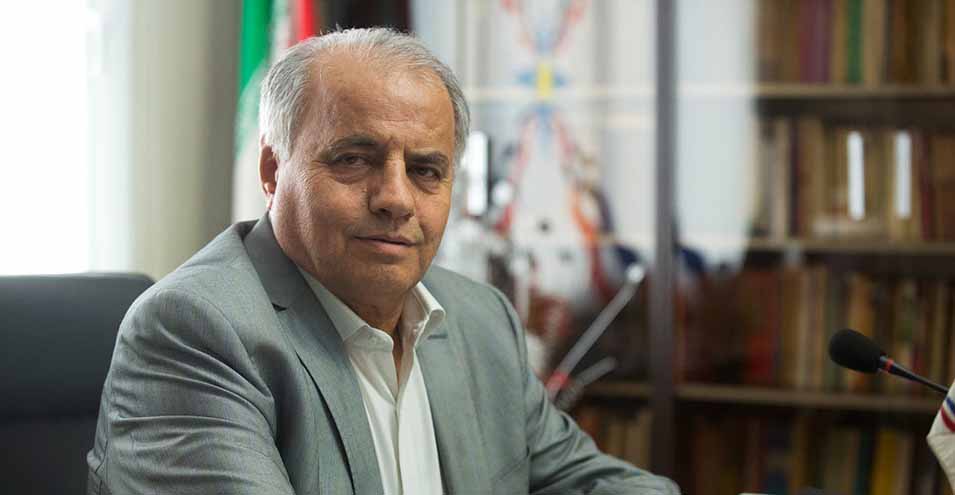
On the other hand, Makarem Shirazi, a religious leader in Qom, recently said, “All the corruption in the world is flowing into people’s homes through satellites, the Internet, and mobile phones.” He had previously called for the shutdown of mobile phone video communication services in Iran, saying, “The corruption of this certainly outweighs its benefits.”
According to the Islamic Republic News Agency, this source close to the conservatives said on Thursday: "Lest some make excuses that a different atmosphere has been established and that red lines can be crossed."
Although Pope Francis and Makarem Shirazi differ greatly in their religious affiliation and number of followers, both are considered traditional religious leaders. But why do these two conservative religious leaders have such different views on digital media, and especially the Internet?
It can be said that this difference from earth to heaven is mostly due to the difference in the views of Christianity and Islam about man and the nature or philosophy of creation. According to the teachings of Christianity, man is a being who is created free and has the power to choose between good and evil. The responsibility for this choice is also his own. However, according to the teachings of Islam, the philosophy of man's creation is obedience and following the Sharia, and any violation of it leads to punishment and punishment.
For this reason, Christianity sees the problem of sinning not in the tools and artifacts but in the nature of man. However, Islam believes that it is these tools and artifacts that cause sin and that they should be kept away from man's reach so that he does not commit sin.