Budget embezzlement report reveals corruption in state currency allocation and astronomical salaries of Iranian government managers
The 2018 budget disbursement report indicates that astronomical salaries were paid to more than 240 managers and that some individuals received government currency without importing essential goods.
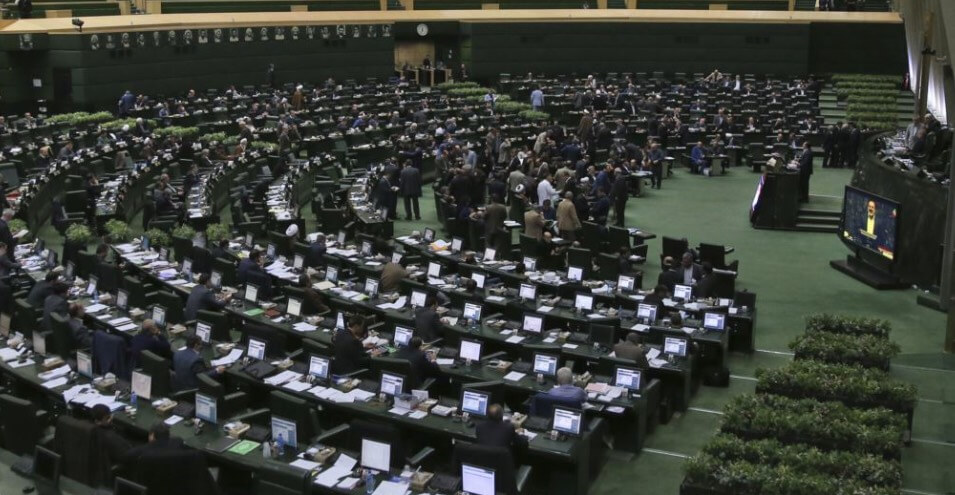
On Tuesday, April 16, in a public session of the Parliament, Adel Azar, the head of the Court of Accounts, announced while reading the Court's report on how the 2018 budget was spent that this year, 241 executives of executive agencies received salaries higher than the amount specified in the Civil Service Law.
Stating that the highest salary received by one of the managers was more than 53 million Tomans per month, he said that these managers received a total of more than 11 billion and 350 million Tomans in additional payments. According to the Civil Service Management Law, the net payment ceiling for managers is 23 million and 583 thousand Tomans.
Another part of the report refers to violations in the misuse of government currency. Mr. Azar said that in many cases, the recipient of the 4,200 tomans of currency that he received from the government to import essential goods either did not import it at all or allocated the currency to non-essential goods such as popsicle sticks, toys, cat food, and dental floss.
A large number of individuals and legal entities who received government currency worth more than $4.389 billion did not import any goods. For example, out of 385 individuals and legal entities who received $10 to $50 million in foreign currency, 212 individuals and legal entities did not import more than $1.237 billion.
Other government violations in the budget allocation report were related to the transfer of state-owned companies. According to Adel Azar, out of a total of 894 transfers of government shares, enterprises, and properties and assets worth 149 trillion tomans, 77 percent of the transfers were transferred to non-governmental public institutions instead of being transferred to the private sector in accordance with Article 44 of the Constitution. He also pointed to thousands of billions of dollars in violations and deviations in government auctions, including in pricing.
The Court of Accounts, which is affiliated with the Islamic Consultative Assembly, has exposed this part of the corruption in the Islamic Republic, while the members of the Assembly themselves are accused of widespread economic corruption. Various institutions occasionally expose each other's corruption in the midst of political competition within the Islamic Republic system.
Corruption in the Islamic Republic's government apparatus has been repeatedly mentioned by domestic critics as well as US government officials.
Not long ago, US Secretary of State Mike Pompeo said in several tweets about the Islamic Republic's officials that instead of helping the people, they were involved in corruption.
In recent years, economic corruption cases in Iran have increased, and a number of these cases involve government managers or relatives of prominent government figures.
Source: Voice of America