UNESCO: 264 million children are out of school
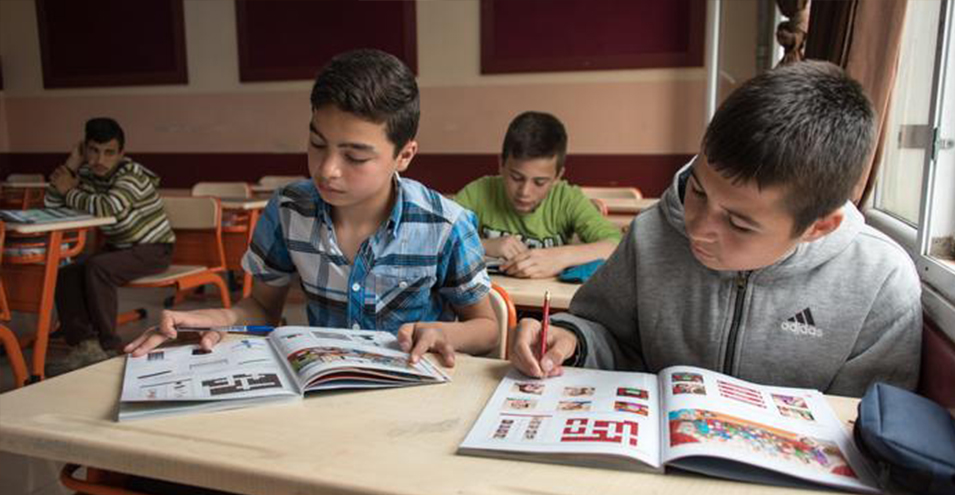
According to the latest UN report, more than a quarter of a billion children and adolescents are out of school for various reasons. In addition, many children who manage to enter school do not complete their education.
There are various reasons why children and adolescents are not attending school and continuing their education. In its latest report on the state of education in the world, the United Nations Educational, Scientific and Cultural Organization (UNESCO) has stated that the chaos in the education system of some countries, the absence of schools, and the forcing of children to work instead of studying are among the main reasons why children and adolescents are not attending school.
"Spiegel Online" wrote on Tuesday morning (October 24) citing a new UNESCO report that 264 million children and adolescents aged six to 17 are outside the education cycle in their countries.
According to the report, 17 percent of children who enter school worldwide do not complete primary school. This rate rises to 55 percent in secondary school. Children and adolescents in Niger, Burkina Faso, Burundi and South Sudan have the lowest chances of entering school and continuing their education.
UNESCO has released its latest report on the state of education in the world, urging countries to increase investment in their education systems. According to the organization, investment in education is on average less than five percent of countries' gross national product.
The United Nations Educational, Scientific and Cultural Organization estimates that an additional $39 billion in annual investment is needed to provide quality and equitable education systems worldwide. This investment gap reveals how far countries’ education systems fall short of UNESCO’s benchmarks.
Inequality and discrimination between girls and boys
One of the shortcomings highlighted by the UNESCO report is the gender gap in access to free education for children. In only 66 percent of countries do girls and boys have an equal chance of completing primary school. This situation is the case for secondary school in only a quarter of all countries in the world.
Gender inequality among the teaching profession is striking, even in a developed country like Japan. While 39 percent of primary school teachers in Japan are women, only 6 percent of schools are managed by women.
The new UNESCO report also highlights a familiar and long-standing problem: the inequality of opportunity between children from poor and affluent families in accessing education, especially for higher education. UNESCO says this inequality is “far greater” in countries such as Panama, Macedonia and Mongolia.
753 million illiterate people
According to "Spiegel Online," there are also bright and hopeful points among the results of the latest UNESCO surveys: Between 2000 and 2015, the number of adults who are unable to read and write decreased by four percent, and this rate among young people reached 27 percent.
However, 753 million people worldwide, or about one-tenth of the world's population, are still illiterate. Illiteracy rates vary significantly across countries, with less than 60 percent of the population in sub-Saharan Africa able to read and write.
UNESCO experts have emphasized in their report that since 2004, military attacks on schools have increased, especially in South and West Asia and North Africa, and in many of these regions, the existence of a quality education system is practically unthinkable.
Source: DW