80 percent of “collected street children” in Tehran are foreigners
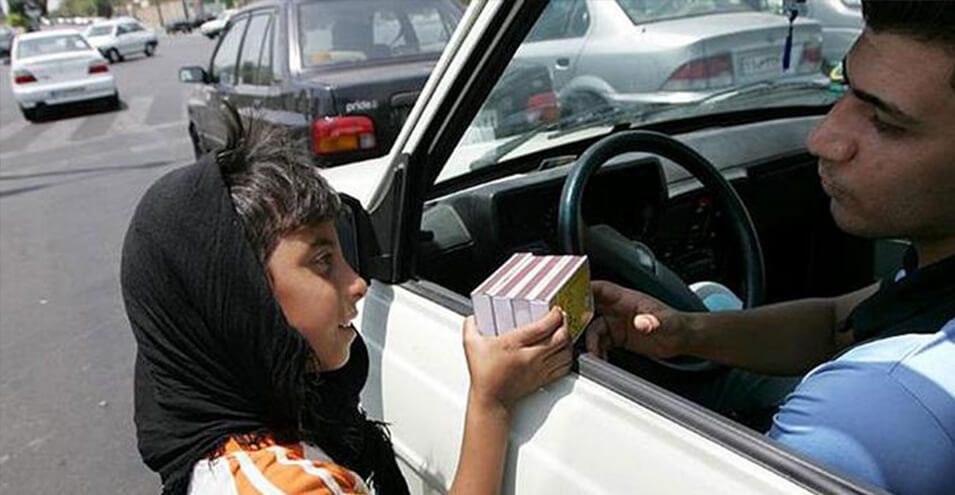
The “Collection of Street Children and Labor” project resumed in Tehran about 40 days ago. According to Iranian officials, 80 percent of these children are foreign and 50 percent are “completely illiterate.” Child rights advocates are calling for the project to be stopped.
The Iranian Interior Minister reported on the "inappropriate situation of street children and beggars collected" in Tehran, saying that 80 percent of them are citizens of other countries, especially Afghanistan.
According to the governor of Tehran, in line with the implementation of the "Collection of Street and Begging Children" project, 306 children have been "collected and organized" so far.
Abdolreza Rahmani Fazli stated today, Sunday, July 28, on the sidelines of the “National Social Council meeting on the topic of collecting and organizing child laborers,” “Reports show that street and beggar children live in inappropriate conditions and have been exploited.”
Rahmani Fazli stated that "a large portion of street and beggar children are citizens of other countries and must be supported," emphasizing: "Given that some of these children were citizens of Afghanistan, we have raised the issue with the embassy of this country."
Threat to return Afghan “street children”
Iran's interior minister threatened that Afghan street children would be returned to Afghanistan if it did not cooperate. "Most of the children collected are Afghan and illegal," he said. "If other institutions cooperate, we can take appropriate measures to organize street children, but if they do not cooperate, we will return these children."
Abdolreza Rahmani Fazli also announced the planned "clash" between the police and "gangs of child laborers and street children" and the cooperation of the judiciary in this regard.
According to ILNA, Tehran Governor Issa Farhadi also announced on the sidelines of today's meeting attended by the Minister of Interior that "one hundred percent" of the 306 street children collected were "beggars" and 80 percent of them were citizens of other countries.
While the majority of the collected street children are foreign nationals, the Director General of the Socially Vulnerable Affairs Office of the Welfare Organization, the institution in charge of the "Collection and Organization of Street and Beggar Children" project, announced last Tuesday that 53 percent of the total street children identified in Iran are foreign nationals.
In another part of his speech today, the Tehran governor also stated that 50 percent of the collected street children were “completely illiterate” and 20 percent of them were “parentless.” He added: “Unfortunately, among these children, there are also children who have diseases that need to be treated.”
“Only 18 percent of the children collected are Iranian”
Issa Farhadi also stated that the proportion of Iranian children among the street children collected was "18 percent."
Regarding street children with Iranian parents, Farhadi said that if these children "are collected for the first time in these projects, only a commitment is taken from the family and the child is handed over to them, but if it is repeated, this action is a crime."
According to the governor of Tehran, "if the child is a citizen of another country and his or her parents are legally present in Iran, a commitment must be made for the first time, and if it is repeated, action will be taken to expel them from the country."
Issa Farhadi added: "If a child is illegally present in Iran with his or her parents and is collected in this project, the child and his or her family will be expelled at the first opportunity."
Farhadi also called the "most important problem" "children without parents" and said: "According to the resolution of the country's Social Council and the minister's order, it was decided to hold a meeting with the embassies of the relevant countries regarding the organization of these children so that the necessary measures can be taken to reject these children, otherwise they will be kept in camps."
Protest by child rights advocates
The project called “Collecting Working and Street Children,” which was suspended in the fall of 2017, partly due to civil protests, was re-implemented in the Iranian capital about 40 days ago. This action, which was first carried out in August 2017 and within the framework of the “Collecting Beggars Project,” provoked a reaction from a number of child activists and members of the Tehran City Council, and was considered a confrontation with a “harmed and oppressed” group.
The deputy head of social affairs at the Iranian Welfare Organization had clearly stated that the goal of implementing this plan is to clear urban streets of these children: "The goal of the joint plan to organize Iranian and non-Iranian working and street children is to prevent them from being present on urban streets."
Less than two years ago, a number of experts and civil society organizations wrote in an open letter in protest against the “Plan to Collect Working and Street Children”: “Instead of collecting children and punishing families who use their children out of coercion and ignorance, the country’s financial resources and human capital should be spent on coherent short-term, medium-term, and long-term programs to improve livelihoods, access to employment, and improve the living conditions of vulnerable groups in society, and to ensure that their children have access to education and health.”
Source: DW