Advisor of Guidance Office in Khorasan Razavi Calls Sunni Mosque in Zahedan a “House of Corruption”
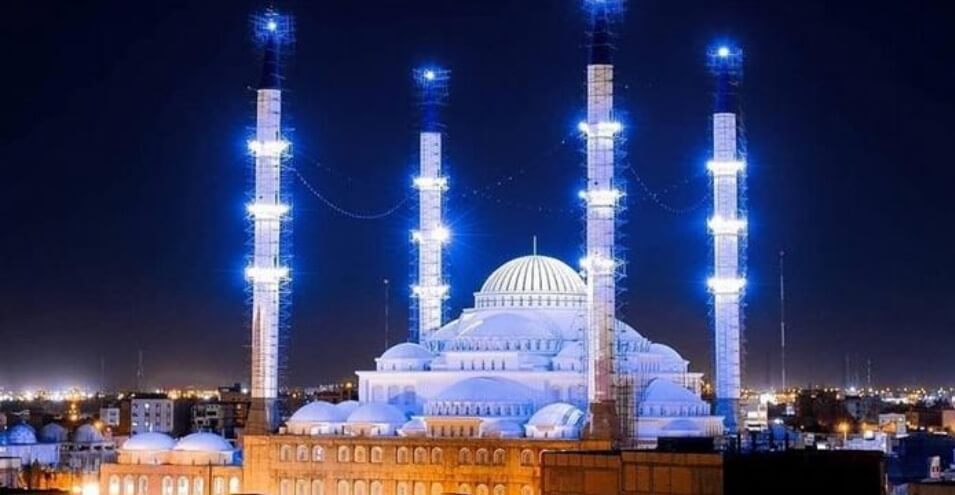
Mohammadbaghir Tabatabai, an advisor to the Guidance Office of Khorasan Razavi Province, called the Macki Mosque in Zahedan, Iran’s largest Sunni mosque, a “house of corruption” on his Twitter account and called for its demolition. After numerous protests, he deleted his tweet.
The inflammatory remarks made by the advisor to the Guidance Office of Khorasan Razavi sparked protests among Iran’s Sunni followers on the eve of Eid al-Fitr. Facing widespread objections and citing “national peace,” the Iranian official was forced to remove his post from his Twitter account.
Tabatabai wrote: “I posted a message on Twitter that was a mistake and caused distress to some of my compatriots. Out of respect for national peace and in honor of soldiers who guard the peace of the nation, I have deleted it.”
In a tweet that the advisor to the Department of Culture and Islamic Guidance of Khorasan Razavi deleted, the Macki congregational mosque in Zahedan, one of the largest Sunni mosques in Iran and the world, was called a “house of corruption.” He wrote: “This is one of the houses of corruption that should be demolished. The Macki Mosque.”
Tabatabai further commented in response to users’ reactions, also referring to the Macki Mosque’s architecture and explaining: “The form of their building is also borrowed from the usurpers of Anatolia!”
The Macki Mosque is one of the largest cultural and religious heritages, built in Zahedan, the capital of Sistan and Baluchestan Province, in 1353 (during the time of Mohammad Reza Shah Pahlavi), before the establishment of the Islamic Republic. The exterior facade of this mosque is reminiscent of Ottoman-era mosques in Turkey, while its interior resembles the Prophet’s Mosque in Medina.
The design of the mosque’s structure and its interior architecture are the achievements of Iranian artists. The Baloch people voluntarily and without receiving payment participated in the construction of this building, and state institutions played no role in its establishment.
The Difficult Situation of Sunnis in the Islamic Republic
Iranian Sunnis have faced considerable difficulties in establishing their mosques and religious centers since the establishment of the Islamic Republic.
In Tehran, the capital, over one million Sunnis reside, and Iranian Sunni leaders have repeatedly requested permission to build a mosque, but after more than four decades since the Islamic Republic came to power, “extrajudicial” institutions have not allowed its construction.
Beyond Tehran, in major cities such as Mashhad, where Sunnis live in the minority, some of their prayer rooms have been demolished.
A Tehran Sunni prayer room known as the “Pounak Prayer Room” was demolished several years ago by municipal forces, backed by law enforcement and security forces, without prior notice. This action faced severe criticism from Sunni religious scholars and the public.
Sunni scholars, including Maulavi Abdulhamid, the Sunni Friday Prayer Imam of Zahedan, protested the demolition of the Pounak Prayer Room by sending separate letters to the Supreme Leader and the President.
Continued Insults and Humiliation of Sunnis
Hassan Amini, a popular religious authority in Kurdistan who has repeatedly been present and spoken at the Macki Mosque, told Deutsche Welle in Persian that the Macki Mosque in Zahedan is the most important religious center for Sunnis, and Maulavi Abdulhamid is the most prominent Sunni figure in Iran.
Hassan Amini further emphasized that insulting remarks are not new, and those making such remarks remain unpunished.
Regarding the statements of the advisor to the Guidance Office of Khorasan Razavi, he said: “This person wants to create division among the Iranian people and sow discord between Shias and Sunnis. Such statements are not new, and similar insults have been raised in Iran in previous years. As a Sunni minority in Iran, we have been and continue to be subjected to all-around attacks, and we have become accustomed to these kinds of issues now.”
Source: DW