Theological Dispute at the Pentagon; Removal of ‘Christian’ Label from US Military Religion List Sparks Controversy
The recent decision by the U.S. Department of Defense to review the list of religious affiliations for military personnel has evolved into a debate that extends far beyond a simple administrative change. The Pentagon, which significantly reduced the number of religious codes used in the military as part of a reform program, suddenly found itself at the center of a dispute concerning religious identity, religious freedom, and the boundary between government administration and theological discourse. The strong reaction from Mormon politicians and the Department of Defense’s rapid retreat demonstrated that the issue of religious classification in America remains highly sensitive.
The matter began when the U.S. Department of Defense released a new list of religious affiliations for use in military personnel files. This list, which was prepared with the aim of simplifying a system consisting of more than 200 religious codes, retained only 31 categories. In the initial version, many denominations and different branches were classified under the heading “Christian,” but the Church of Jesus Christ of Latter-day Saints (LDS) or Mormons was listed without this label; an issue that quickly faced objections from leaders and politicians affiliated with the church.
One of the main critics of this decision was Mike Lee, a Republican senator from Utah, who described the move as “offensive” and “repugnant” and called on the Department of Defense to reverse its decision. He argued that the government should not arbitrate theological differences among different branches of Christianity or determine which groups qualify as “Christian” and which do not. He stated on this matter: “It is highly offensive that the U.S. Department of Defense considers virtually every religious group that believes in Jesus Christ to be Christian, yet excludes the Church of Jesus Christ of Latter-day Saints from this definition.”
He further added: “This decision is contrary to any sense of decency and violates the fundamental principle that government should not interfere in theological differences among religious denominations.”
Political and media pressure ultimately caused the Pentagon to revise its list within days. In the new version, instead of some groups being listed under the heading “Christian” and others being excluded, this heading was completely removed and all denominations were listed independently. The Department of Defense, in explaining this change, stated that the purpose of the review was solely to simplify the administrative structure and help military chaplains provide better services, not to judge the legitimacy or nature of any religious belief.
In a statement released from the Pentagon’s official account regarding its rapid response: “The Pentagon’s duty is not to arbitrate theological disputes, but to ensure that sincere religious beliefs among our forces are respected and strengthened.”
This stance was an attempt to end criticism that accused the government of entering into disputes over religious beliefs among different denominations.
However, this controversy was not limited to the Mormons issue. The reduction in the number of religious codes from over 200 to 31 categories also raised concerns among some smaller religious groups. Critics argue that removing the names of certain religions and religious orientations from the official list could affect the visibility of religious needs of minorities within the military structure, although the Pentagon has emphasized that military personnel can still register their religious beliefs in personal documents and identification tags.
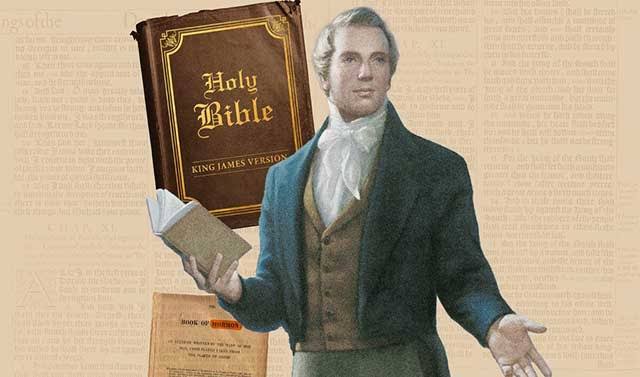
On a deeper level, this incident has once again revived one of America’s oldest religious debates: Are Mormons considered part of Christianity or a separate religious tradition? Members of the Church of Jesus Christ of Latter-day Saints consider themselves followers of Jesus Christ and part of the Christian tradition, but some Protestant and evangelical churches reject this view due to theological differences, including a different understanding of the concept of the Trinity. Experts believe the recent Pentagon controversy showed that this historical difference remains unresolved in American religious and political discourse.
Although the U.S. Department of Defense has attempted to portray this case as an administrative error and a correctable one, the widespread reactions to it demonstrate that even an apparently technical change in government structures can quickly transform into a debate over religious identity, religious freedom, and the government’s role in defining religious beliefs; a matter that will likely continue to be the subject of discussion in American political and religious circles in the months ahead.