“Fanoos”: A Restaurant for Religious Lifestyle or a Symbol of Dual Law Enforcement in Iran?
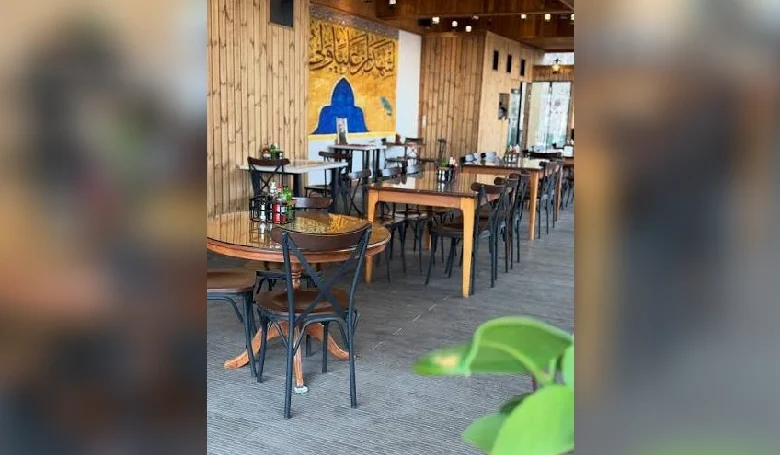
While dozens of cafes and restaurants across Iran have faced closure in recent weeks for allowing women without mandatory hijab or “failing to observe Islamic standards,” the advertisements for the religiously-themed cafe-restaurant “Fanoos” in Tehran have once again become a topic of discussion on social media; a venture that emphasizes a religious lifestyle, from discussing the ritual ablution of staff and the use of Karbala soil in food to the removal of certain common beverages from its menu.
The cafe-restaurant “Fanoos” in Niavaran, Tehran, has recently regained attention through the release of videos on social media; videos that showcase the distinct operational style of this establishment and present it as a special space for religious families. This very issue has intensified the question: Are laws enforced uniformly for all commercial businesses in Iran?
An examination of the history of this establishment shows that “Fanoos” has been operating under the same name and approach at least in recent years, and the subject had been discussed in the media even before this recent wave of user attention. In Farvardin 1403 (March-April 2024), Ali Hamdani published a report on the phenomenon of religious cafe-restaurants in Tehran and introduced “Fanoos” as one example of this trend. In that report, the management of the establishment explained the religious features of the restaurant.
Published information about this establishment identifies it as being located in Niavaran, at Yaser Junction, Yaser Street, and the Parisan Jamaran complex. The official channel attributed to Fanoos also identifies it as a “Fanoos Cafe-Restaurant” and a place for “religious families.”
However, what has captured the attention of social media users more than the restaurant’s religious nature are the specific details mentioned in its advertisements.
In one of the promotional videos released about Fanoos, it is stated that kitchen staff perform ritual ablution before starting work and cooking food, and a small amount of Karbala soil is used in the food. This matter has also been reflected in media reports, and published explanations about Fanoos show that these have been part of the establishment’s promotional identity.
In some published content about this restaurant, there has also been mention of serving Karbala water and other services with religious connotations; claims that should be understood as part of the establishment’s self-promotion and marketing, rather than facts independently verified by official institutions or experts.
However, a video that has recently gained attention highlights another aspect of this lifestyle approach. In this video, a woman introducing the establishment’s space sets aside canned soft drinks on the table, washes her hands, and then introduces a different beverage to the viewers, stating that such soft drinks are not used in this cafe.
Another section of “Fanoos” advertising that has received more attention on social media than other parts is the naming of beverages offered at the establishment. In one of the promotional videos, when discussing the available drinks at the cafe, a clear statement is heard: “We don’t have Americano here; we have Palestino.” This phrase has been repeated in re-shared videos from Fanoos, and has even become one of the main keywords associated with this cafe in user responses, with the equation “Americano = Palestino.”
This choice of naming is not merely a linguistic wordplay with the name of a coffee beverage; rather, it acquires explicit meaning in today’s political and social atmosphere in Iran. “Americano” here has become a symbol of America, while “Palestino” in opposition to it has become an identity explicitly linked to Palestine and the political discourse of the Islamic Republic. For this reason, this phrase has been perceived by many social media users not as advertising humor, but as a sign of the establishment’s political and ideological position.
This becomes even more sensitive when we consider that in recent years, the Islamic Republic’s support for Palestinian groups and the allocation of extensive political, military, and financial resources to what is called the “Resistance” axis has been a subject of serious contention in Iranian society. Some government critics and opponents have repeatedly raised the slogan “Not Gaza, not Lebanon, my life for Iran” in protest of the Islamic Republic’s foreign policy priorities. Therefore, the deliberate choice of the word “Palestino” against “Americano” could be interpreted by critics as a reflection of the same political priority.
In the meantime, it is noteworthy that this position is being presented as a commercial product in a public space. Fanoos restaurant presents itself as a religious establishment and emphasizes the religious values and lifestyle it advocates in its advertising. Therefore, the naming of beverages can also be understood within the framework of the establishment’s ideological identity; an identity that apparently seeks to demonstrate its boundaries with Western cultural and political symbols.
However, whether we should consider this act as “representative of the wishes of the Iranian people” or, conversely, as a sign of distancing itself from the wishes of a large segment of society, is a political and debatable matter. What is observable and documented is that a commercial establishment has used the phrase “We don’t have Americano here; we have Palestino” in its advertising, and this very phrase has become one of the main focal points of user reactions on social media.
From this point, the issue of duality in Iran’s public sphere is raised once more: Do citizens and businesses have the right to choose their products, names, and operational style based on their beliefs, or is this right only accepted when it aligns with the official ideology of the Islamic Republic? If one cafe can openly set aside “Americano” and present “Palestino” as a symbol of its identity, while another cafe faces the threat of closure because of the presence of female customers without headscarves, the question of equality in law enforcement becomes even more pressing.
In fact, the debate is not over a cup of coffee; it is about who in today’s Iran has the right to display their lifestyle, beliefs, and social choices in the public sphere and who faces restrictions and punishment for those very choices.
A look at Iran during the Muhammad Reza Shah Pahlavi period, particularly the years before the 1357 (1979) Revolution, shows that hijab was not a mandatory legal requirement for women in public spaces. Iranian women in public spaces wore very diverse clothing, from chadors and headscarves to unveiled outfits, suits, skirts, and trousers, and the choice of clothing, unlike the legal system of the Islamic Republic, was not transformed into a government mandate.
In Iran’s major cities, veiled and unveiled women existed alongside each other in universities, government offices, shops, restaurants, cinemas, and other public spaces. In other words, the Muhammad Reza Shah government did not impose mandatory hijab on society in the specific matter of public clothing choice.
This changed gradually after the 1357 (1979) Revolution. The Islamic Republic transformed hijab from a personal and religious choice into a legal obligation, and in subsequent decades, the scope of enforcement was not limited only to women; businesses that served women without mandatory hijab were also subjected to warnings, fines, closures, and seals. This was not an exception for men, and after 1979, men were also not permitted to wear certain clothes, particularly to use ties.
From this perspective, today’s debate over “Fanoos” cafe-restaurant is not limited to the choice of a beverage or the dress of a restaurant’s customers. The more fundamental issue is whether in a society where an establishment can openly advertise its religious lifestyle and even its political views in the form of a business, citizens with different lifestyles should also have the same right to choose their clothing, beverages, music, and manner of presence without government interference.
If lifestyle choice is considered a right for one group, it is logical that the same right is recognized for other groups. Otherwise, what is formed is not freedom of choice, but the application of a different standard to different groups in society; a standard that pressures one group for their choices and leaves another free in the public sphere due to alignment with the government’s official values.
Fanoos is not being presented merely as a place to eat; it is an establishment that, based on published information, has attempted to transform the restaurant space into part of a religious lifestyle. Sources describing this establishment have noted that female customers must enter with complete Islamic dress, and its space is even used for photography related to hijab and Islamic clothing products. Additionally, in published descriptions, the activity of staff with ritual ablution has been mentioned as a feature of this establishment.
In fact, the phenomenon of “religious cafe-restaurants” in Tehran had previously received attention. A report in 1403 (2024-2025) discussed the emergence of such spaces; places that attempt to provide an environment aligned with religious lifestyles for their customers, with special conditions even set for women’s dress and presence in them.
However, the main controversy over Fanoos takes shape when we place the operation of such establishments alongside the government’s recent actions against other cafes and restaurants.
In recent weeks, a new wave of cafe closures has been reported in Tehran and some other Iranian cities. Iran International reported in late Tir (July) that several cafes in central Tehran were closed, with some previously facing enforcement action for failing to enforce mandatory hijab. In this same report, cafe owners spoke of increased pressure from regulatory bodies and enforcement against businesses known to operate with different lifestyles.
Iran Wire also reported the closure of “Omarat Mohseni” in Behbahan; a historic complex that had been renovated into a hotel-restaurant and was, according to the report, shut down due to “optional hijab for some customers” and music broadcasting.
Beyond these, several cafe-restaurants on Sanati and Iranshahr streets in Tehran were sealed on 29 Tir (July 20), and multiple investigations showed that “failure to observe Islamic standards” was among the reasons for these enforcement actions.
These enforcement actions are not, of course, new. A radio report in 2025 also covered the experience of Tehran cafe owners who said officials would warn them about women without headscarves in the cafe, and in some cases would close the business. One cafe owner in this report said his business was closed only because of a few female customers without headscarves.
Reports from international organizations also show that pressure on businesses that serve women without mandatory hijab is part of a broader pattern in the Islamic Republic. A United Nations Fact-Finding Mission report on Iran stated that commercial establishments continue to be closed for serving women who do not comply with mandatory hijab.
In such circumstances, it is natural that the release of advertisements for a restaurant with a completely religious identity raises questions about how laws are enforced.
The issue is not whether a religious restaurant should have the right to design its environment and services according to the beliefs of its audience. If a private establishment operates within the framework of the law, the principle of economic freedom and customer choice should be respected regarding it. The fundamental issue arises when one lifestyle for a group of citizens is supported or tolerated under the name of “Islamic values,” while a different lifestyle for another group faces administrative enforcement and business closure.
What can be said based on available evidence is the existence of a clear difference in the type of reported treatment of two groups of businesses and social styles: on one hand, cafes that, according to multiple reports, are closed due to the presence of women without mandatory hijab, and on the other hand, establishments that openly advertise themselves on the basis of religious lifestyle and Islamic dress requirements and continue their operations in the public sphere.
This difference also raises a more important question: Is the Iranian government’s concern really about “enforcing the law” or about “the type of lifestyle” of citizens?
If the criterion is merely law enforcement, uniform rules would be expected to apply to all businesses; regardless of whether their owners are religious, secular, traditional, or belong to any other social movement. But if law enforcement changes in different ways proportional to an establishment’s religious or political identity, then the issue goes beyond professional regulations and becomes discrimination in treatment of citizens.
This is even more significant because mandatory hijab in the Islamic Republic is not merely a personal matter. Islamic Republic officials have for years defined it as part of public order and the government’s religious identity, and for non-compliance, they have held not only individuals but also business owners responsible. The British government also warned in its travel guide to Iran that Islamic dress codes are strictly enforced in Iran, and government action against women for non-compliance with hijab can include arrest and violence.
Meanwhile, recent reports show that pressure on cafes and restaurants has not stopped even during war and economic crisis. Iran International wrote in Tir that after a period of relative relaxation, a new wave of cafe closures has begun, and some business owners believe the goal is to pressure spaces associated with different lifestyles.
For this reason, Fanoos’s promotional videos cannot be understood merely as a matter of food or beverage choice. What has made these images controversial for some in society is their placement within a larger context of struggle over lifestyle in Iran; a struggle in which one side is the government’s effort to preserve official and ideological norms, and the other side is a society that in recent years has increasingly resisted lifestyle coercion.
From this perspective, the Fanoos affair becomes more than a story about a can of soda or a particular restaurant; it becomes a symbol of a larger question: If the Iranian government closes cafes and restaurants for customers who do not comply with mandatory hijab, should the same sensitivity and the same standard not be applied equally to all commercial units, regardless of their religious or social orientation?
The answer to this question does not only concern the future of Fanoos; it concerns the principle of equal citizenship before the law and the right to choose one’s lifestyle in Iranian society. If the law is the same for all, it must be enforced the same for all, and if one group is to be able to shape the public sphere according to its beliefs, that same right to choose must be recognized for other groups in society.
Otherwise, what remains is not a single law, but two different standards for two different societies; a society where one segment is supported under the name of “Islamic lifestyle” and another segment faces the threat of closure, fines, and security enforcement for choosing a different lifestyle.