Death Sentence Re-issued for Verishe Moradi Following Annulment of Previous Ruling
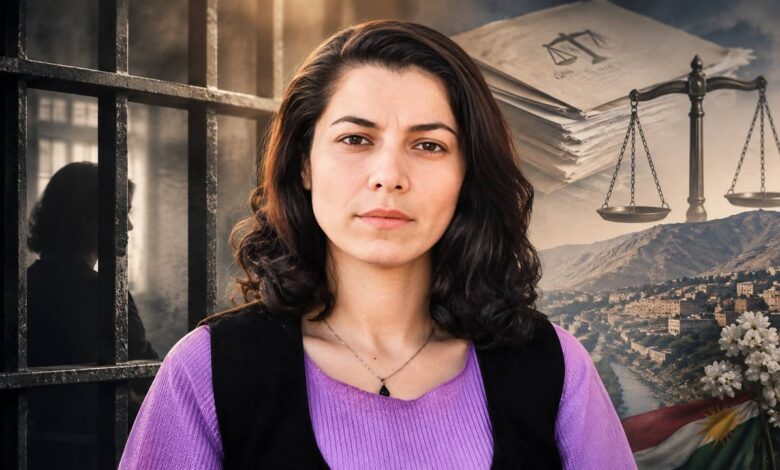
Branch 15 of Tehran’s Revolutionary Court, presided over by Abolqasem Selavati, has sentenced Kurdish political prisoner Verishe Moradi, a resident of Sanandaj, to death for the second time. According to her lawyers, the ruling was issued without addressing the legal objections and investigative deficiencies noted by Iran’s Supreme Court.
According to reports released by human rights organizations, the new sentence was delivered to Moradi’s lawyers yesterday, Wednesday, October 22, 2026 (22 Mehr 1405). The ruling was issued despite the fact that Iran’s Supreme Court annulled the previous death sentence in December 2024 (Azar 1404) due to investigative deficiencies and failure to observe legal procedures, returning the case to the same branch for re-examination.
Moradi’s lawyers state that the court reissued the death sentence without conducting the investigations requested by Iran’s Supreme Court. According to them, in the new proceedings, the charge against her was changed, but the fundamental deficiencies in the case remain unresolved.
Verishe Moradi was previously sentenced to death in autumn 2023 (Autumn 1403) by the same branch under the same judge on charges of “moharebeh” (enmity against God) through membership in the Kurdistan Free Life Party (PJAK). That sentence was annulled in December 2024 (Azar 1404) by Branch 9 of Iran’s Supreme Court.
According to explanations released by her lawyers, among the objections raised in the previous review were investigative deficiencies and the failure to clearly inform her of specific charges that formed the basis for the death sentence. Nevertheless, the same branch has now imposed the death penalty once again.
This process raises an important question: if the previous ruling was annulled due to legal objections and investigative deficiencies, why were these noted deficiencies not addressed before issuing the new ruling? A clear and documented answer to this question is essential for assessing the fairness of the judicial proceedings.
Verishe Moradi was arrested on July 31, 2023 (10 Mordad 1402) on the road between Marivan and Sanandaj by officers from the Ministry of Intelligence. According to human rights reports, her arrest was accompanied by violence and beatings.
After her arrest, she was held for months in security detention centers in Sanandaj and in Ward 209 of Evin Prison, spent time in solitary confinement, and was later transferred to the women’s ward of Evin Prison.
Moradi did not attend the last hearing of her case on September 19, 2026 (29 Shahrivar 1405). According to published reports, she boycotted the court proceedings in protest against the judicial process and what she considered violations of her legal rights.
In a separate case, she has also been sentenced to six months imprisonment on charges of “disrupting prison order.” According to human rights sources, this conviction is related to her positions and protests during her time in prison.
The re-issuance of a death sentence for Verishe Moradi, following the annulment of the previous ruling by Iran’s Supreme Court, has heightened concerns about respect for the right to defense and fair trial standards. In a case where the penalty is taking a human life, careful examination, thorough review of evidence, the opportunity for effective defense, and adherence to legal procedures are of vital importance.
The new ruling can be appealed to Iran’s Supreme Court within 20 days. The re-examination of the case and consideration of the raised objections will now play a decisive role in the fate of this political prisoner.
When a death sentence is annulled due to legal deficiencies, it is expected that re-examination will lead to addressing those deficiencies, not that the same punishment be reissued without clear accountability for the previous shortcomings. Verishe Moradi’s case once again highlights the necessity of judicial transparency, respect for the right to defense, and accountability regarding death sentences in Iran.