Hamid Nouri Sentenced to Life Imprisonment for Role in 1988 Executions
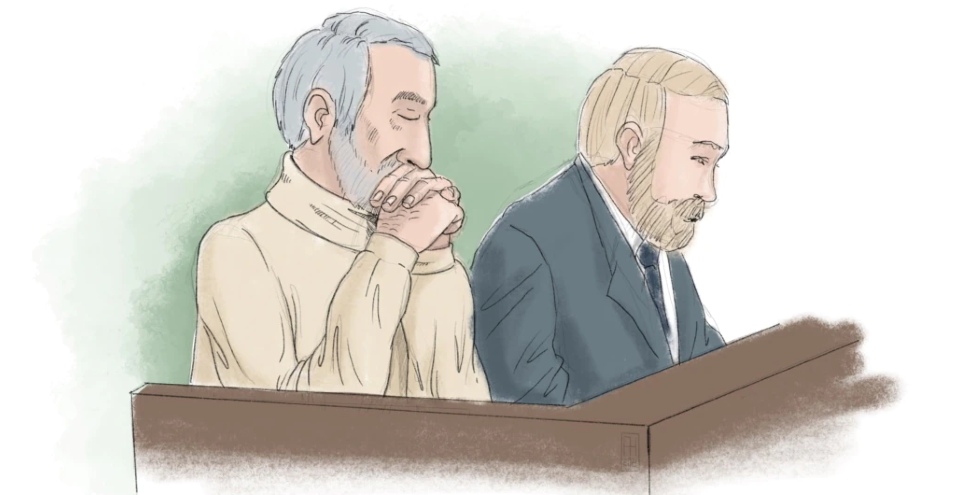
The judge and jury of the Stockholm District Court on Thursday, July 14, 2022, after nine months of review, announced the verdict for Hamid Nouri, who was accused of involvement in the mass execution of political prisoners in the summer of 1988.
The court on Thursday confirmed a life sentence for Mr. Nouri.
This is the first time in more than three decades since the mass execution of political prisoners in the summer of 1988 in Iranian prisons that one of the accused in this case has been tried in court and sentenced.
The Swedish prosecutor had previously demanded a “life imprisonment” sentence for Nouri by charging him with “war crimes” and “intentional murder.”
Hamid Nouri, also known as “Hamid Abbasi,” the former deputy warden of Gohardasht Prison, was tried in Sweden for nine months on two main charges of “international war crimes” and “intentional murder.”
The first court hearing of his trial began on August 10, 2021, and ended on May 4, 2022. The court held 93 sessions to hear statements from complainants and the defendant’s defense arguments.
During this period, at least 60 complainants and witnesses and 12 experts in Islamic jurisprudence and international law spoke about this case.
In the summer of 1988, a group of four, on the orders of Ayatollah Ruhollah Khomeini, the leader of the Islamic Republic at the time, re-“tried” thousands of political and ideological prisoners who were serving their prison sentences in prisons and executed them on political charges.
Hossein-Ali Nayeri, Morteza Eshraqi, Ebrahim Raisi, and Mostafa Pourmohammadi were the four judicial officials and main figures of this “death committee.”
In that same year, Hossein-Ali Montazeri, the then-Deputy Leader of the Islamic Republic, in a meeting with them, called their actions “the greatest crime in the history of the Islamic Republic” and called these individuals “criminals.”
Ebrahim Raisi, whose role in these executions was particularly discussed during two previous presidential elections in Iran, has defended these executions.
Mr. Raisi, after winning the presidential election, in his first press conference as the president-elect, proudly defended his role in the death committee and said: “If a prosecutor defends the rights of the people and the security of society, he should be commended and encouraged.”
Hossein-Ali Nayeri, the Islamic judge of the Islamic Republic at the time of the summer 1988 executions, who, according to witnesses in Hamid Nouri’s court case, headed the group known as the “death committee,” last week in a rare statement defended carrying out these executions and accused the executed of preparing “new conspiracies.”
He accused the executed of “childish stubbornness” and also efforts to inflict “economic harm to the system” by cutting telephone wires and breaking light bulbs.
The Islamic Republic, on the eve of issuing the final verdict in Hamid Nouri’s case in Sweden, had called for his release.
Kazem Gharibabadi, Deputy of the Judiciary and Secretary of the Human Rights Headquarters of the Islamic Republic, in a letter to Michelle Bachelet, UN High Commissioner for Human Rights, at the same time called for “compensation for material and moral damages” inflicted on him.
The Iranian government, shortly after the start of these sessions, reacted against the holding of this court and even indirectly threatened to execute the death sentence of Ahmadreza Jalali, an Iranian-Swedish doctor and university professor.
Mr. Jalali, who is currently in the prisons of the Islamic Republic, has been charged with “espionage and selling information to Israel” and “corruption on earth.”
Source: Radio Farda