Informed Source: Omid’s Kidney Cancer Remained Undetected Because He Was Not Sent Outside Prison for Tests
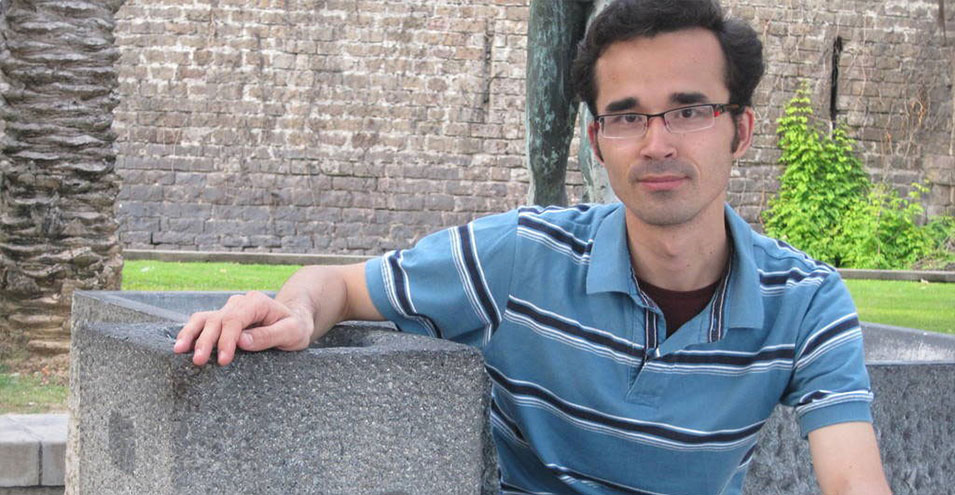
An informed source on the condition of Omid Kokabi, a brilliant doctoral student in physics, told the Campaign for Human Rights in Iran that after doctors diagnosed him with a tumor in his kidney, Omid remains under medical supervision in a hospital. This source told the campaign, “The reason for the delay in detecting Omid’s kidney cancer was that he was not sent outside the prison for examination and tests.”
According to an FCN report, this informed source on Omid Kokabi’s case stated that with timely diagnosis, the progression of his disease could have been prevented. The source told the campaign: “The reason Omid’s kidney cancer was not detected was that he was not sent outside the prison for examination and tests. For example, if when he first passed a kidney stone in November 2011 following bleeding and pain from passing it, he had been sent outside the prison, he would naturally and according to normal procedure have undergone an ultrasound. Even a single ultrasound image would have shown the presence of the tumor. Omid had repeatedly visited the prison clinic for kidney pain or abdominal pain.”
The source added: “When they took an ultrasound image because of the kidney stone, they accidentally discovered the existence of this large tumor. He waited for some time to be transferred to a hospital with a urology department, but this was not approved. Prison doctors only prescribed painkillers for him without even examining him. This is his second visit to the hospital. About a week ago, Omid’s cancer was detected, and his entire right kidney has been affected by the cancerous tumor.”
Omid Kokabi, a 30-year-old Iranian prodigy and graduate of Sharif University and doctoral student in atomic physics at the University of Texas, USA, was arrested on January 30, 2011, at Imam Khomeini Airport while leaving the country. After his arrest, he was held in solitary confinement for an extended period, and his family and lawyer had no contact with him. After 15 months of detention, on Sunday, May 14, 2012, he was sentenced to ten years imprisonment by a court presided over by Judge Salwati on charges of connections with hostile states (America). His lawyer filed a request for retrial in 2014 to overturn the ten-year sentence; however, Branch 54 of the appeals court again upheld the ten-year sentence.
This informed source, noting that Omid Kokabi has suffered from kidney pain many times during these years in prison but the authorities did not allow his transfer to the hospital, or after transfer to the hospital, he was returned to prison after a quick examination and before undergoing routine medical examinations and tests, told the campaign: “If the first time in November 2011 when Omid passed a kidney stone, following the bleeding and severe pain after passing it, he had been sent outside the prison, naturally and according to normal procedures that apply to any illness, he would have undergone an ultrasound and the cancer would have been detected, making it possible to prevent the tumor from becoming malignant.”
This informed source told the campaign: “His lawyer, on behalf of the family, has submitted a request for his release.”
Saeid Khalili, Omid Kokabi’s lawyer, the brilliant physics doctoral student, said on Saturday, April 18 (April 17, 2015), in an interview with ILNA News Agency that his client in Evin Prison has kidney cancer and “needs immediate surgery for nephrectomy or complete removal of the kidney along with the malignant tumor.” According to the lawyer, this prisoner should be released as soon as possible under Article 502 of the Criminal Procedure Code to undergo medical treatment and surgery; otherwise, delay in treatment will cause irreparable damage to this young prisoner.
The lawyer also said that in addition to the evidence and documents in the case file, his client now meets the conditions for release according to Article 502 of the Criminal Procedure Code. Saeid Khalili explained this article: “Whenever a convict suffers from a physical or mental illness and the execution of the sentence would aggravate the illness or delay his recovery, the judge of criminal execution, with the opinion of the forensic physician, postpones the execution of the sentence until recovery.” Mr. Khalili emphasized that “the application of this article does not depend on the opinion of the court or prison” and must be implemented immediately.
Saeid Khalili, Omid Kokabi’s lawyer, said in an interview with ILNA News Agency that his client has met the conditions for conditional release for more than two years according to the law, yet he has not been released, even considering his cancer illness.
Source: Campaign for Human Rights in Iran