Canada Deports Salman Samani; Ending Two-Year Legal Battle with Senior Islamic Republic Official
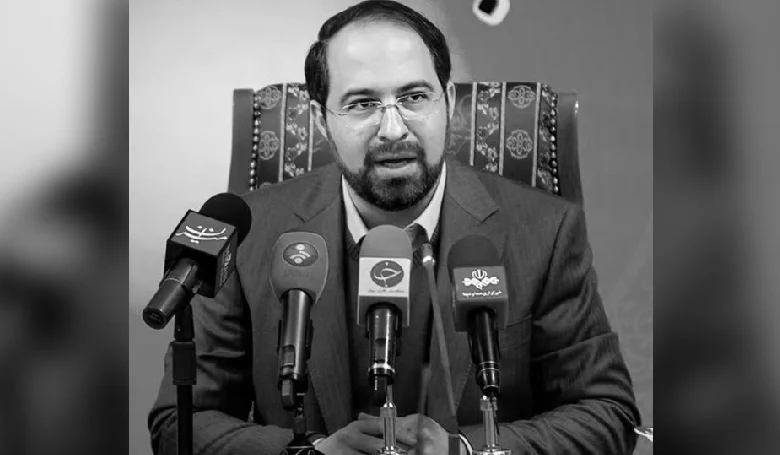
Canada has finally deported Seyyed Salman Samani, former deputy and spokesperson of the Islamic Republic’s Ministry of Interior, after more than two years of legal struggle. The action came after his final attempt to halt the deportation order was rejected, once again bringing to the forefront discussions about the presence of senior Islamic Republic officials in Western countries and governments’ efforts to prevent these nations from becoming safe havens for Iranian government operatives.
Canada’s Border Services Agency announced that Seyyed Salman Samani, former deputy and spokesperson of Iran’s Ministry of Interior, has been deported from Canada. The announcement came hours after Canada’s Federal Court rejected Samani’s latest request to stop the deportation order, paving the way for enforcement of a decision made by Canada’s Immigration and Refugee Board more than two years ago.
Canada’s Border Services Agency stated in a release: “As a matter concerning the public interest, the Canada Border Services Agency confirms that Seyyed Salman Samani has been deported from Canada.”
This action marks the end of a case that began in 2023, during which Canadian immigration authorities argued that Samani, due to his senior position in the Islamic Republic’s structure, fell under regulations prohibiting the entry and residence of senior Iranian government officials in Canada.
Samani’s case first became serious in Canada in 2023. After leaving Iran and entering Canada on a visitor visa, he was living in Toronto.
Canada’s Border Services Agency referred his case to the Immigration and Refugee Board for examination of his eligibility to remain in the country. Canadian authorities argued that Samani had been a senior official of the Islamic Republic and therefore did not qualify for residence in Canada under the country’s new regulations.
In March 2024, Canada’s Immigration and Refugee Board issued an order for Samani’s deportation. This decision came after the board concluded that Samani held “significant influence in the exercise of governmental power” within Iran’s governmental structure.
Samani utilized available legal channels in Canada to try to postpone the enforcement of the order, and ultimately his case reached Federal Court in 2026.
In July 2026, Global News reported that Samani had asked the Federal Court to halt his deportation. He also described the Canadian government’s decision to reject his request for deportation delay as “unlawful” and “manifestly unreasonable.”
During the same proceedings, Samani requested that his name be removed from public court documents and replaced with random letters such as “A.B.” or “X.Y.” He cited the media sensitivity and publicity of the case and potential consequences as reasons for this request.
Samani’s final attempt to halt the deportation ultimately failed. According to legal records published in Canada, Federal Court Judge Sebastien Grammond rejected Samani’s request to stop the enforcement of the deportation order on July 1, 2026, clearing the way for his deportation.
Global News also reported in its recent coverage that Samani was deported from Canada following his failure in the final stage of legal proceedings. His deportation is significant because enforcement of deportation orders against senior Islamic Republic officials has long been a slow and complicated process in Canada.
A 2025 Global News report showed that at that time, despite identifying dozens of senior Islamic Republic officials in Canada, only one had actually been returned to Iran.
The primary basis of Samani’s case was not merely an accusation of committing a specific crime in Canada. Canadian immigration authorities focused on his position in the Islamic Republic’s structure, arguing that as one of the senior officials of the Ministry of Interior, Samani held significant influence in the governmental system.
A report from Canada’s Border Services Agency, reviewed by Global News, described Samani’s period of activity in the Islamic Republic as a long career path within the governmental structure, stating: “Throughout his professional career, this individual demonstrated his commitment and loyalty to the system.”
According to the same report, Samani worked in various government positions between 2007 and 2021, and after leaving the government in August 2021, he entered Canada on a visitor visa issued in Ankara.
Canadian authorities also emphasized that he held a position close to the top of power within the Ministry of Interior’s structure. According to Canada’s Border Services Agency, Samani was only two levels below the president in the governmental hierarchy, and therefore his role could not be considered merely an ordinary administrative position.
One of the most important aspects of Samani’s case relates to his period of service as spokesperson for Iran’s Ministry of Interior. During the first administration of Hassan Rouhani in 2016, he was appointed as Ministry of Interior spokesperson by Abdul-Reza Rahmani-Fazli. He had previously served as head of the Ministry of Interior’s Performance Management, Inspection and Legal Affairs Center.
As Ministry of Interior spokesperson, Samani was one of the official faces of the government defending the policies and performance of this ministry—a ministry whose security and law enforcement structures in various domestic fields operate under its supervision or control.
Canada’s Border Services Agency noted in its report about his role as spokesperson: “As a spokesperson, Mr. Samani was a conduit for government propaganda and was responsible for disseminating information that aligned with the government’s narrative while suppressing opposing views.”
Canadian authorities also argued that the ministry in which Samani worked played a role in dealing with political protests and restricting freedom of expression and assembly rights. During his proceedings, Samani denied accusations of participation in human rights violations.
During his hearing, he stated that he had no knowledge of orders from Abdul-Reza Rahmani-Fazli, the then-minister of interior, to use lethal force against protesters during the November 2019 protests.
Samani also stated that he had been “deeply affected” by events at that time and decided to leave the government, although he remained at the Ministry of Interior until August 2021, citing assistance in combating the coronavirus pandemic as his reason for staying.
In another hearing, he stated: “I did everything in my power to protect human rights in my country.” Samani also claimed he had no knowledge of arbitrary detentions, torture, and killings by the Iranian government. However, Canada’s Immigration and Refugee Board accepted the arguments of government officials about his senior position in the Islamic Republic’s structure and issued his deportation order.
Samani’s case was formed within the broader policy framework that Canada implemented in November 2022 against senior Islamic Republic officials.
Following Mahsa Amini’s death in police custody and the beginning of “Woman, Life, Freedom” protests, the Canadian government declared the Iranian government under the Immigration and Refugee Protection Act as a government engaged in “terrorism and systematic and widespread human rights violations.” This decision resulted in a wide range of senior Islamic Republic officials and members of the Revolutionary Guards being barred from entering or residing in Canada.
In 2024, Global News reported that Canada had reviewed dozens of cases involving senior Islamic Republic officials and referred some of them to the Immigration and Refugee Board for processing. In subsequent years, the number of identified individuals increased. A 2025 Global News report revealed the identification of 26 alleged senior Islamic Republic officials in Canada facing deportation proceedings. However, the enforcement of deportation orders did not proceed at the same pace as their issuance.
For this reason, Samani’s deportation is now being viewed as one of the most important cases of actual enforcement of Canada’s policy against senior Islamic Republic officials.
Samani’s case is not merely about one former Islamic Republic official; this case once again raises a fundamental question about the presence of Iranian government officials in Western countries: Should countries that regard themselves as defenders of human rights and civil liberties allow officials who have spent years operating within the Islamic Republic’s structure to live in security and comfort after leaving Iran?
This question is particularly important for the Iranian diaspora community—a community many of whose members left the Islamic Republic due to political, religious, and social repression.
Global News previously reported, citing Kaveh Shahrooz, a lawyer and human rights activist, that Canada had long become a safe haven for individuals associated with the Iranian government. While welcoming Canada’s measures, Shahrooz called for greater transparency regarding the identity of these individuals and how they entered Canada.
Now Samani’s deportation demonstrates that Canada’s policy has not merely been limited to visa cancellations or prevention of entry, and in cases where judicial and immigration institutions identify a person as falling under the relevant regulations, it can result in actual deportation.
However, numerous other cases remain pending, and the speed of processing them continues to be a matter of debate.
Salman Samani, born in 1980 and a dentistry graduate, passed through various levels of the Islamic Republic’s governmental structure during his years of service and eventually became one of the recognizable faces of the Ministry of Interior. During his tenure as spokesperson for a ministry that bore significant responsibility for managing the country’s internal affairs, he also worked within the political structure close to figures such as Ali Larijani. However, after leaving Iran and residing in Toronto, his political past once again came into focus.
Now, after more than two years of legal struggle, appeals, and attempts to prevent the enforcement of the order, the case has reached its conclusion: Salman Samani is no longer in Canada.
His deportation took place even though he himself had denied any participation in human rights violations; however, Canadian immigration authorities ultimately determined that his position within the Islamic Republic’s structure and his degree of influence in the exercise of governmental power were sufficient grounds for issuing the deportation order.
This case also demonstrates that for senior Islamic Republic officials, leaving Iran does not necessarily mean the end of accountability for their political and governmental past—at least not in countries that have implemented specific policies to counter the presence of senior Iranian government officials within their borders.