Kermanshah: Water Scarcity and Devastated Environment
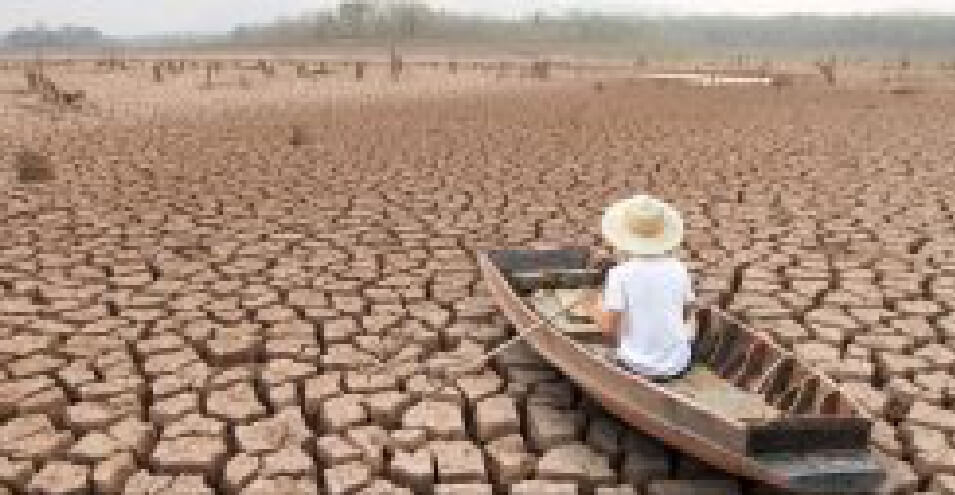
The expansive province of Kermanshah, with an area of 25,009 square kilometers—representing just 1.5 percent of the country’s total land area—has been plundered and ravaged over the past 42 years as if by the most ruthless enemy, transforming into a barren, waterless wasteland. Kermanshah faces a severe water crisis, while the province’s environment has been devastated.
All of the province’s rivers have dried up, and its springs have evaporated their last drops. The seven major rivers of the province—Qarah Su, Razavor, Garab, Morg, Gamasiyab, Dinur Ab, Simreh, and others—have all run dry. Of all the once-lush and verdant springs that existed in the province, nothing remains but cracked, parched earth at the bottom of the dried riverbeds. Springs like Taghbestan, Khairallias, Yavari Spring, Khezreh Zendeh, and Niloofar Spring—which locals once believed were bottomless and connected to the infinite oceans of the world, springs where locals believed the legendary Jahan-Bin Cup of ancient Persia was thrown by Shiroyeh, the unworthy son of Khosrau Parviz, never to be found again—have now dried up, with dust and sand rising from their beds into the air.
With the drying of the province’s rivers and springs, the metropolis of Kermanshah faces an imminent and dangerous crisis of drinking water shortage. Currently, a substantial portion of the city’s drinking water is supplied by the Gamishyan Dam in Kamyaran, and if this dam’s water runs out, there will be no water for drinking in Kermanshah.
Throughout the province, there is no longer a single verdant, leafy tree under whose shade one could rest one’s weary body and find respite for a while. Except for small pockets that have so far endured, the entire province is nothing but a pyramid of scorching heat and cracked, sun-baked earth that ravages the eye.
All this suffering has come about only through the hands of incompetent officials and unqualified, inexperienced administrators who, through ignorance and irresponsibility, have brought ruin upon this province’s fate. They denied it its surface waters and squandered its underground aquifers without account for agricultural purposes. They left its natural forests unprotected and abandoned, and removed from consideration all the studied environmental plans for the province’s future that had been designed before the Islamic Republic came to power to preserve the ecosystem. Consequently, what should never have happened occurred. A land that experts believe will be uninhabitable in less than two decades. Although this situation has occurred or is occurring in many other provinces of the country, Kermanshah province carries its own unique sufferings and compounded problems.
Kermanshah Province on the Brink of Water Bankruptcy
With a population of over two million, Kermanshah province was once one of the relatively water-rich provinces with vast fertile lands and plains. Due to the incompetence, ignorance, and political maneuvering of Islamic Republic officials in dealing with water, soil, and environmental issues over the past four decades, the province has now transformed into a dry, parched region facing a crisis of water bankruptcy and land subsidence—what is referred to as the catastrophe of the century.
Over the past forty years, due to faulty planning and mismanagement resulting from poor judgment and political discrimination among cities, all of the province’s surface waters—including seven rivers, dozens of springs, and more—were diverted away from the province. Its waters were taken out of the province and instead, through the drilling of deep and semi-deep wells, both legal and illegal, all reserves of underground aquifers were extracted over four decades. Kermanshah province has been transformed into a region of dry, depleted lands and now faces the brink of a major water crisis and land subsidence.
A Review of Kermanshah’s Water and Soil Conditions
The Morg River near Sarfiroozabad, Razavor River in Kamyaran, Garab River in Ravansar, Gamsiyab River in Bisotun, Dinur Ab River in Dinur, and Qarah Su and Simreh rivers in Kermanshah are seven major rivers that have flowed through this province and together form the headwaters of the great Karun River, which ultimately flows into Hawizeh Marsh. These seven major rivers, along with numerous seasonal streams, marshes, and hundreds of springs, had made the province verdant, flourishing, and vibrant.
Over the past four decades, despite the fact that precise scientific studies had been conducted and planning had been undertaken for the rational and optimal use of surface waters for irrigating provincial lands, with future water and soil conditions in mind for coming decades, when the Islamic Republic came to power, all these efforts and scientific studies and rational planning were abandoned. Unfortunately, the massive volume of water from all seven rivers flowing through the province was diverted to unknown destinations without a single drop being used within the province. The government encouraged farmers to drill deep and semi-deep wells and use underground waters, and not stopping there, even supplied drinking water for the province’s cities and villages from underground aquifer resources.
This resulted in, after forty years have passed, Kermanshah province now facing an enormous and insurmountable water crisis and land subsidence, causing farmers and livestock herders in the province to face ruin, continued and accelerating migration from villages to cities, and cities confronting a dangerous drinking water shortage.
The Fated Destiny of Germaab Dam on the White Mountain of Kermanshah
Before the Islamic Revolution, the construction of a diversion dam to irrigate the great plains of Mahidasht—the province’s largest plain—Sarfiroozabad, Sanjaabi, Guran, Qalkhani, and Ravansar, and other areas in the south, southeast, and southwest of Kermanshah province had been studied, and more than 25 percent of the dam’s construction work had been completed. Through the creation of this diversion dam, which was planned to be constructed in an area called Tangeh Germaab on White Mountain, a portion of the Simreh waters would be directed to Sarfiroozabad Spring, and by flowing along the natural course of the Morg riverbed, after irrigating the plains of Sarfiroozabad, Mahidasht, Kozran, Sanjaabi, Guran, Qalkhani, Ravansar, and others—totaling approximately 1,200 square kilometers—the water would continue its natural course toward the Qarah Su River and would circulate in a loop so that not a drop of water would be wasted, with excess waters returning to the main watershed. This was considered one of the unique and unparalleled projects in the field of watershed management in the world.
Unfortunately, when the Islamic Republic came to power, this grand and beneficial project was abandoned. With the abandonment of this project, new plans were put on the Islamic Republic government’s agenda for controlling the great Simreh and Karun rivers for Kermanshah province. Based on those plans, no provision was made for Kermanshah’s people to use surface waters, and farmers were given no permission to draw even the smallest amount from the seven rivers mentioned; whereas the waters of these rivers were systematically diverted along the Simreh River route, and after passing through provincial lands and exiting the province, at least eighteen small and large dams were constructed on the Simreh and Karun rivers. Most of these dams have had defects and problems, and in various ways have caused the ecosystem along their paths to face complex and insurmountable difficulties.
In addition to this major project, plans for fencing off the province’s natural resources and tree-planting within the natural forests of this section of the Zagros to preserve and nurture the region’s natural ecosystem had been implemented and had brought extensive areas under protection. Unfortunately, with the Islamic Republic coming to power, all these plans and programs were abandoned. The Germaab diversion dam project was forgotten, all fences were destroyed, their barbed wires were stolen, and saplings nurtured within the vast oak forests were destroyed. Shepherds grazed their flocks in protected pastures and forests, and nothing called environmental protection and conservation remained.
Pumps That Completely Drained Underground Aquifers Over Four Decades, Turning the Region into Barren Wasteland
Instead of all those beneficial and studied plans, unfortunately, the dangerous project of drilling deep and semi-deep wells and uncontrolled exploitation of underground aquifers became the policy of Islamic Republic governments and replaced the previous plans. Based on this approach, deep and semi-deep wells, both legal and illegal, were drilled throughout the province’s plains, and permission for using underground waters was given ever more liberally.
Water motors worked day and night relentlessly, and farmers, competing and keeping pace with one another, exerted all their effort to pump as much underground water as possible without any oversight. Meanwhile, irrigation was conducted in traditional ways, wastefully using tens of times more water than necessary. One or two decades later, semi-deep wells dried up, and this time permission for so-called “bottom-breaking”—deepening wells further—became common practice. Farmers, encouraged by government incentives, loans, and other means, drilled deeper wells to extract the last remaining drops of underground water from the depths of the earth. Continuing this process, now after four decades, there is neither water in the rivers nor in even the deepest wells, and in some areas of the province, no water whatsoever—surface or underground—remains.
The great oak forests have withered, and nothing remains of the once-abundant fruit orchards that existed in the province. This process is advancing toward other regions. More than eighty percent of traditional livestock operations in the province have been destroyed due to the loss of pastures and forests and the lack of water and fodder for animals, and the remaining ones are taking their last breaths. All industrial livestock operations in the province have gone bankrupt due to incorrect planning and uncalculated, ever-increasing inflation and rising costs in the country, with their owners either fleeing due to bank debts or being imprisoned.
Currently, after more than forty years of this chaos, what remains for the province is scorching heat, dry land, and other harsh and destructive phenomena that continue to deepen and intensify this environmental catastrophe in the region and consequently the human disaster.
The flood of migrations toward cities from areas where water has run out and no shelter remains for temporary settlement has been ongoing for some time now and is expanding to such an extent that it will not be long before all the villages of Kermanshah province are emptied of their inhabitants.
Source: Hrana