16 Kurdish Citizens of Mahabad Sentenced to Total of 77 Years and 9 Months in Prison
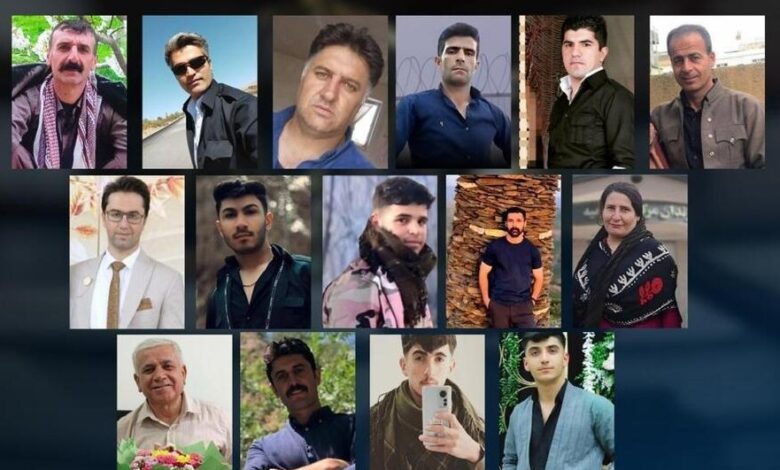
16 Kurdish citizens from Mahabad who were arrested during a wave of security arrests in December 2024 have been sentenced to a total of 77 years and 9 months of imprisonment according to verdicts issued by the Revolutionary Court of the city. This case had previously been covered by human rights reports documenting arrests without court orders, transfers to Urmia Intelligence Ministry detention centers, and denial of detainees’ access to lawyers and family members.
According to available information on the case, Branch One of Mahabad’s Revolutionary Court, presided over by Judge Ahed Siami, issued prison sentences for the 16 Kurdish citizens. The charges brought against them included “gathering and conspiracy,” “membership in or connection with groups opposing the Islamic Republic,” “propaganda against the system,” and “activity on social networks.”
According to the issued verdicts, Abdullah Hoshmund and Abdolrahman Qoveh were each sentenced to seven years and one month of imprisonment. Additionally, Abdullah Qoveh, Ghadir Kharaminfar, Jalal Sadefi, Ali Maroufian, Aaram Maboozaleh, Youssef Tal, Rebar Rasuli, Ayoub Rasuli, Osman Jahanifor, Rahman Dana, Salar Shamsborhan, and Zaniar Seyedahemadi were each sentenced to five years in prison.
In another section of the case, Nazanin Eliasi was sentenced to two years imprisonment and Kamal Massoudi to five months imprisonment. The total of these sentences amounts to 77 years and 9 months in prison.
Examination of reports released by human rights sources shows that the case of these individuals emerged following a widespread wave of arrests of Kurdish citizens in Mahabad in December 2024. The Kurdistan Human Rights Network reported in its statements that Ministry of Intelligence forces arrested several Mahabad citizens, including Ayoub Rasuli, Rebar Rasuli, Rahman Dana, Osman (Shwaneh) Jahanifor, Zaniar Seyedahemadi, Aaram Maboozaleh, Youssef Qal, Ghadir Kharaminfar, Jalal Sadefi, and Kamal Massoudi, between December 14 and 16, 2024.
In some cases, security forces visited individuals’ homes and arrested them without presenting court orders, and some of those arrested were transferred to the Ministry of Intelligence detention center in Urmia for interrogation.
The Kurdistan Human Rights Network also reported that a number of these individuals were denied access to lawyers and family visits during their detention. The organization specifically noted regarding Ayoub and Rebar Rasuli that they were arrested without court orders and were denied family visits and access to legal representation.
The case continued in subsequent months. The Kurdistan Human Rights Network reported in April 2025 that Nazanin Eliasi, Osman Jahanifor, Rahman Dana, Youssef Qal, Abdullah Hoshmund, Zaniar Seyedahemadi, and Houreh Qoveh were released on bail; at the same time, Ghadir Kharaminfar, Salar Shamsborhan, Jalal Sadefi, Ali Maroufian, Aaram Maboozaleh, and Abdullah Qoveh remained in detention.
Nazanin Eliasi was released on bail on April 10, 2025, after being transferred from the Ministry of Intelligence detention center in Urmia to the central prison of the city. According to KHRN’s report, she was denied access to a lawyer and family visits during her detention.
Subsequently, the status of some other detainees also changed. The Kurdistan Human Rights Network reported in September 2025 the temporary release on bail of Salar Shamsborhan, Ayoub Rasuli, Rebar Rasuli, and Ali Maroufian, noting that these individuals were freed after months of detention in Mahabad prison.
The issuance of these sentences comes as human rights reports in recent years have repeatedly documented the arrest of Kurdish citizens in western regions of Iran and the leveling of security charges against them.
KHRN reports on the wave of Mahabad arrests demonstrate that this security operation in December 2024 was not limited to a few individuals but encompassed a significant number of citizens from the region.
Among these issues, the deprivation of detainees’ swift access to lawyers and family members, their transfer to security centers outside their place of residence, and prolonged detention prior to trial have been criticized in human rights reports on these cases.
Given the total sentences announced, the case of 16 Mahabad citizens has now entered a new phase with the issuance of 77 years and 9 months of imprisonment; sentences that are largely related to charges connected with political activities, connections to groups opposing the Islamic Republic, and activity in cyberspace.