10 Years in Prison for a Voice Message: In Iran, Even Concern for Students’ Lives Can Be a Crime
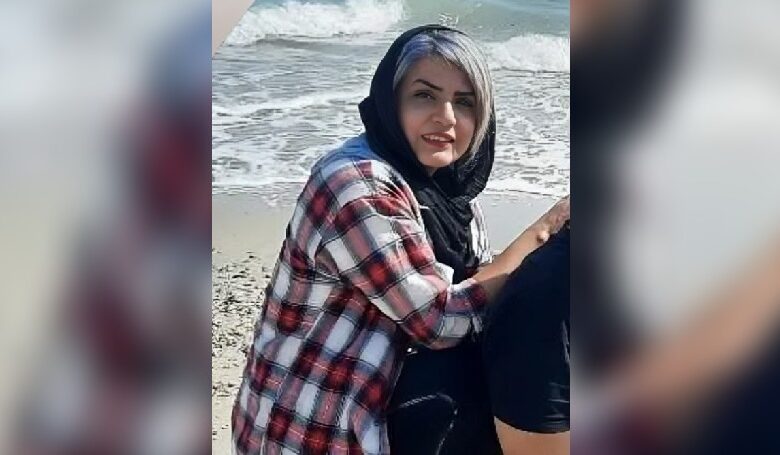
“Leila Moalemi,” a citizen residing in Mashhad, has been sentenced to 10 years in prison for allegedly sending an audio message to foreign media outlets. If the reports are accurate, this ruling exemplifies the severe restrictions on freedom of expression in the Islamic Republic—a place where expressing concern about students’ safety during wartime can lead to arrest, imprisonment, and denial of medical treatment.
According to reports from human rights organizations, Leila Moalemi, a citizen from Bandar Abbas residing in Mashhad, has been sentenced to 10 years of imprisonment by the Revolutionary Court in the city. The charge that led to this heavy sentence, according to these reports, was sending an audio file to foreign media outlets during the 40-day war between Iran, Israel, and the United States.
The content of her message was neither a call for violence nor any armed action. Rather, in the audio file, Moalemi expressed concern about the health situation of students in Minab and said that under wartime conditions, it would have been better if the school principal had removed the students from school. Nevertheless, this statement was included in her legal case and ultimately resulted in the 10-year prison sentence.
Hengaw also reported that Leila Moalemi was arrested on Thursday, June 7, 1405 (May 28, 2026), in Mashhad by government forces and subsequently transferred to Vakil Abad Prison. According to this report, the 10-year prison sentence was announced to her during her detention in prison.
This date holds particular significance, as it was the same day Moalemi was arrested that Amnesty International issued a report on the human rights situation in Iran, warning that the Islamic Republic was using wartime conditions to intensify the suppression of opponents and critics.
Amnesty International stated in its report that since the war began on February 28, 2026, more than 6,000 people have been arbitrarily detained in Iran. Among those detained were protesters, journalists, lawyers, human rights defenders, government opponents, and members of ethnic and religious minorities.
The organization also reported the use of serious security charges, expedited legal proceedings, torture and mistreatment, forced confessions, and the issuance of heavy prison sentences and death penalties.
Leila Moalemi’s case, if its details are verified, raises a larger question about the state of freedom of expression in the Islamic Republic. If a citizen faces a 10-year prison sentence merely for expressing concern about students’ safety and conveying that concern to a foreign media outlet, how narrow has the line between “freedom of expression” and “security crime” become within Iran’s judicial system?
Human Rights Watch stated in its global report on Iran: “Laws in the Islamic Republic continue to criminalize the exercise of rights related to freedom of expression, assembly, and association, and government officials use these laws to deal with journalists, human rights defenders, opponents, and others who hold different views.”
The organization also noted that in 2025, hundreds of people were arrested solely for exercising their human rights, including expressing political views, and many trials were accompanied by serious violations of fair trial standards.
Thus, the issue is not merely about the case of one woman in Mashhad. Rather, the issue is whether an Iranian citizen can question and criticize the government’s performance, wartime conditions, children’s and students’ safety, or even the country’s official policies, without such expression becoming a security matter in a legal case.
Reports from human rights institutions show that concerns about restrictions on freedom of expression in Iran have increased since the war began.
Volker Türk, United Nations High Commissioner for Human Rights, stated in April 2026 that the suppression of civil space and freedom of expression in the Middle East has significantly intensified. His office reported that since the war began in Iran, nearly 2,350 people have been arrested, many of them facing charges such as “terrorism,” “opposition to the government,” “espionage,” or “collaboration with the enemy.”
Amnesty International also stated that the authorities of the Islamic Republic have intensified their treatment of opponents during the war period and have even persecuted individuals who have engaged in peaceful activities.
The organization also reported cases of torture, prolonged solitary confinement, mistreatment, and deprivation of food and medical care. In such circumstances, cases like Leila Moalemi’s raise concerns that wartime conditions have become a tool for narrowing public space and silencing critical voices.
The severity of the Islamic Republic’s government’s treatment of opponents is not limited to imprisonment alone. The United Nations warned in March 2026 that a number of Iranian prisoners and protesters face expedited death penalty proceedings, and there are credible reports of the danger of torture, mistreatment, and forced disappearance of prisoners.
Several months later, Volker Türk announced that the Islamic Republic has executed at least 56 people since March 19 in cases related to security charges; among them, 27 were related to anti-government protests. More than 100 others faced similar charges and the risk of death penalty.
The European Union and 26 other countries also condemned the execution of protesters in Iran on August 12, 2026, and called for an end to the use of capital punishment and the release of those arbitrarily detained.
Consequently, from arrest and imprisonment to torture and death sentences, multiple international reports point to a broader pattern in the Islamic Republic’s treatment of opponents and critics.
Another matter raised regarding Leila Moalemi’s case is her physical condition. This citizen suffers from acute heart disease and during her detention in Vakil Abad Prison in Mashhad, she has not had access to appropriate medical services and medication.
This claim has not yet been independently verified by international sources; however, the deprivation of prisoners in Iran from medical care is an issue that has been repeatedly documented by human rights organizations.
Human Rights Watch stated in its 2026 report that Iranian officials have deliberately and consistently withheld adequate and timely medical care from some prisoners, and this has been part of a pattern of mistreatment of political prisoners.
The organization also warned in a separate report that depriving prisoners of medical care in Iran has a long history and in some cases has led to prisoners’ deaths. Therefore, if the reports about Leila Moalemi’s physical condition are accurate, she is not only facing a heavy sentence; her health has also been placed in conditions that human rights organizations have previously warned about. Leila Moalemi’s case, regardless of its ultimate outcome, presents a disturbing picture of the state of freedom of expression in Iran.
In a free society, a citizen’s concern about children’s safety during wartime should be part of public discourse; one can agree or disagree with it, debate its accuracy, and even, if the information is wrong, provide an appropriate response.
But when the expression of such concern becomes a security case and a long-term prison sentence, the issue is no longer merely a legal matter; it is about society’s right to speak and criticize.
Reports from the United Nations, Amnesty International, and Human Rights Watch also show that cases of suppressing freedom of expression and opinion in Iran are not isolated or exceptional instances. These institutions have reported widespread arrests, unfair trials, torture, forced confessions, heavy prison sentences, and executions related to opposition to or protest against the government.
In such an atmosphere, the fundamental question is: If an Iranian citizen cannot freely speak about their children’s safety, government officials’ performance, wartime conditions, or their country’s future, what does freedom of expression actually mean for them?
And if the response to a dissenting opinion is arrest and imprisonment, and in some cases even torture or execution, then we can no longer speak of a simple disagreement between a citizen and the government. Rather, we are facing a structure that apparently does not view tolerance for dissenting voices as a civil right, but as a security threat.
Leila Moalemi’s case, if the details reported about it are verified, is another example of this very concern: in the Islamic Republic, even the voice of concern for children’s health may carry a heavy price for its speaker.