Christian Solidarity Party Supports Reza Pahlavi’s Leadership During Transition, Calls for Referendum on Iran’s Future System
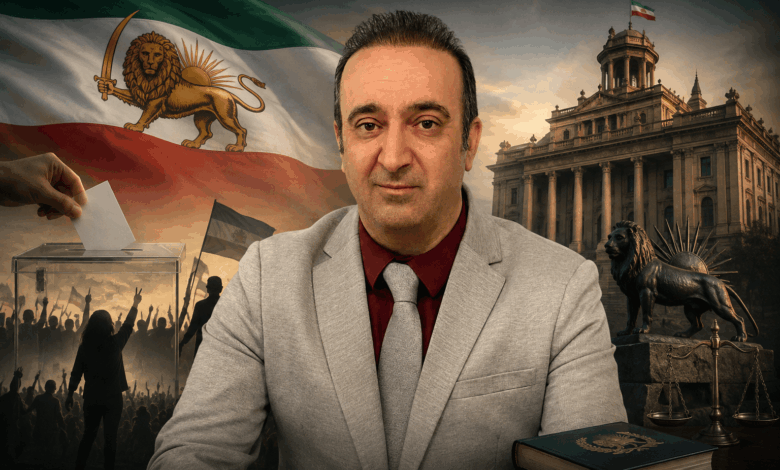
The Christian Solidarity Party of Iran (HAMA) has announced that it supports the leadership of Prince Reza Pahlavi during the transition from the Islamic Republic and considers constitutional parliamentary monarchy as its political preference for Iran’s future. The party has simultaneously emphasized that the final form of the country’s political system should be determined through a free, transparent referendum based on the will of the people.
The Christian Solidarity Party of Iran operates with the goal of ensuring organized participation of Iranian Christians in the country’s political developments and presents itself as an advocate for a free, secular, democratic Iran based on human rights. Vahid Rozi, the board chairman of the party, while explaining HAMA’s views on Iran’s future, has emphasized the necessity of active and organized presence of Christians in the political sphere.
According to Rozi, the Iranian Christian community, despite its historical and cultural heritage, has faced limitations and discrimination in past decades. From HAMA’s perspective, Christians in future Iran should not merely be seen as a religious minority, but should enjoy equal rights like other citizens and participate in determining the country’s political and social future.
He has emphasized that this participation should occur through political parties and civil institutions, and churches should not be transformed into political institutions. The Christian Solidarity Party of Iran is registered in the Netherlands and conducts its political and international activities from that country.
One of the main pillars of the party’s viewpoint is the simultaneous emphasis on the Christian identity of its members and the secular nature of its desired political system. Rozi has defined secularism as the separation of religious institutions from government and the state’s neutrality toward both religious and non-religious beliefs of citizens, stating that HAMA is not seeking to establish a Christian government.
Based on this viewpoint, values such as human dignity, justice, accountability, service to others, forgiveness, and defense of the oppressed are important to the intellectual identity of party members, but religious rulings are not intended to form the basis of government administration.
HAMA also emphasizes the legal equality of all citizens, regardless of religion, sect, or lack of religious belief. The Christian Solidarity Party of Iran has introduced constitutional parliamentary monarchy as its preferred option for Iran’s future political system.
Based on the party board chairman’s explanations, in such a system, the monarch would have no executive role in running the country, and his position would primarily be a symbol of historical continuity, national unity, and solidarity, while the elected government and parliament would be responsible for running the country.
Rozi has also announced that HAMA supports Prince Reza Pahlavi as the leader of the transition period in current conditions. According to him, the party believes that Reza Pahlavi can play a unifying role in the process of transitioning from the Islamic Republic and creating conditions for establishing a free, secular, and democratic system.
However, constitutional monarchy has been described as HAMA’s sole political preference, and the party has emphasized that the final decision about the future political system should be left to the people. On this basis, HAMA calls for holding a free, transparent, and trustworthy referendum and has announced that if the majority of people choose a different political system, it will respect the people’s vote.
Secularism, rule of law, free elections, separation and balance of powers, judicial independence, freedom of speech and media, freedom of party activities, human rights, equality of citizens, preservation of territorial integrity, and defense of national interests are among the principles that this party emphasizes for Iran’s future.
HAMA has also announced that it does not limit its political activities only to the transition period and, should a free political space form in Iran, intends to participate as a legal party in elections and, if gaining public trust, to be present in the country’s elected institutions.
The Christian Solidarity Party of Iran also emphasizes on the issue of transitional justice the creation of a balance between the necessity of accountability and the avoidance of vengeance. Rozi has stated that future Iran should not be built on the basis of revenge, but national reconciliation should not mean overlooking murders, torture, unlawful executions, organized suppression, and other human rights violations.
From this party’s perspective, individuals for whom valid evidence exists of their direct participation in serious crimes should be tried in independent courts with respect for the right to defense and principles of fair justice. In contrast, mere membership or employment in a government institution should not by itself serve as the basis for punishment, and criminal responsibility should be individual and based on law and evidence.
HAMA has also supported a comprehensive process for transitional justice including truth-seeking, documentation of human rights violations, hearing the voices of victims, compensation, and reform of institutions involved in repression. Rozi has summarized this approach with the phrase: “Future Iran needs justice without vengeance and reconciliation without forgetting the truth.”
The Christian Solidarity Party of Iran has also rejected formal, financial, or operational affiliation with churches and Christian organizations.
According to HAMA’s board chairman, interaction with churches, Christian figures, and other civil institutions is part of a party’s natural engagement with society, but the party’s political decision-making is not influenced by any church or religious institution. The party has announced that the criterion for its political decisions will be Iran’s national interests, freedom and welfare of the people, democracy, human rights, and the organization’s stated principles.
According to Vahid Rozi, open political activity for opponents of the Islamic Republic, particularly Christians and converted Christians, can still be accompanied by security consequences.
HAMA, under current conditions, has listed awareness-raising, creating connections among activists, promoting secular and democratic discourse, defending freedom of religion and belief, and conveying the voice of Iranian Christians to the international community among its objectives.
The party has also announced that should the opportunity for free political activity in Iran materialize, it intends to establish its party structures within the country, recruit and train new members, and present political programs for areas such as economy, employment, education, health, environment, foreign policy, national security, social justice, and civil liberties.
The Christian Solidarity Party of Iran has emphasized that its goal is not to form a “Christian Iran.” The organization says it wants to participate in creating a free, secular, and democratic country; a country in which Christians and other citizens, regardless of religious belief, enjoy equal rights.