Vartan Avanesian: Pressure on Christians in Iran Started from the First Years of the Islamic Republic and Continues
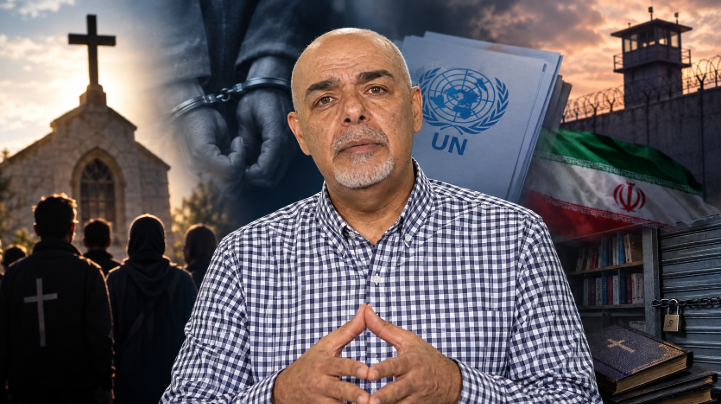
Rev. Vartan Avanesian, one of the leaders of Iran’s Persian-speaking churches, referring to United Nations reports on violations of citizens’ rights in Iran, stated: “Pressure on Christians in the Islamic Republic is not a new phenomenon and began from the very first years after the revolution.” According to him, this pressure started with the closure of Christian bookstores and places of worship and continued with the detention, interrogation, and intimidation of Christians.
Avanesian, referencing his decades of experience working in Persian-speaking churches, said that what has happened to Iran’s Christians is not limited merely to administrative restrictions or the closure of a few religious centers, but has in some cases escalated to security crackdowns against church leaders and members. He emphasized that Christians in Iran continue to be detained and imprisoned because of their Christian faith and beliefs.
He further stated that one of the main problems is that many people under pressure do not have the means to get their voices heard outside Iran, and for this reason the international community does not always receive a complete picture of what Christians inside the country are experiencing. According to Avanesian, despite the activities of organizations and institutions defending Christian rights, there remains “much work” to be done in communicating the voices of these people to the world.
These statements are consistent with Avanesian’s previous positions. Earlier, in connection with the case of property confiscation from the Jama’at-e Rabbani church in Iran, he stated that church leaders were not present during the trial and had no lawyer. At that time, Avanesian said: “Christians were warned that publicizing this case could have heavy costs for them.” He also spoke about accusations against himself and his church of connections with the CIA.
Avanesian has also described in his life account years of work in Iran’s Persian-speaking churches. According to this account, in 1979 he converted to Protestant Christianity at the Jama’at-e Rabbani church in Isfahan, worked for a time at the church bookstore, and later entered into pastoral ministry. He subsequently served at the Jama’at-e Rabbani church in Sari and then at the Central Church of Tehran, and in subsequent decades was a close witness to the developments and pressures imposed on Persian-speaking churches.
He also mentioned in his account a period when Persian-speaking churches still had the ability to sell Christian books and operate openly in the first years after the revolution, but according to him, these conditions gradually changed. This personal experience forms an important part of his current remarks about the beginning of pressure on Christians.
In his recent interviews, Avanesian ultimately emphasized the point that the issue of Iran’s Christians remains unresolved. From his perspective, although various institutions outside Iran work on religious freedom and Christian rights, there is a large gap between reporting the situation and conveying the actual voices of those facing pressure inside Iran.
This pastor’s remarks come at a time when human rights reports and Western governments have also reported in recent years the continued detention of converted Christians, pressure on house churches, and the use of security charges against some Christian activists in Iran. As a result, Avanesian’s account, in addition to revisiting his personal experience from the early years of the Islamic Republic, points to an issue that, according to human rights organizations, continues in Iran: restrictions on religious freedom and security crackdowns against segments of the Christian community, particularly converted Christians and activists in Persian-speaking churches.