15 Days of Resistance at Qezelhesar: Death Row Inmates’ Strike Against Endless Execution Orders
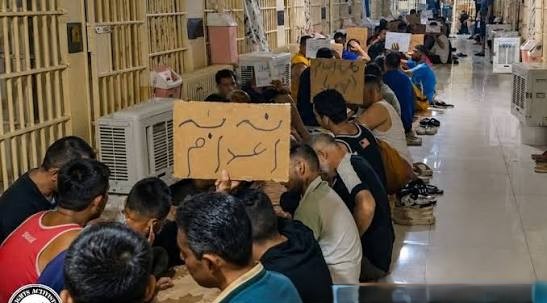
In one of the longest collective protests by inmates in recent years, prisoners in Ward 2 of Qezelhesar Prison in Karaj have continued for the fifteenth consecutive day to refuse food and stage a sit-in within their cell, demanding a halt to death sentence executions. These protests come amid growing concerns about the fate of dozens of death row inmates and the transparency of judicial procedures in Iran.
The protest by inmates in Ward 2 of Qezelhesar Prison is not merely a occupational or prison-specific protest; rather, it has once again brought the broader issue of capital punishment in Iran to the center of attention.
According to reports published by human rights sources, inmates in this ward have been on hunger strike and sit-in since late June in protest of the transfer of several death row inmates to solitary confinement cells and due to concerns about imminent executions. They are calling for a halt to executions pending a review of cases and amendments to relevant laws.
The continuation of this protest for more than two weeks demonstrates the depth of concern among inmates who believe that some death sentences have been issued without sufficient examination of case circumstances and the possibility of review.
Qezelhesar Prison in Karaj has been one of the most significant centers for executing death sentences in Iran in recent years, particularly in cases related to drug offenses. Human rights organizations have repeatedly warned about the high number of executions in this area and the need to reform the Islamic Republic’s judicial approach.
Critics argue that many defendants in drug-related cases come from underprivileged sectors of society, and in some cases, their role, degree of involvement, and personal circumstances require more careful examination. However, the execution of death sentences leaves no opportunity for correcting potential errors.
In recent days, the transfer of many inmates from Ward 2 of Qezelhesar to other sections has increased concerns among families and human rights activists. According to published reports, following these transfers, a significant number of death row inmates are expected to remain in this ward.
The absence of official explanation regarding the reason for these transfers has prompted some families and human rights activists to raise the possibility of faster execution of sentences.
The current protest emerged at a time when inmates in the same ward had previously gone on hunger strike in protest of executions. Following those protests, judicial authorities had promised that some executions would be halted and the possibility of case review would be provided. However, from the perspective of protesting inmates, the continuation of execution procedures suggests that these promises have failed to restore lost trust.
The main issue now is not merely the halting of a few specific sentences, but rather a larger question about the general policy of capital punishment in Iran: Is the purpose of punishment to execute justice or to create fear and social deterrence?
International human rights bodies have repeatedly warned in recent years about the increase in execution of death sentences in Iran. These organizations have called for respect for fair trial standards, access by defendants to independent counsel, and prevention of issuing irreversible sentences in cases where uncertainty exists about the investigation process.
The strike by Qezelhesar inmates has now become a symbol of protest against the death penalty policy in Iran; a protest that began behind prison walls but raises questions beyond a prison cell: about the value of human life, the right to fair trial, and governments’ responsibility in the exercise of punitive power.