Execution of Two More Protesters in Mashhad and Serious Questions About Trial Procedures and Confessions
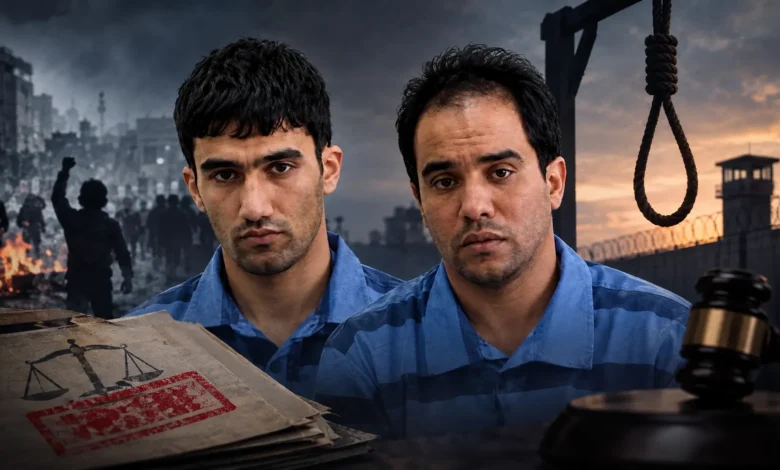
The Islamic Republic’s Judiciary announced on the morning of Wednesday, October 29, 2026, the execution of Ali Hemati-Sistani and Majid Nikandish, two detainees from the December 2024 protests in Mashhad; sentences that were carried out after confirmation by the Supreme Court and concluded amid human rights reports detailing torture, forced confessions, and failure to meet fair trial standards in these cases.
The “Mizan” news agency, the Judiciary’s media outlet, stated that Ali Hemati and Majid Nikandish were arrested during the December 18th protests in the Tabarsī area of Mashhad, and the judicial system accused them of participating in violent acts and having a role in the killing of four security personnel. The Judiciary also stated that after trial proceedings with the presence of the defendants and their lawyers, and after confirmation of the sentences by the Supreme Court, they were executed.
However, human rights organizations’ account of this case differs fundamentally. According to reports, Ali Hemati Sistani was a married father of two, and Majid Nikandish was 25 years old from Quchan, who after arrest were subjected to torture and forced to make “forced confessions.” According to the same reports, the First Branch of the Mashhad Revolutionary Court, headed by “Gholamreza Akbari,” sentenced them to death on charges of “moharebeh” (waging war against God) in May 2025, and the Supreme Court confirmed the verdict in July.
Mizan also cited what it called “the confessions of the accused” to prove the charges, claiming that Ali Hemati confessed to setting fire to a shop, blocking a road, and injuring a security officer, and that Majid Nikandish admitted to participating in protests, carrying cold weapons, destroying public property, and attacking a shop. However, the mere publication of the text or images of such “confessions” cannot independently prove their validity without considering the conditions of interrogation, the detainees’ access to lawyers, and how the statements were obtained.
At this juncture, one of the most important questions about this case emerges: if confessions were one of the main bases for issuing the death sentence, was there any possibility of an independent review of the conditions under which these confessions were obtained? Human rights organizations say the answer regarding similar cases in Iran is accompanied by serious concerns, and reports of torture and forced confessions in cases resulting in executions have been published. Reports of torture and pressure to extract confessions have also been published regarding these two individuals, but these claims cannot be independently verified, and the Judiciary has rejected them.
On the other hand, the published information about the case shows that the charge of “moharebeh” ultimately resulted in the death penalty; a punishment whose execution after Supreme Court confirmation eliminates any possibility of judicial review of the original sentence. In such a case, transparency regarding evidence, interrogation methods, actual access to lawyers, and the possibility of effective defense is of paramount importance; however, a significant portion of these details has not been published in the Judiciary’s official account. Voice of America also emphasized in its report on the execution of these two sentences that independent information about the trial process, the defendants’ access to chosen lawyers, and the conditions under which confessions were obtained has not been made public.
The execution of Ali Hemati and Majid Nikandish also took place at a time when Mai Sato, the UN Special Rapporteur on human rights in Iran, just one day earlier called for a halt to executions in Iran. Sato announced that in the coming days she would publish details of cases she has corresponded with Islamic Republic officials about, and an important portion of these cases relate to protesters and individuals facing execution.
Before the execution, Majid Nikandish’s name had been mentioned in human rights reports as an individual at imminent risk of execution. Iran Wire reported in July that his death sentence, after confirmation by the Supreme Court, was on the verge of execution, and human rights sources had warned of torture and extraction of forced confessions from him during detention; this outlet had also emphasized that it could not independently verify these claims.
Now with the execution of these two sentences, families and public opinion are faced with a case where the government’s official narrative and that of human rights organizations have a significant gap between them. The Judiciary states that legal procedures were followed, the trial was held with the presence of the defendants and lawyers, and the sentences were executed after review by the Supreme Court; in contrast, human rights organizations have warned about torture, forced confessions, and fair trial standards.
Under such circumstances, the execution of the death sentence not only ends the lives of two people but also limits the possibility of examining many remaining questions about the case. Questions such as what exactly evidence was presented regarding these two individuals’s role in the deaths of four security personnel, whether the confessions cited were obtained freely, and whether the defendants had the opportunity for effective and independent defense, still require clear and verifiable answers.
The execution of Ali Hemati Sistani and Majid Nikandish is not merely news of two judicial sentences being carried out; this case once again brings to the center of attention the issue of the use of capital punishment for those arrested during protests and widespread concerns about transparency and fair trial in Iran’s security-related cases.