A ceasefire that smells of indifference; peace on paper and lasting suffering for the Iranian people
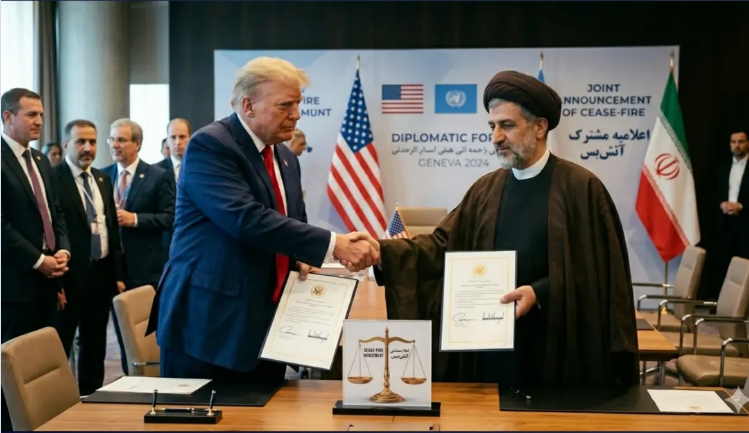
Today's ceasefire, which smells of indifference, promises peace on paper; but it is feared that it will leave lasting suffering for the Iranian people.
The announcement of a temporary ceasefire agreement between the United States and the Islamic Republic of Iran has been accompanied by widespread political and economic reactions, with many seeing it not as the end of the crisis but rather as the beginning of a new phase of concerns for the Iranian people. An agreement that on the surface speaks of a reduction in tensions, but in its core raises serious questions about the fate of the people who have the least say in these equations.
US President Donald Trump, referring to the negotiations process, announced this morning, Wednesday, April 8, 2020, saying: "We have received a 10-point proposal from Iran, and we believe that this proposal provides an operational basis for negotiations." He also added: "Almost all of the various points of dispute in the past between the United States and Iran have been agreed upon, but this two-week deadline allows the agreement to be finalized and definitive."
The details of the proposal, released by sources close to the Iranian government, include a cessation of hostilities, the withdrawal of American forces from the region, the easing of shipping restrictions in the Strait of Hormuz, the lifting of sanctions, and the acceptance of some of Iran's nuclear demands. However, the American side has not yet provided a complete picture of its commitments, and this ambiguity has added to the complexity of the situation.
The agreement has also faced serious criticism at the regional level. Yair Lapid, a prominent figure in the Israeli opposition, called the agreement a “political disaster” and emphasized: “Never in our entire history has such a political disaster occurred.” He also criticized the decision-making process and added: “It will take years to repair the political and strategic damage that Netanyahu caused due to arrogance, negligence, and lack of strategic planning.”
Meanwhile, US officials are calling the deal a major achievement. A White House spokeswoman said: “This is a victory for the United States, made possible by President Trump and our incredible military.” Caroline Leavitt, referring to the speed of the military operation, said: “We have achieved and exceeded our primary military objectives in 38 days.”
Global markets also reacted to the ceasefire announcement, with oil prices falling significantly, in what analysts see as a sign of easing concerns about disruptions to tanker traffic through the Strait of Hormuz. However, these economic developments come at a time when the humanitarian situation in Iran remains in the shadows.
Critics believe that the focus of world powers on energy market stability and geopolitical interests has effectively led to ignoring the domestic situation in Iran. In a situation where reports indicate increased pressure, executions, and violent confrontations with protesters, this ceasefire could be interpreted as an opportunity to consolidate the power of the regime and intensify domestic repression.
Over the past two months, widespread violence and the crackdown on protests have raised deep concerns about the human rights situation in Iran. However, this issue has received little international attention, with the main focus being on political agreements and their economic consequences.
This situation raises the fundamental question of whether such agreements are truly in the interest of the people or merely a reflection of the balance of power between governments. In the meantime, it seems that the Iranian people are more exposed than ever to the consequences of decisions that are made without their presence and voice.
The current ceasefire, although it may lead to a temporary reduction in military tensions, could pave the way for a new period of pressure and instability within the country, without taking into account domestic demands and the fundamental rights of citizens. In such circumstances, this concern becomes even more acute. Peace that is formed on paper may in practice come at a heavier cost to Iranian society.