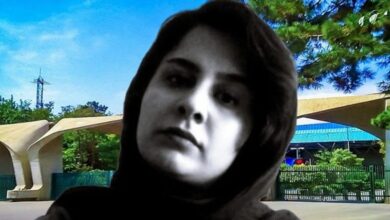
"Artemis Ghasemzadeh," a Christian citizen, is at risk of being deported from Panama.

"Artemis Ghasemzadeh," a Christian citizen, is at risk of deportation and return to Iran after three months of living in Panama.
According to a report by the International Organization for the Protection of Christians, Artemis Ghasemzadeh, an Iranian Christian citizen who has been living in Panama for three months, has until June 7th to find a country that will accept her. Otherwise, she will be forced to return to Iran.
The refugees who were transferred from the United States to Panama in the past three months were able to temporarily stay in Panama on humanitarian visas until their status was determined. Artemis is one of these refugees, and now, as her humanitarian visa is about to expire, she is forced to seek safe haven because she would be subject to severe state harassment, detention, and torture if she were to return to Iran.
Artemis and her brother Shahin, who left Iran for the United States, faced many difficulties and dangers along the way, but they eventually reached the United States. Upon arrival, they were arrested in San Diego, and after five days the siblings were separated. Artemis was transferred to Panama with another group of refugees, while her brother remained in a detention center in Houston.
After the Trump administration's decision in February to deport illegal immigrants from the United States, many of them were transferred to Panama and temporarily housed in a hotel. Reports in the New York Times and numerous follow-ups on the Trump administration's immigration policies have drawn public attention and reactions.
Artemis is now sharing a room with two Iranian Christian families and refugees from China, Vietnam and Pakistan. They were initially given just 30 days to leave Panama, but that was later extended to two months. Unprepared and unaware of the sudden change in US immigration policies, Artemis and her brother were the victims of the changes.
After the situation of refugees deported from the United States became public, especially Artemis, who had repeatedly contacted some news agencies and Christian support organizations, the Iranian police contacted her mother and asked about her daughter's connection to Christianity, which made Artemis concerned about her mother's safety.
Artemis stated regarding the conditions of Christians in Iran: "In Iran, being a Christian from birth is not a problem and there are beautiful churches, but if a Muslim becomes a Christian, the situation becomes different and the police will arrest him because this is not good for the country."
Some lawyers in New York, Mexico and Colombia are trying to find a safe country for Artemis and other refugees based in Panama, but so far they have not found a suitable financial sponsor for them. Artemis, considering the circumstances and knowing what fate awaits her if she returns to Iran, emphatically stated: “I would rather die than return to Iran.”
The Office of the United Nations High Commissioner for Human Rights considers the principle of non-refoulement to be a guarantee of human rights. This principle is enshrined in several international treaties, including the Convention against Torture, although the United States has not signed some of these conventions, such as the ICPPED.
Artemis said of the deadline: "I have a lot of nightmares. I can't live in my hometown, I don't have the chance to go to America, I don't have a safe place to live. I don't know what the next step is and where I should be. It's really scary and I might never see my family again."
Referring to a passage from the Psalm, he added: "Those who sow in tears will reap with shouts of joy. Whatever happens, good or bad, one should pray to God. I cry a lot and wait for a miracle."