America: Together with Israel, we will confront the IRGC's destructive role in the region
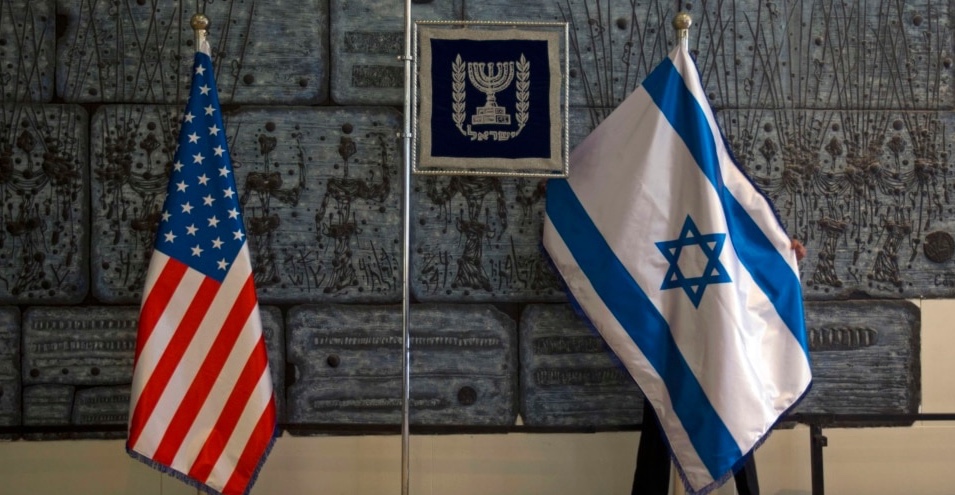
A day after the Islamic Republic of Iran's president threatened to "attack the center" of Israel, a US State Department spokesperson said that Israel's security is "sacred" to the country and that the US, along with Israel and other regional partners, "will use every appropriate tool to counter the IRGC's destructive role in the region."
Ned Price also rejected the Iranian government's accusation that the United States played a role in stalling the JCPOA revival talks, saying that if Iran wants to use the nuclear talks to resolve "disputed issues outside the JCPOA," it should also pay attention to US concerns outside the JCPOA.
In recent weeks, removing the IRGC from the US terrorist list has been cited as the most important obstacle to negotiations.
Officials of the Islamic Republic of Iran have raised the removal of the IRGC from the terrorist list as a last-minute request during the negotiations.
On April 29, EU foreign policy chief Josep Borrell said that the issue had "nothing to do with the JCPOA" and accused Iran of hindering negotiations to revive the JCPOA by demanding "guarantees regarding the Revolutionary Guard."
The possibility of removing the Revolutionary Guard Corps from this list has been met with negative reactions from US allies, especially Israel, Republican politicians in the US, as well as opponents of the Iranian government.
Critics say that "the IRGC is a tool for terrorism abroad and repression of people on the streets of Iran, protects the religious dictatorship in Iran, and continues to hinder the improvement of the human rights situation in Iran" and should not be removed from such a list.
Despite these objections, according to media reports, US government officials have said that they would agree to such a request if the Iranian government gives public guarantees to reduce regional tensions and, on the other hand, stops the operational follow-up of the case of the killing of Qassem Soleimani.
This request, however, has been met with negative reactions in public statements by Iranian government officials. Yesterday, Saeed Khatibzadeh, spokesman for the Iranian Foreign Ministry, said that pursuing the case of the killing of Qassem Soleimani is "a fundamental principle in Iran's foreign policy."
US State Department spokesman Ned Price also said that the US preference is for success in the negotiations and the revival of the JCPOA, but "the United States has prepared itself for both scenarios of success and failure in the negotiations."
The negotiations to revive the JCPOA, which have been ongoing in Vienna for more than a year with the presence of Iran, the JCPOA member states, and the indirect participation of the United States, have been suspended since mid-March of last year, and the parties involved in the negotiations have not yet provided a precise outlook on the final time for deciding whether the negotiations will fail or succeed.
Source: Radio Farda