Ebrahim Raisi: We have no hope for Vienna and New York
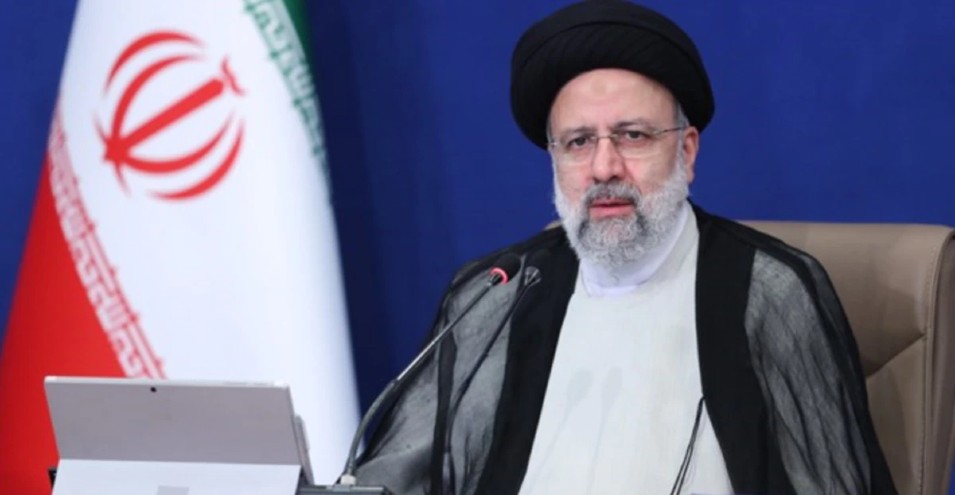
The President of the Islamic Republic says that Iran should look to its neighbors. The Russian representative reports progress in the Vienna talks. A number of officials from the former US administration express concern about a possible agreement with Iran.
On Friday, February 11, in a speech marking the anniversary of the 1979 revolution, Ebrahim Raisi stated that "we must have a balanced view of all countries, especially our neighbors," adding that looking to the West has made the country unbalanced.
"Our hope is in the people of the north, south, east and west of the country, and we never have hope in Vienna and New York," he said.
Hours after Raisi's remarks, Mikhail Ulyanov, Russia's representative in the JCPOA revival talks in Vienna, tweeted about his "very fruitful" meeting with Robert Malley, the US chief negotiator in the Vienna nuclear talks, and wrote: "We are definitely making progress in the Vienna talks."
Ulyanov had also written a little earlier that all three working groups (sanctions lifting, nuclear issues, and implementation/arrangement) were scheduled to meet on Friday to address outstanding remaining issues.
He had previously announced a meeting on Thursday evening between the participants in the JCPOA (other than Iran) and the United States, and wrote that the parties were scheduled to exchange views on the current and "apparently final" stage of the Vienna negotiations on the JCPOA.
The Russian representative is not the only official to announce the "finalization" of the JCPOA revival talks in Vienna.
German Foreign Minister Annalena Berbock also announced on Thursday, at a joint press conference with her Israeli counterpart in Tel Aviv, that nuclear talks with Iran have entered the "final stage."
Hossein Amir-Abdollahian, Foreign Minister in Ebrahim Raisi's government, said on Thursday that Iran is determined to reach a good agreement, but the timing of the negotiations and reaching such an agreement "depends on the will of the Western parties to fully adhere to the lifting of sanctions and the return of all parties to their commitments."
Trump administration officials express serious concern over possible deal with Iran
As reports emerge that the JCPOA negotiations are reaching their final stages, criticism and concerns about the US government's performance regarding a possible new agreement with the Islamic Republic have increased.
Among the most recent of these, Elliott Abrams, former US special representative for Iran, criticized the Biden administration on Thursday at a meeting hosted by the National League for Democracy in Iran in Washington, stating that the current US administration had said that it would place human rights at the center of its foreign policy, but it had not done so regarding Iran.
Morgan Ortagus, former spokesperson for the US State Department in the Donald Trump administration, also said at the meeting that any Republican candidate, if they win the US presidential election in 2024, would likely once again withdraw the United States from a potential nuclear agreement with Iran.
Referring to media reports about the progress of the Vienna talks, he predicted that the potential agreement would be "worse than the original agreement in 2015."
Brian Hook, another former US special representative for Iran, also warned at the meeting that if the Islamic Republic obtains permission to enrich uranium through the JCPOA, other countries may also make such a demand.
The eighth round of nuclear talks between Iran and Germany, Britain, France, China, and Russia, with the indirect presence of the United States, with the aim of revitalizing the Joint Comprehensive Plan of Action (JCPOA), resumed on Tuesday, February 9, in Vienna, the capital of Austria.
The goal of these talks is to return to the 2015 nuclear deal, which former US President Donald Trump unilaterally withdrew from in 2018.
The Islamic Republic wants all sanctions lifted, while the West wants Iran to return to all its commitments under the JCPOA. Iran has been gradually reneging on these commitments and has been enriching high-purity uranium for some time now, contrary to the JCPOA.
American experts have repeatedly said that Iran is only a few months away from achieving the ability to build a nuclear bomb.
Source: DW