Iraqi Federal Court annuls 11 seats for ethnic and religious minorities
The Iraqi Federal Court annulled 11 seats held by ethnic and religious minorities and ordered the division of the Kurdistan Region into four electoral districts.
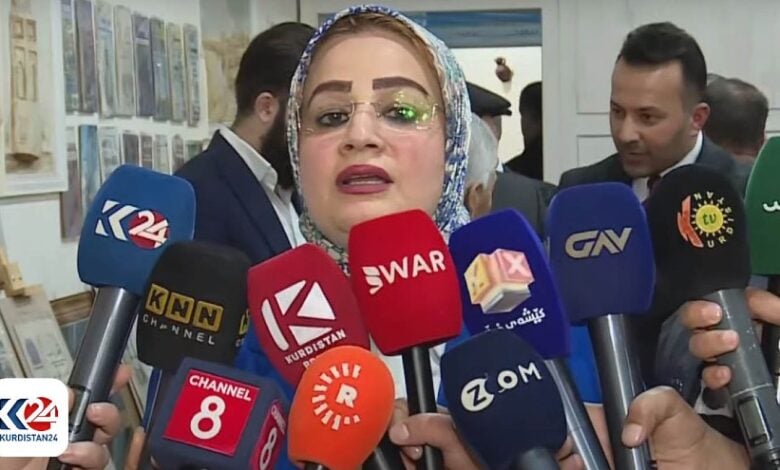
"Mona Ghawchi, Deputy Chairman of the Turkmen Islah Party," said in a press conference on February 25, in response to the Iraqi Federal Court ruling: "The Federal Court ruled to eliminate 11 seats for communities in the Kurdistan Parliament, and we will hold a series of meetings with political movements starting tomorrow, Monday, February 26, and announce our official position."
The Iraqi Federal Court, in a hearing on the complaint of the Patriotic Union of Kurdistan, issued a ruling reducing the number of seats in the Kurdistan Parliament from 111 to 100, which deprived national and religious communities of having representatives in the parliament. National and religious communities also expressed their opposition to the ruling issued by the court, considering it a political and rejected ruling, and demanded the realization of their rights. Mona Ghawchi, in protest of this ruling, also called on the United Nations and the consulates of countries in the Kurdistan Region to defend the rights of the communities.
Following the reading of the verdict, the head of the Iraqi Federal Court, Jassim al-Amiri, said: "The Iraqi Federal Court, in its session, declared Article 11 of the first amended article of 1992 regarding the Kurdistan Parliament illegal. The members of the Kurdistan Parliament will consist of 100 members, which means that 11 seats for ethnic and religious minorities, including 5 seats for Chaldean and Assyrian Christians, 1 seat for Armenian Christians, and 5 seats for the Turkmen quota, have been eliminated."
According to the head of the Iraqi Federal Court, the Kurdistan Region will be divided into four electoral districts in the provinces of Erbil, Sulaymaniyah, Dohuk and Halabja, according to the ruling. The decision to eliminate 11 seats by the Iraqi Federal Court has drawn widespread criticism from leaders of ethnic and religious minorities in the Kurdistan Region.
According to reports from the Kurdistan 24 news network, Haysam Petros, a representative of the Chaldean Christians in Duhok, criticized the Supreme Court's decision and said: "50 to 60 thousand Christian citizens live in Duhok, but 150 Christian families live in Sulaymaniyah, and we do not have a single school in Sulaymaniyah that teaches in the Syriac language. There are 100 to 120 churches in Duhok, but we only have one or two churches in Sulaymaniyah. The orders of this court come from Tehran, and the Iraqi authorities are implementing these orders."
According to Hessam Petros, Baghdad's decisions have been against Christians since 2003. He added on this issue: "The federal court creates problems for us every day. Now that Christians have left Baghdad, the federal court creates problems for us every day in some way. We have been organizing an internal movement for a few days and will take a stand against the court's decision and will submit a detailed report to the American consulate, the Europeans and the United Nations."
Haysam Petros stated bluntly: "As Christians in Kurdistan, we hope that the Kurdistan Regional Government, just as it has previously supported Christians and other minorities, will now continue to support the rights of religious minorities and not implement this federal court decision."
Aydin Maruf, the Minister of Minority Affairs, also responded to the federal court's decision, saying: "The federal court's decisions are illegal, political, unfair, and against minorities, because the minority seats were legally allocated to them, and they will participate in the elections without the minority seats."
"Ashwaq Jaaf," a former Kurdish representative in the Iraqi House of Representatives, also said in response to the federal court's decision to remove 11 seats: "With the federal court's decision, minorities will no longer have representatives in the Kurdistan Parliament, which is a great injustice against them and will certainly lead to deeper problems."