The 87th Session of the Nouri Court; Akhavan's Message: "The Death Committee of the 1988 Executions Was Worse Than the Revolutionary Courts"
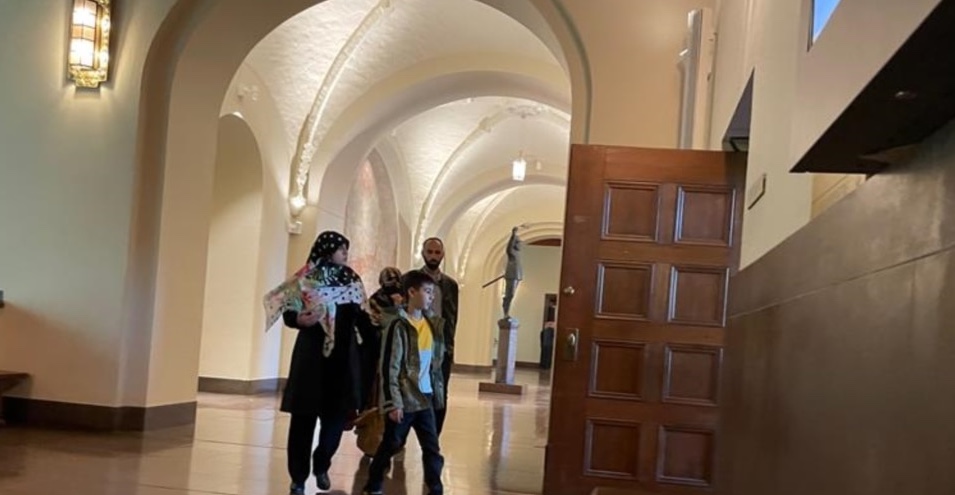
The eighty-seventh session of the trial of Hamid Nouri, accused of participating in the execution of political prisoners in the summer of 1988 in Gohardasht Prison, was held on Monday, May 25, 2022, in the afternoon session only, with the testimony of Professor Payam Akhavan as an expert witness.
Payam Akhavan testified in the court via video live from Toronto, Canada. Explaining his activities, he said that he is a human rights lawyer and university researcher, and has been a special advisor to prosecutors at the Hague court for many years.
The first part of Payam Akhavan's testimony was dedicated to explaining how the International People's Court of Iran Tribunal was formed in 2012. He explained to the court that in 2011-2012, he was invited to cooperate by a number of mothers from Khavaran, including the families of Behkish and Babak Emad, in a phone call to investigate the dimensions of the killing and execution of political prisoners in the summer of 1988. This invitation was made based on his experiences with cases related to "crimes against humanity."
Payam Akhavan said that first a committee was formed and a group of experienced prosecutors gathered together. The committee's first step was to form a fact-finding commission. The second stage of work was dedicated to the legal aspects of the case.
Payam Akhavan said: “Seventy-five people testified; seventeen via Skype and the rest in person. Thirty-eight of these witnesses were prisoners who survived the executions and the rest were from the families of the executed. They had already sent their written testimonies to the committee, and the committee members had already read those written testimonies. The witness said the purpose of the oral interrogations was only to confirm and establish the truth.”
The selection of seventy-five witnesses was done by volunteers from among ordinary people or from various political groups and minorities such as Kurds and Arabs. These volunteers contacted the witnesses. The committee also looked at the events of the 1960s in general. The testimonies were collected and presented to the committee by one Iranian and two non-Iranian lawyers.
The result was a report prepared and presented to the Committee in July 2012. The next step was a hearing held at the Hague Court in October 2012; an oral and preliminary hearing, in which the Committee's report was one of the documents of the Court.
Payam Akhavan explained how at this stage nineteen witnesses were added to the number of witnesses, and six prominent judges and a prominent lawyer also accompanied the group. The witness said that a letter was also sent to the embassy of the Islamic Republic, but no response or response was ever heard from them.
Payam Akhavan testified that the outcome of the tribunal was a full report in 2013. He said that the tribunal issued its verdict against the Iranian government. The tribunal concluded that the Iranian government had executed individuals in Iranian prisons in the summer of 1938 for their religious or political ideas. These executions were carried out by the highest authority in the country, their leader Khomeini, and on the basis of an order called a “fatwa.” The Iranian tribunal confirmed that a death committee had visited various prisons and decided on the executions. The final verdict of the tribunal was “crimes against humanity” announced by Iran.
Payam Akhavan said: “My judgment was that the witnesses were telling the truth. Many of them had suffered trauma or mental crisis. They spoke of torture and its various methods, rape, questions from the death squads, and the method of selecting people for execution. These details convinced me. Despite the high number of testimonies, their details did not contradict each other.” The witness emphasized that the Iranian tribunal had other documents and evidence, including the Ronaldo report from El Salvador, which included the names of thousands of those executed and was prepared at the request of the United Nations. That report also included a letter from Ayatollah Montazeri. The Brotherhood said that Montazeri was Khomeini’s successor and opposed the executions.
The Brotherhood message declared that the most important document proving the executions and the reason for their occurrence was Khomeini's fatwa, in which Khomeini wrote that all people with opposing beliefs should be executed.
The Brotherhood message said the fatwa was written for a specific group of prisoners called “hypocrites.” Everyone knew that the “hypocrites” meant the “People’s Mojahedin Organization of Iran,” which had intervened and played a role in armed conflicts related to the Iran-Iraq war. “It is claimed that there is a second fatwa, but I don’t think it is available,” the Brotherhood message said. “This second fatwa was about leftists. These people are called apostates.”
The Brotherhood message said there was a connection between the executions and the Iran-Iraq war and the armed war of the Mujahedin with the Islamic Republic, but the issue was more complex than that. Mujahedin prisoners who had been arrested for very ordinary activities were executed en masse in retaliation for and instead of the Mujahedin who had participated in the armed war against the government [on the borders].
Payam Akhavan said that those involved in these executions were later promoted. For example, Pourmohammadi became a senior judge. Nayyari was promoted to deputy judge of the Supreme Court. Ebrahim Raisi also became head of the judiciary and is now president. “The regime’s policy was to promote the perpetrators and perpetrators of these executions,” Shahed said.
The Brotherhood’s message provided a detailed explanation of how the death squads functioned and how well they fit into the Iranian judicial system. He said that Khomeini established the Revolutionary Courts immediately after his return to Iran in February 1979. Systematic executions began, and people were put to death for mundane and vague Islamic crimes, such as fighting God or moharebeh.
Payam Akhavan said: “The revolutionary courts that are still operating do not comply with the constitution. They are famous for not allowing anyone to defend themselves and for sentencing anyone to death. The death committee of the 1988 executions was worse than the revolutionary courts. The death committee had no judicial process. [Their actions] were a religious inquisition, and the death committee operated outside the Iranian judicial system.
The Brotherhood message explained how Iranian officials had been denying the executions until the audio message was broadcast. The witness said that of course Iran did not deny carrying out many of its executions in the 1960s. He explained that he believed that they did not announce the executions of the summer of 1988 and denied it because they knew that public opinion would ultimately not accept it. He said that they executed countless people in secret, in retaliation.
Regarding the government's justification for the executions, Payam Akhavan said: "There was a connection between the political prisoners and the military forces that had participated in the armed conflict. The government linked the two. The witness said: "This is how you want to justify the mass executions. That is the main point of Khomeini's fatwa itself. In the fatwa, he said that this group had participated in the armed conflict and he specifically said that these people should be executed."
Payam Akhavan said: "According to Ayatollah Montazeri, between 2,800 and 3,800 people were executed in the summer of 1988. Others have executed a much higher number. Access to the correct number and statistics of executions is difficult due to the lack of cooperation from the Iranian government, especially regarding the number of executions outside Tehran. We know that these executions were carried out throughout the country."
In another section, the Brotherhood's message testified that "there is no free media in Iran. The media announces their [Islamic Republic's] general policy."
Judge Thomas Sander announced at the end of today's hearing that the defendant's defense lawyers submitted new evidence to the court late last night in their client's defense. The judge said the defendant's lawyers can present this evidence in court at the appointed time.
The judge's statement drew strong objections from Kenneth Lewis, a lawyer for a number of plaintiffs who are members of the People's Mojahedin Organization. The lawyer stated that given the limited time remaining, the plaintiffs' counsel, the prosecutors, and the court as a whole do not have enough time to review the evidence. He requested that the court, if the accused clients present this evidence, also give the plaintiffs' defense lawyers and experts time to challenge the evidence and provide additional explanations.
The judge ultimately agreed to postpone the decision on this matter until later in the day after consulting with other court officials and lawyers.
The Hamid Nouri trial is holding its final sessions. This week's court sessions, as previously announced, are dedicated to the prosecutors and the four lawyers advising the plaintiffs in the case. In the next session, which will be held tomorrow, the prosecutors will present and fully explain the final indictment and officially announce the request for punishment for Hamid Nouri, the defendant in the case. The next court sessions this week are dedicated to the four lawyers advising the plaintiffs in the case to present their final defenses to their clients in court and to officially state the request for punishment for the defendant on behalf of the plaintiffs. The final two court sessions next week are also dedicated to the defendant and his lawyers to present their final defenses and ask the court to issue a verdict of not guilty for the defendant.
Source: Voice of America