Iranian ambassador summoned amid pressure from hardliners to expel British ambassador
Britain summoned Iran's ambassador to London. At the same time, on Monday, hardline and fundamentalist media outlets and a group of members of the Islamic Consultative Assembly claimed that the British ambassador "managed" the recent protests in Tehran and should be expelled from Tehran.
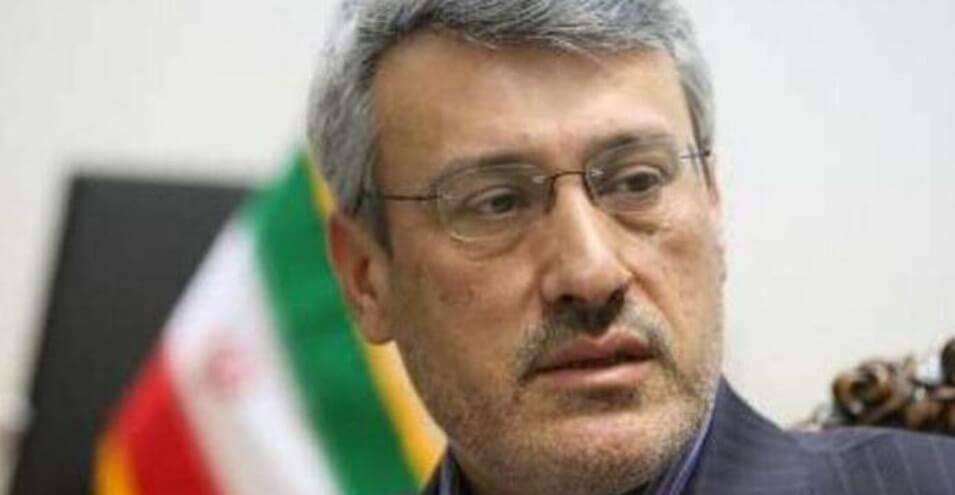
The French news agency AFP reported that the British Foreign Office summoned Iran's ambassador to London, Hamid Baeidinejad, on Monday, January 13, in connection with the arrest of Rob McIlroy in Tehran.
Mr. McIlroy was temporarily detained for several hours last Saturday, amid protests over the downing of a Ukrainian plane by the Revolutionary Guards. Britain called the Islamic Republic's action a "flagrant violation of international law," and British Foreign Secretary Dominic Raab called the detention "unfounded and unjustified."
Reuters and Sky News also reported that the reason for summoning Baeidinejad, Iran's ambassador to London, was the "unacceptable detention" of the British ambassador in Tehran.
One week deadline for British ambassador to leave Iran
On Monday, a group of parliamentarians, in a coordinated and unanimous speech, called for the expulsion of the British ambassador from Iran and, in different tones, advised Iranian Foreign Ministry officials to do this "faster."
Hossein Naqvi Hosseini, spokesman for the Majlis National Security Commission, said that the Iranian Foreign Minister will definitely be invited to the commission to explain to the representatives about the British ambassador's presence at last Saturday's gatherings. He called for a response from the Iranian diplomatic apparatus to the British government.
Alaeddin Boroujerdi, a member of the Parliament's National Security Commission, also said that the Iranian Foreign Ministry should give Mr. McIlroy a week to leave.
Boroujerdi pointed out that even if British officials react, this must be done, saying that the past is over and that, according to him, "the nation and the system" can no longer tolerate "the mischief of the British ambassador."
The conservative website Jahan News accused Iranian Foreign Ministry officials of being "intolerant" of Britain's harsh tone and their protest against the detention of its ambassador in Tehran, and wrote that it was necessary to wait and see what the Iranian Foreign Ministry's plan was for the British embassy.
“Let’s expel him so that other ambassadors don’t repeat it”
Abolfazl Hassanbeigi, a member of the National Security and Foreign Policy Commission of the Parliament, also called for the ambassadors' movements in Iran to be "under surveillance" and, thus, they must inform the security forces if they want to leave the embassy at any time.
He considered the expulsion of the British ambassador from Tehran a lesson for other ambassadors that will prevent similar actions from being repeated.
Hussein Sheikhol-Islam, former advisor to the Minister of Foreign Affairs, said that if it were up to the Foreign Ministry officials, "I would have asked for the British ambassador's apology as an undesirable element today" and expelled him from the country.
Reducing relationships at the acting level
The student movement of Imam Sadeq University has written a letter to President Hassan Rouhani calling for the expulsion of the British ambassador from Iran and the reduction of diplomatic relations with the country to the level of chargé d'affaires.
Habibollah Dehmardeh, a representative from Sistan in the parliament, also expressed surprise that the British ambassador was not expelled and said that Iranian Foreign Ministry officials should not act passively.
Earlier, Fars News Agency had criticized in a report the Iranian Foreign Ministry's mediation for the release of the British ambassador in Tehran.
Pressure from extremist and fundamentalist media to expel British ambassador
Since the news of the temporary arrest and release of the British ambassador in Tehran was published, several hardline newspapers and conservative media outlets close to the Revolutionary Guards have called the British foreign minister an "undesirable element" and called for the expulsion of the British ambassador from Iran.
Two hardline and fundamentalist newspapers, Kayhan and Resalat, called on the Iranian Foreign Ministry to abandon "passivity."
On Monday, January 13, the Fararo website republished parts of the Kayhan newspaper's note and wrote: "Kayhan claimed that the British ambassador wet himself out of fear during his arrest, and while he was being transferred to another location outside the aforementioned gathering, he wet himself again!"
Hossein Shariatmadari, the representative of the Islamic Republic's Supreme Leader Ali Khamenei in Kayhan, questioned in his note why the British ambassador was "so terrified" by his arrest, claiming that the British ambassador had a "mission" to "manage" "a handful of celebrities" against Qassem Soleimani.
Shariatmadari called the artists and celebrities supporting the recent protests "homeland sellers" who have "gone to the despicable licks of America, England, and Israel."
The Tasnim news agency, close to the Revolutionary Guards, made the same claim on Sunday, writing that during the evening rally last Saturday (January 2) in front of Amirkabir University, the British ambassador to Tehran was engaged in "organizing, inciting, and directing some radical and destabilizing actions."
Mohammad Kazem Anbarloui, the editorial writer of the conservative Resalat newspaper, aligned with Kayhan's stance, while accusing the United States of directing and managing the protest rallies after the downing of the Ukrainian plane by the Revolutionary Guards, called for the expulsion of the British ambassador to Iran.
Officials in the Iranian diplomatic service have not yet commented on these reactions and the call to expel the British ambassador from Tehran.
Source: DW