Mike Pompeo's statements about accelerating the collapse of the Islamic Republic
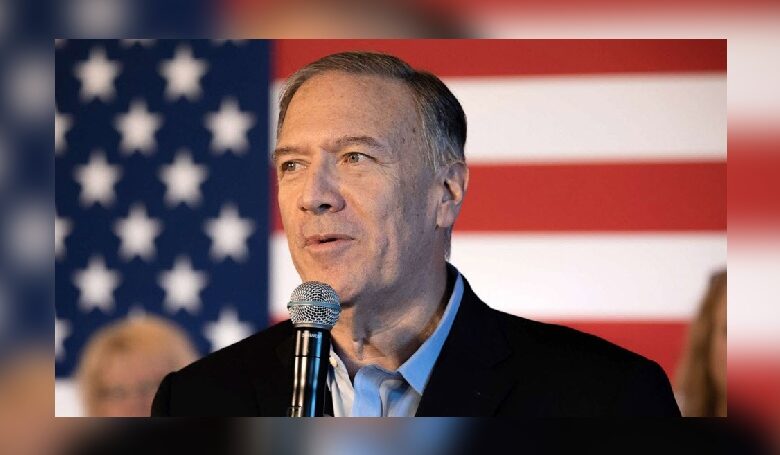
In remarks, Mike Pompeo offered a sobering analysis of a "regime on the decline" and the opportunity to hasten the collapse of the Islamic Republic by standing with the Iranian people.
Former US Secretary of State Mike Pompeo, in an analytical article published on the Fox News website, paints a stark picture of the current situation in the Islamic Republic of Iran, describing it as a regime that is facing clear signs of exhaustion and decline, both domestically and regionally.
He emphasizes that these circumstances provide a historic opportunity for American policymakers to pave the way for the collapse of this regime by increasing pressure on Iranian sovereignty and supporting the people.
Referring to a series of measures taken in recent years by the Donald Trump administration and Israel to weaken the Islamic Republic's military and proxy arms (including the 12-day war), Pompeo writes: "The Islamic Republic is no longer the regional power it once was and is now facing crisis on every front. Iran's military infrastructure has been severely weakened and its nuclear program has been seriously damaged. Its network of proxy forces across the Middle East is also collapsing."
According to him, this decline is not limited to the external arena. Pompeo also described the domestic situation in Iran as a crisis, writing: “The domestic situation is also grim. Due to chronic economic mismanagement, corruption, and international isolation, the economy is in shambles and the country is facing a water shortage. The regime, which lacks popular legitimacy and cannot meet the needs of the people, has only one remaining tool for control: the rule of fear.”
This assessment is in line with numerous reports by international human rights organizations that have reported in recent years an increase in repression, widespread arrests, and severe restrictions against minorities, including Christians, in Iran; repression that, according to critics, is a sign of the structural weakness of a system, not its strength.
In another part of the article, Pompeo strongly criticizes the view that there is “no alternative” to the Islamic Republic, stating: “This perception is false in every way. It ignores the aspirations of millions of Iranians who have risked their lives to demand change, and it denies the existence of an organized, democratic opposition.”
Pointing to the nationwide protests in Iran in recent years, he believes the people have repeatedly and clearly stated their desires. “The Iranian people have made their preference abundantly clear in successive waves of uprisings,” Pompeo writes. “They want neither theocracy nor monarchy. They want a free, democratic, and accountable republic.”
The former US Secretary of State points to historical examples to explain the current situation of the Islamic Republic, recalling the collapse of the Berlin Wall and the sudden fall of Bashar al-Assad's government, and says: "Iran today is showing the same classic signs of exhaustion; signs that have often been the precursors to the fall of authoritarian regimes."
Pompeo, a key architect of the “maximum pressure” campaign against the Islamic Republic, emphasizes that America’s job is not to predict the exact moment of collapse, but to prepare for it. “The job of American policymakers is not to predict the exact moment of regime collapse,” he writes, “but to shape the environment so that when it does occur, the outcome is stability, not chaos. This requires a realistic approach that is willing to move beyond the failed diplomatic formulas of the past.”
He believes that this same logic can be seen in Donald Trump’s policies toward Iran, both in his first and second administrations: “This same second characteristic has characterized Donald Trump’s policies toward Iran in both his first and second administrations. He now has the opportunity to complete his historic achievements in the Middle East with a truly transformative success and help accelerate the decline of the Iranian regime.”
At the same time, Pompeo makes it clear that regime change in Iran should not and cannot be imposed from the outside. Emphasizing the decisive role of the Iranian people, he says: “No external force should replace their will.” However, he says, the international community can and must play a supporting role: “We can help the people of Iran achieve their will for change by increasing external pressure and supporting the people who are seeking a peaceful, democratic, and pro-Western future. Our task is simple: stand with the Iranian people, recognize the democratic vision they have chosen, and deny them the money, legitimacy, and immunity that the ruling clerics rely on to survive.”
This stance comes at a time when many Iranian Christians, both inside the country and in exile, see the Islamic Republic as one of the main obstacles to religious freedom and human dignity. In their view, Pompeo's remarks are not just a geopolitical analysis, but also a reflection of the demands of a people who have paid a heavy price for freedom, justice, and a different future for years.