Inauguration of Bucharest National Cathedral, a manifestation of Christian faith and national identity in the heart of Romania
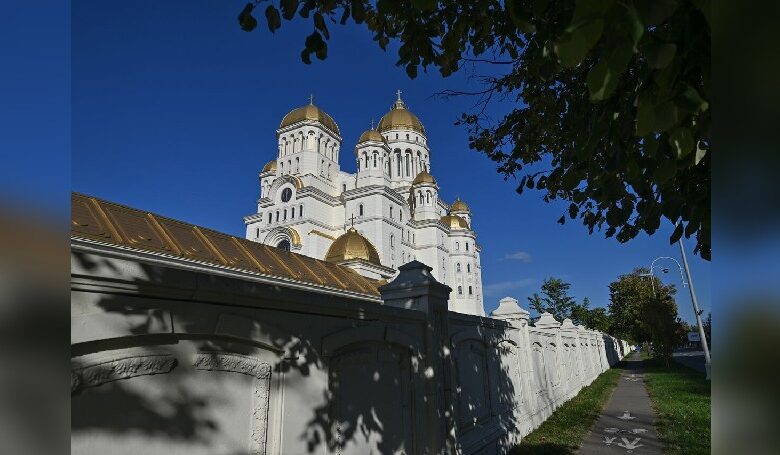
Romanians gathered to attend the inauguration of the world's largest Orthodox church, a building that, after more than a century of waiting, became a new symbol of faith and national unity.
Images and reports published on social media indicate the inauguration of the largest Orthodox church in the heart of Romania.
On Sunday, October 26, thousands of Romanian citizens from all over the country came to the capital to witness a historic moment: the official inauguration of the Bucharest National Cathedral, a massive and impressive structure that holds the title of the largest Orthodox church in the world.
After 15 years of construction and preparation, this magnificent building was consecrated and inaugurated in the presence of Patriarch Bartholomew, the spiritual leader of the Orthodox world, and Patriarch Daniel, the leader of the Romanian Orthodox Church. During this ceremony, the Eucharist was celebrated in the presence of a large crowd of clergy, believers, and pilgrims.
"We drove all night to be here on this historic day. I feel like this church is a gift to the faith and resilience of the Romanian people," said Maria Russo, a retired economist from the city of Cluj.
The National Cathedral, now the headquarters of the Romanian Orthodox Church, replaced a smaller church built in the 17th century. The idea for the cathedral was first proposed more than a century ago, but two world wars, communist rule and economic crises delayed the project for decades. “What was impossible in 126 years has finally been achieved in the last 15 years,” said Father Adrian Agaci, referring to the long journey. “This is a miracle of faith.”
The National Cathedral, with a height of 127 meters and a capacity of 5,000 people in the inner nave, is designed to accommodate tens of thousands of people in its vast grounds for religious services. It is expected that up to 40,000 pilgrims will visit the site daily.
The exterior and interior of the church are decorated with luxurious mosaic iconography, reflecting ancient traditions and Orthodox religious art.
The cost of the complex has been estimated at around 270 million euros, most of which has been financed by public funds. Despite criticism of the cost, many citizens see the project as a symbol of the restoration of faith and national unity.
The National Cathedral stands behind the massive Romanian Parliament building (a symbol of the country's communist era), as if to symbolize the triumph of faith over a challenging past.
Today, in a country of over 19 million people, 85% of whom identify as Orthodox, Bucharest's National Cathedral is not only a place of worship, but also a living symbol of the connection between religion, history, and Romanian national identity.