Increase in student arrests during Iranian protests and the response of domestic and international institutions
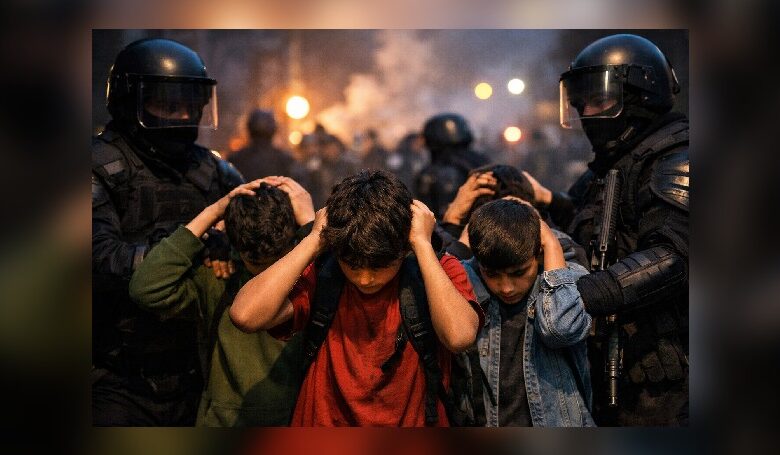
The arrest of students under the age of 18 in recent protests and possible violations of children's rights in Iran have sparked reactions from domestic and international institutions.
In recent weeks, as nationwide protests have spread across Iran over the economic and livelihood situation, numerous reports have emerged of security forces arresting students and children under the age of 18. Local sources and civil society organizations have reported the arrest of hundreds of children in different provinces, and new names of detained students are being published on news channels and social media every day, suggesting ongoing and widespread arrests of children.
According to reports, 10 high school students, aged around 17, were arrested by security forces in the city of Shushtar in overnight raids, and the identities of some of them have been confirmed, although no official reasons for the arrests have been announced. Also in Kohgiluyeh and Boyer-Ahmad provinces, at least three children and several teenagers have been arrested during recent protests, including a 17-year-old who was arrested on the streets of Yasuj.
This wave of arrests, although not widely responded to by Iranian authorities, has been accompanied by comments. Abdulwahid Fayyazi, a member of the Parliament's Education and Research Commission, confirmed the arrests of children and adolescents during the protests and said: "The judicial authority will deal with them based on the rights of children, adolescents and youth."
Domestic human rights institutions have also described the situation as worrying. The Iranian Center for Human Rights and the Iranian Human Rights Organization have reported on the detention of children without their families being informed, stressing that this process is in conflict with Iran's obligations under international child rights treaties.
In addition to anecdotal reports, the Coordination Council of Iranian Teachers' Unions has also reported the arrest of hundreds of children under the age of 18 in recent protests, saying that the scope of these arrests has spread to several provinces.
Child rights activists and lawyers warned that detaining children should be a last resort and only in specific and short-term circumstances, with due regard for the rights of access to a lawyer, notification of families, and hearings in specialized courts. These principles are part of the Convention on the Rights of the Child and the principles of fair trial, which the Islamic Republic of Iran has also joined but refuses to do in practice.
Reports also point to the psychological consequences of detention on adolescents; past experiences have shown that detention can lead to dropout, frustration, depression, and a deterioration of the educational environment for students. According to psychologists, such encounters may reinforce feelings of injustice and insecurity in children and isolate them from society.
Human rights activists and international organizations have repeatedly warned in the past about Iran's violations of its obligations on children's rights and the arbitrary detention of minors. Previous reports have shown that Iran's criminal laws in some cases conflict with international standards that prohibit criminal liability for those under 18, and that detention without family notification can be considered an example of "enforced disappearance."
The issue of detaining children during Iranian protests was first seriously raised in 1401, when official officials confirmed the detention of students and described it as "preventing the enemy from abusing educational centers."
Experience in recent years has also shown that security encounters with students can leave long-term cultural and social consequences in society.
According to lawyers, the right to protest is one of the fundamental rights of citizens, which is recognized by the Iranian Constitution for all individuals, including children and adolescents, and violating this right can have legal consequences.