Flood risk increases in several Iranian provinces; Khuzestan and Sanandaj on alert
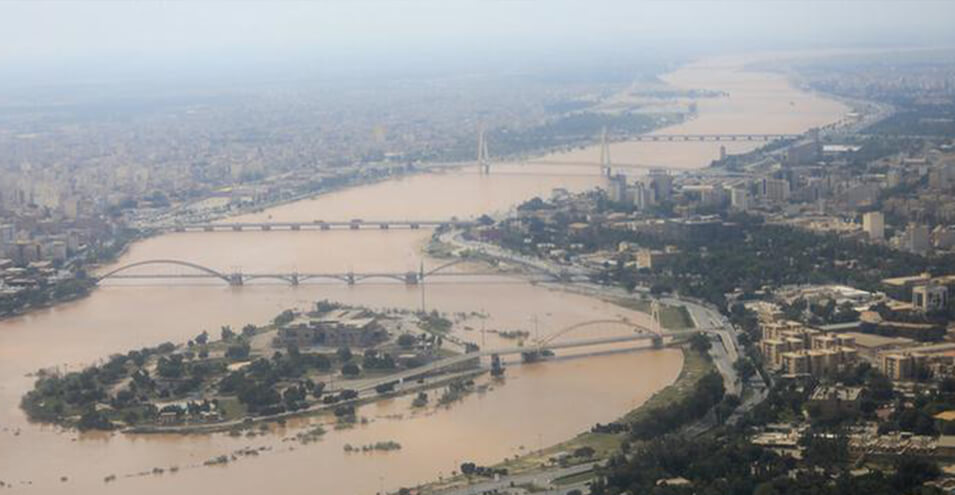
Heavy rainfall in various parts of Iran has increased the risk of flooding. According to official reports, Khuzestan is most at risk, and Sanandaj has also been put on alert. Government agencies are accusing each other of inaction.
While flooding has subsided in some areas of Iran, forecasts of heavy rainfall in the coming days have increased officials' concerns about devastating floods in other areas.
The Ministry of Interior has declared a state of alert for all relevant executive agencies and has canceled the leave of employees of relevant government organizations and institutions.
According to the governor of Khuzestan, the increase in the volume of water in rivers in the northern provinces of Khuzestan will cause new floods in the province and will put the dams in the region at serious risk.
The high volume of water stored in the Dez Dam is of greatest concern, and officials predict that if this trend continues, the Dez output will reach 2,000 cubic meters per second. In this case, more cities and villages in the province will face the risk of major floods.
In a number of Iranian provinces, including North Khorasan, Kermanshah, Golestan, and Lorestan, villages along rivers have been evacuated, and the process of relocating residents of these areas continues.
Sanandaj is on alert.
According to the mayor of Sanandaj, the city in Iranian Kurdistan has been put on alert following the rising risk of flooding.
According to ILNA, Heshmatollah Seydi said that in order to deal with possible flooding and prevent harm to citizens, vehicle traffic on Kurdistan Boulevard and the entrance to the slopes of Abidar Mountain will be prohibited and these routes will be closed.
Schools have also been designated to accommodate homeless people and flood-prone citizens of Sanandaj.
“There is no need to worry”
Government officials have consistently stressed that necessary measures have been taken to combat flooding and provide people with the goods they need. On Sunday, March 31, the governor of Khuzestan said: “All necessary measures have been taken to manage the inflow and outflow of water from the province’s dams, and there is no need for concern.”
The public relations director of the Kermanshah Central Prosecutor's Office also stated, "There is no problem in securing and supplying basic goods, including bread, during rainy days and during possible flooding this week." He also threatened that legal action would be taken against those who "speak lies and cause public concern" in cyberspace.
Since the flooding in the northern provinces, Shiraz, and other regions of Iran, cyberspace activists have begun discussing the role of the human factor in exacerbating the critical situation in the flooded areas. Rouhani's criticism of some of the actions taken by the IRGC in Golestan Province showed that not all discussions in cyberspace are "lies."
Following Rouhani's remarks, IRGC Commander Mohammad Ali Jafari implicitly criticized the inaction of government institutions. He said that if government agencies used all their resources "to the same extent as the popular forces, Basij, IRGC, army, and other armed forces," the fight against the floods would be better.
Source: DW